Maple Cinnamon French Toast Casserole
This maple cinnamon French toast casserole bakes cubes of day-old bread in a milk-and-egg custard. Maple syrup flavors the mixture itself, while butter and cinnamon give the exposed bread a lightly golden finish. The outside pieces keep more texture than the softer bread beneath, making it a spoon-and-fork breakfast rather than a neat loaf slice.
A short covered soak helps the bread absorb custard before baking. There is also a refrigerated overnight option when morning preparation needs to be minimal. The center must still be cooked through, so treat the baking range as a starting point and check the custard in the middle instead of relying only on browned bread at the surface.
Recipe at a Glance
| Yield | 8 portions |
|---|---|
| Prep time | 20 minutes |
| Bake time | Up to 55 minutes; see the method for the range |
| Soaking and resting | 40 minutes |
| Estimated total | 115 minutes |
| Pan | 9 x 13-inch metal baking pan |
| Oven | 350°F (175°C) conventional |
| Category | Food & Recipes |
Times are estimates. Pan material, oven accuracy, ingredient temperature, and portion size affect baking; use the written doneness cues. Optional overnight chilling is not included in the total.
Why Make This Recipe
- One pan replaces cooking individual slices of French toast in batches.
- Day-old bread absorbs custard while retaining recognizable pieces.
- The pan can be assembled ahead and kept refrigerated until baking.
Ingredient Notes and Substitutions
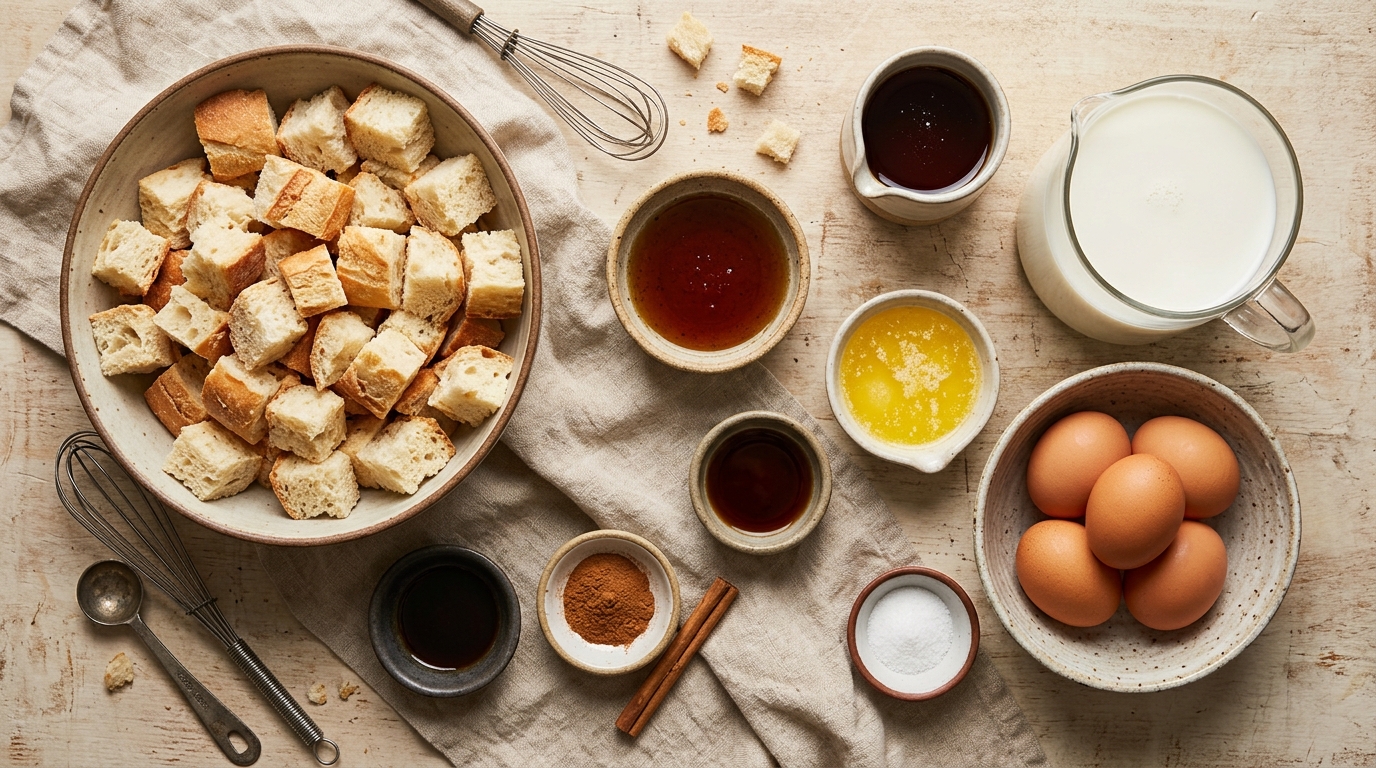
Use sturdy day-old bread
A plain French or Italian-style loaf with some structure is the intended bread. Cut it into roughly 1-inch cubes and weigh 450 g. Very soft sandwich bread can become pasty, while a heavily seeded or strongly flavored loaf changes the dish. If the bread is fresh, dry the cubes on a tray briefly before beginning rather than adding extra bread at random.
Measure the custard liquids
Whole milk gives the custard its written balance. Maple syrup adds sweetness as well as liquid, so pouring in additional syrup before baking can leave the middle too wet. Whisk the eggs until their whites are incorporated; strings of unwhisked white can set into visible patches among the bread cubes.
Choose a suitable pan
Use a 9 x 13-inch metal baking pan. For an overnight preparation, use a metal pan suitable for the change from refrigerator to oven according to its manufacturer. Do not place a cold glass or ceramic dish into a hot oven. The specified size leaves room for the bread to puff without making an unusually deep custard layer.
How to Make Maple Cinnamon French Toast Casserole
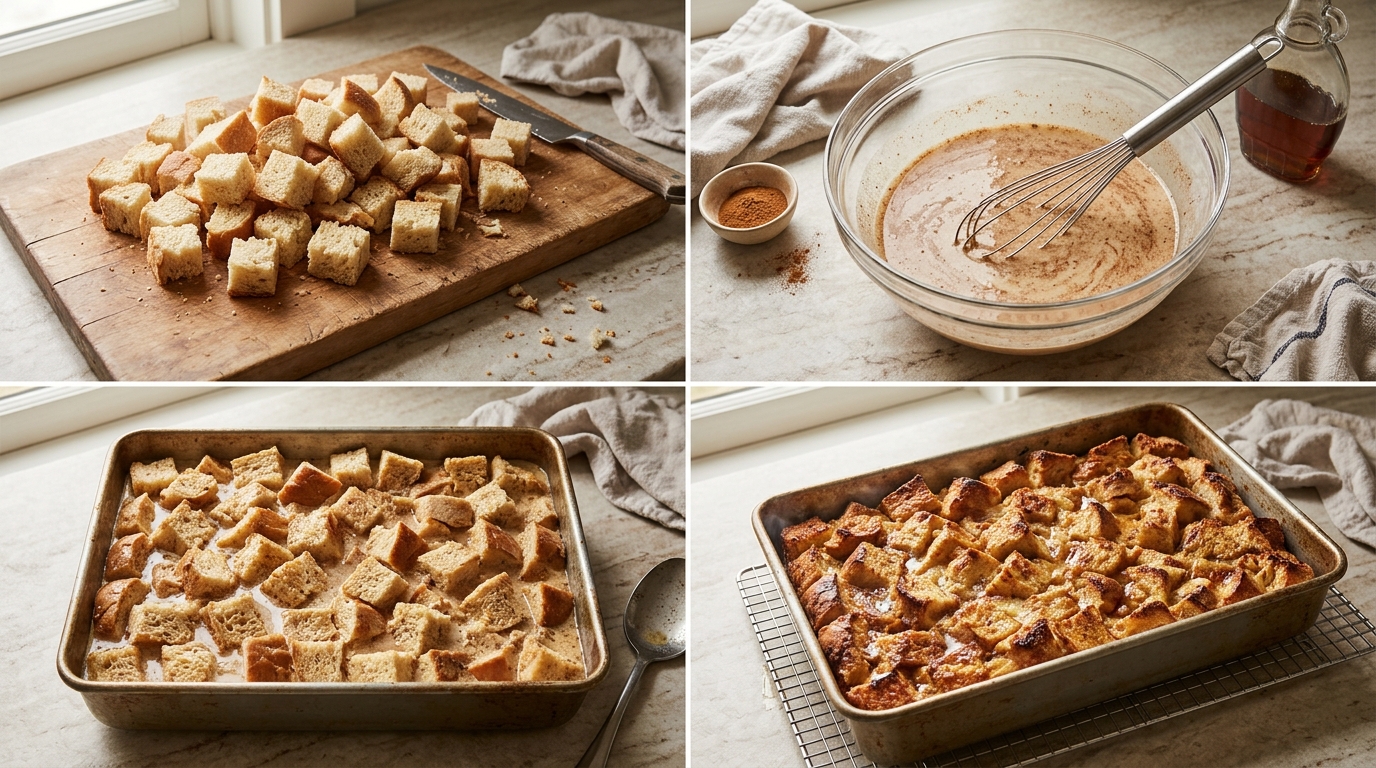
1. Prepare bread and pan
Lightly grease a 9 x 13-inch metal baking pan. Cut and weigh the day-old bread, placing the cubes evenly in the pan. If using freshly baked bread, dry the cubes on a tray in a 300°F (150°C) oven for about 10–15 minutes, then cool; this optional preparation adds time beyond the main estimate.
2. Whisk the custard
Whisk the eggs thoroughly in a large bowl, then whisk in milk, maple syrup, cooled melted butter, vanilla, cinnamon, and salt. Some cinnamon specks will float, but the egg whites should be incorporated. Whisk again just before pouring so the flavorings are not left at the bottom of the bowl.
3. Soak the bread
Pour the custard evenly over the bread. Use a broad spatula to press the cubes gently into the liquid, coating the exposed edges without crushing the bread into paste. Cover and refrigerate for 30 minutes. For the overnight option, refrigerate 8–12 hours and bake within 24 hours of assembling; keep the raw egg mixture cold.
4. Begin covered baking
Heat a conventional oven to 350°F (175°C). Keep the metal pan loosely covered with foil and bake for 30 minutes. An overnight-cold casserole can take longer overall than the short-soaked version. Use a pan approved for refrigerator-to-oven use, and do not substitute a cold glass dish for the metal pan.
5. Uncover and finish
Remove the foil carefully and bake about 15–25 minutes more, until the top is golden and the center no longer holds loose liquid. Check that the center custard reaches at least 160°F (71°C). If the top colors before the center sets, cover loosely again and continue; do not remove an undercooked pan solely because the bread looks brown.
6. Rest and serve
Rest for 10 minutes, then divide into eight portions with a broad spatula. The casserole settles a little as steam escapes. Serve extra maple syrup separately if desired. Divide leftovers into shallow containers and refrigerate promptly rather than leaving a deep warm pan on the table throughout the morning.
Tips and Troubleshooting
Some top cubes stay dry
Press the bread gently into the custard before its soak and distribute the cubes evenly. Completely submerged bread becomes softer, while exposed corners brown more. A mix of the two textures is expected; do not add extra milk after baking has begun.
The center is soggy
Check bread weight, pan size, and custard doneness. Very soft fresh bread can collapse, and an overnight-cold pan may need more time. Continue baking until the middle is cooked and set rather than trying to fix raw custard with a longer countertop rest.
The surface becomes too dark
Use the covered first stage and return foil loosely if necessary near the end. Keep the pan near the middle of the oven. The goal is a golden exposed surface over set custard, not deeply toasted bread over an uncooked center.
Variations
- Add 1 teaspoon finely grated orange zest to the custard for a maple-orange version, keeping the milk and syrup amounts unchanged.
- Serve with fresh berries added after baking. Keeping them outside the custard avoids extra fruit liquid changing the written baking balance.
Make-Ahead Plan
Assemble in the specified metal pan, cover, and refrigerate for 8–12 hours, baking within 24 hours. Keep the pan cold while the oven heats, follow the pan manufacturer’s refrigerator-to-oven directions, and allow extra baking time as needed. The overnight option replaces the short soak; it is not an additional day of room-temperature holding.
Storage and Freezing
Refrigerate leftovers promptly in shallow containers at 40°F (4°C) or colder and use within 3–4 days. Do not leave this egg custard dish out for more than 2 hours, or more than 1 hour above 90°F (32°C). Keep extra syrup and fresh fruit separate from stored portions.
Freeze cooked, chilled portions for up to 2 months for best quality. Thaw overnight in the refrigerator. Reheat covered in a 325°F (165°C) or hotter oven, or in the microwave, until the center reaches 165°F (74°C). Uncover briefly near the end of oven reheating if you want a less soft top.
Serving Ideas
Offer fruit and plain yogurt alongside the casserole for a varied breakfast table. Additional syrup belongs at serving, where each person can choose the amount. Eight portions divide the pan practically, but the size of the bread cubes means portions may look irregular; use a wide serving utensil rather than expecting perfectly smooth-edged squares.
Frequently Asked Questions
Can I bake it immediately after mixing?
The short refrigerated soak helps the bread absorb custard more evenly. Skipping it can leave dry tops over a wetter base. Use the written 30-minute soak or the refrigerated overnight option rather than assuming both give the same result with no absorption time.
Can I use brioche?
Brioche is richer and often sweeter than the plain sturdy loaf specified here. It can make a softer, more dessert-like casserole, but its absorption varies. Keep the bread weight and pan size consistent, and use the center doneness checks rather than assuming identical texture.
Does the overnight option mean it is cooked?
No. The overnight casserole still contains raw egg custard and must remain refrigerated until it is baked. Refrigeration is a holding step, not a substitute for cooking the center to the stated safe temperature.
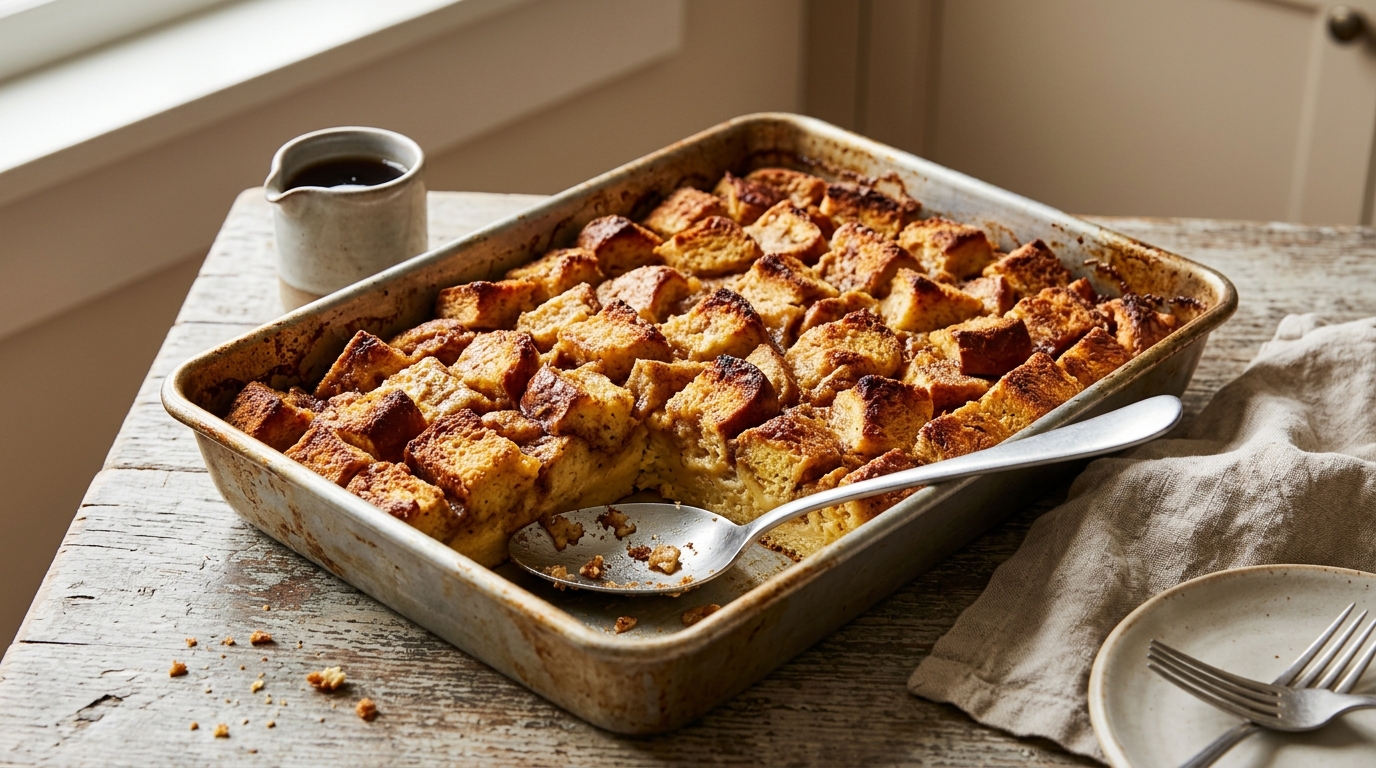
Maple Cinnamon French Toast Casserole
Ingredients
Equipment
Method
- Prepare bread and pan. Lightly grease a 9 x 13-inch metal baking pan. Cut and weigh the day-old bread, placing the cubes evenly in the pan. If using freshly baked bread, dry the cubes on a tray in a 300°F (150°C) oven for about 10–15 minutes, then cool; this optional preparation adds time beyond the main estimate.
- Whisk the custard. Whisk the eggs thoroughly in a large bowl, then whisk in milk, maple syrup, cooled melted butter, vanilla, cinnamon, and salt. Some cinnamon specks will float, but the egg whites should be incorporated. Whisk again just before pouring so the flavorings are not left at the bottom of the bowl.
- Soak the bread. Pour the custard evenly over the bread. Use a broad spatula to press the cubes gently into the liquid, coating the exposed edges without crushing the bread into paste. Cover and refrigerate for 30 minutes. For the overnight option, refrigerate 8–12 hours and bake within 24 hours of assembling; keep the raw egg mixture cold.
- Begin covered baking. Heat a conventional oven to 350°F (175°C). Keep the metal pan loosely covered with foil and bake for 30 minutes. An overnight-cold casserole can take longer overall than the short-soaked version. Use a pan approved for refrigerator-to-oven use, and do not substitute a cold glass dish for the metal pan.
- Uncover and finish. Remove the foil carefully and bake about 15–25 minutes more, until the top is golden and the center no longer holds loose liquid. Check that the center custard reaches at least 160°F (71°C). If the top colors before the center sets, cover loosely again and continue; do not remove an undercooked pan solely because the bread looks brown.
- Rest and serve. Rest for 10 minutes, then divide into eight portions with a broad spatula. The casserole settles a little as steam escapes. Serve extra maple syrup separately if desired. Divide leftovers into shallow containers and refrigerate promptly rather than leaving a deep warm pan on the table throughout the morning.
Notes
More Breakfast Recipes
Also try High Protein Cottage Cheese Egg Bake or Cinnamon Apple Baked Oatmeal, or browse the Food & Recipes collection.
Save this recipe to your Pinterest breakfast board so the ingredient list, pan size, and make-ahead directions are easy to find when planning your next bake.
Preparation and Storage References
General guidance: USDA egg handling and cooking, refrigerated storage, and reheating leftovers.