Blueberry Lemon Yogurt Muffins
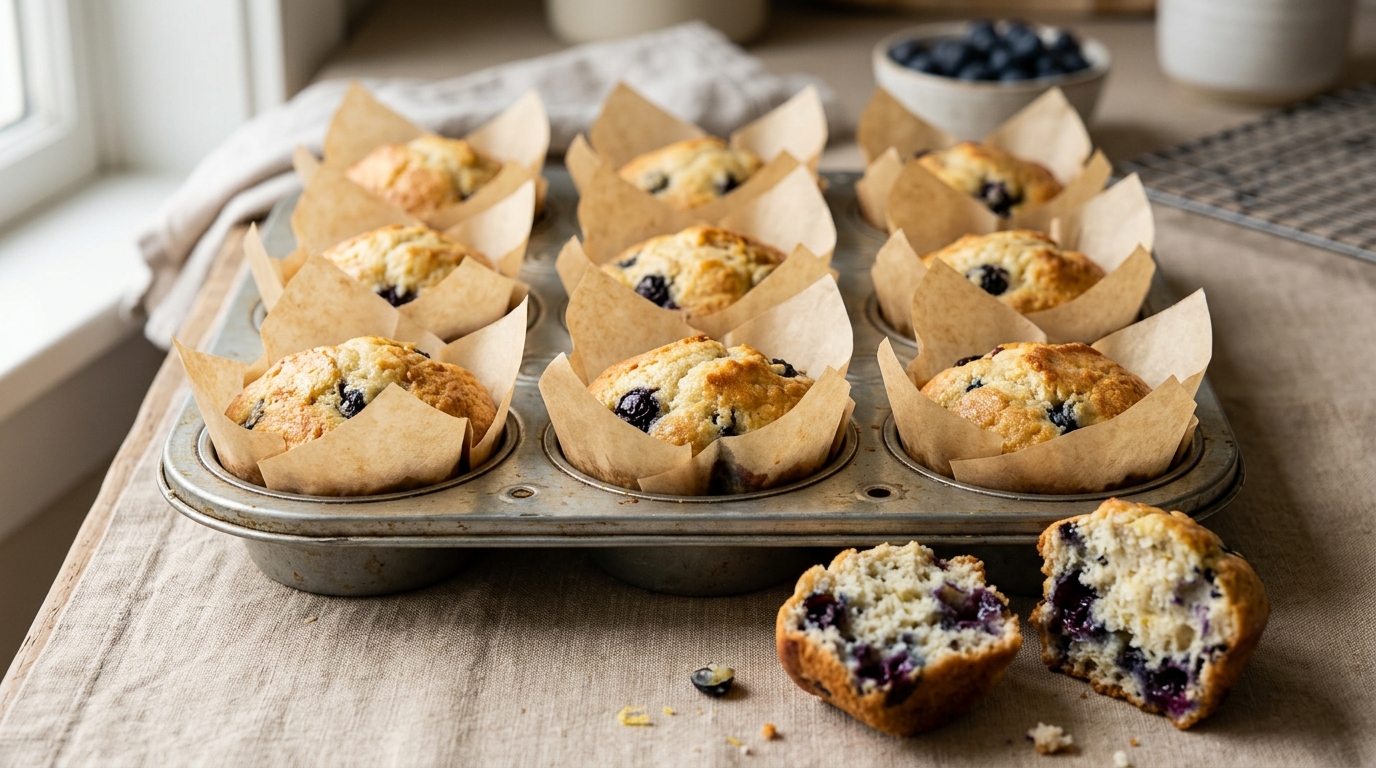
These blueberry lemon yogurt muffins have a soft, close crumb, pockets of blueberry, and lemon flavor from both zest and juice. Plain Greek yogurt gives the batter body, while a small amount of milk keeps it easy to fold. The recipe makes a standard twelve-muffin batch without an icing or a separate crumb topping.
The useful detail is when to stop stirring. A smooth-looking muffin batter usually means more mixing than this recipe needs. Combine the wet and dry ingredients just until the flour disappears, fold the berries through with a few broad strokes, and divide the batter evenly. The muffins can become tomorrow’s breakfast or individual freezer portions once they have cooled.
Recipe at a Glance
| Yield | 12 muffins |
|---|---|
| Prep time | 20 minutes |
| Bake time | Up to 26 minutes; see the method for the range |
| Cooling | 15 minutes |
| Estimated total | 61 minutes |
| Pan | 12-cup standard metal muffin pan |
| Oven | 375°F (190°C) conventional |
| Category | Food & Recipes |
Times are estimates. Pan material, oven accuracy, ingredient temperature, and portion size affect baking; use the written doneness cues.
Why Make This Recipe
- One bowl for dry ingredients and one for wet ingredients keeps preparation straightforward.
- Lemon zest adds aroma without needing a sugary glaze.
- The muffins freeze individually, so you can thaw the number you actually need.
Ingredient Notes and Substitutions
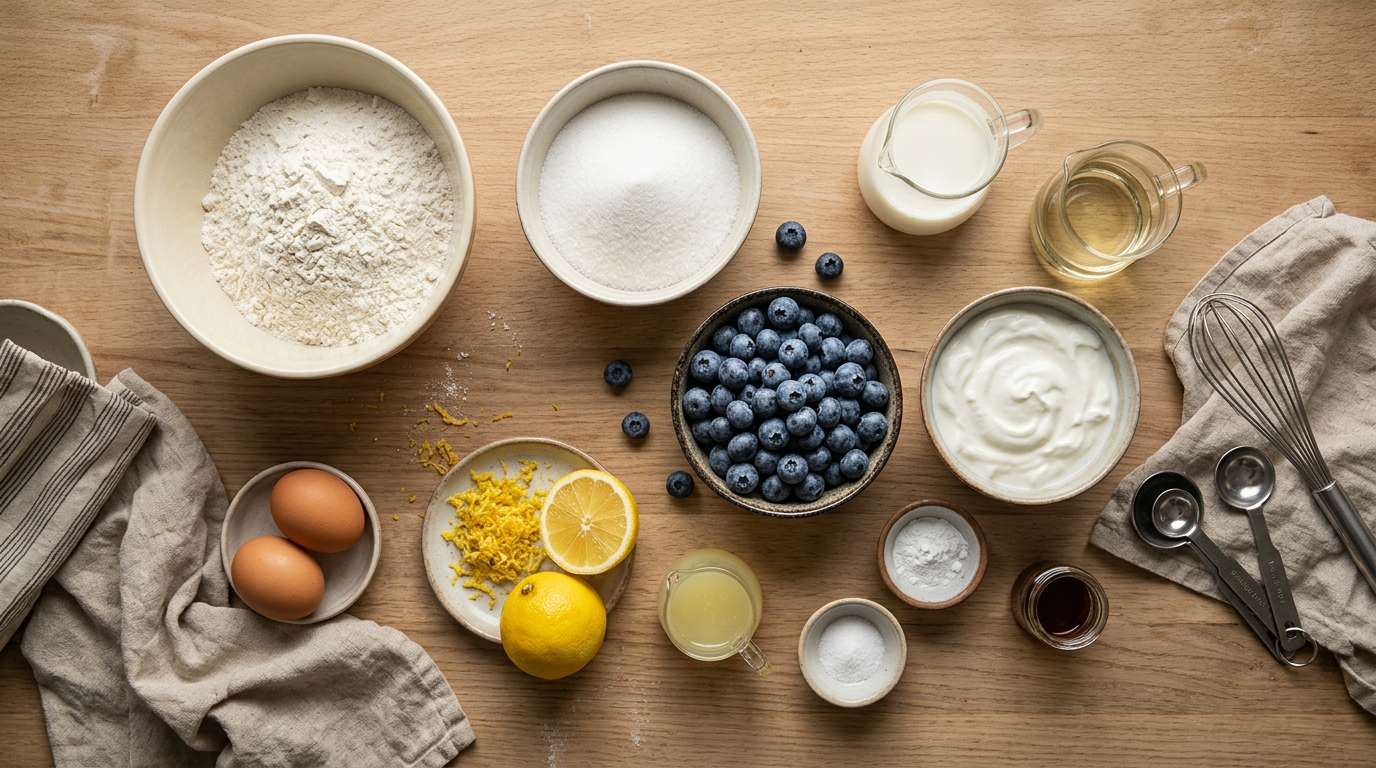
Measure flour lightly
Weigh the flour if possible. If using cups, loosen it, spoon it into the cup, and level the top without packing. Scooping a cup through the bag compresses flour and can make the batter seem dry before the berries even go in. All-purpose flour is the intended flour here; bread flour changes the texture, and almond flour is not a direct substitute.
Choose plain Greek yogurt
Use unsweetened whole-milk Greek yogurt, stirred before measuring. Very thick yogurt can leave a few soft lumps in the wet mixture, which is fine once it is whisked with the milk. Sweetened lemon yogurt changes both sweetness and flavor. Sour cream is a reasonable same-weight alternative, though the muffins will have a slightly different richness.
Handle the blueberries last
Fresh berries should be washed and dried well. Frozen blueberries can go in straight from the freezer; do not thaw and drain them first. Their cold temperature may lengthen baking a little. Fold gently to avoid coloring all the batter purple, and remove any large clumps of frozen fruit before adding them.
How to Make Blueberry Lemon Yogurt Muffins
1. Prepare the pan and oven
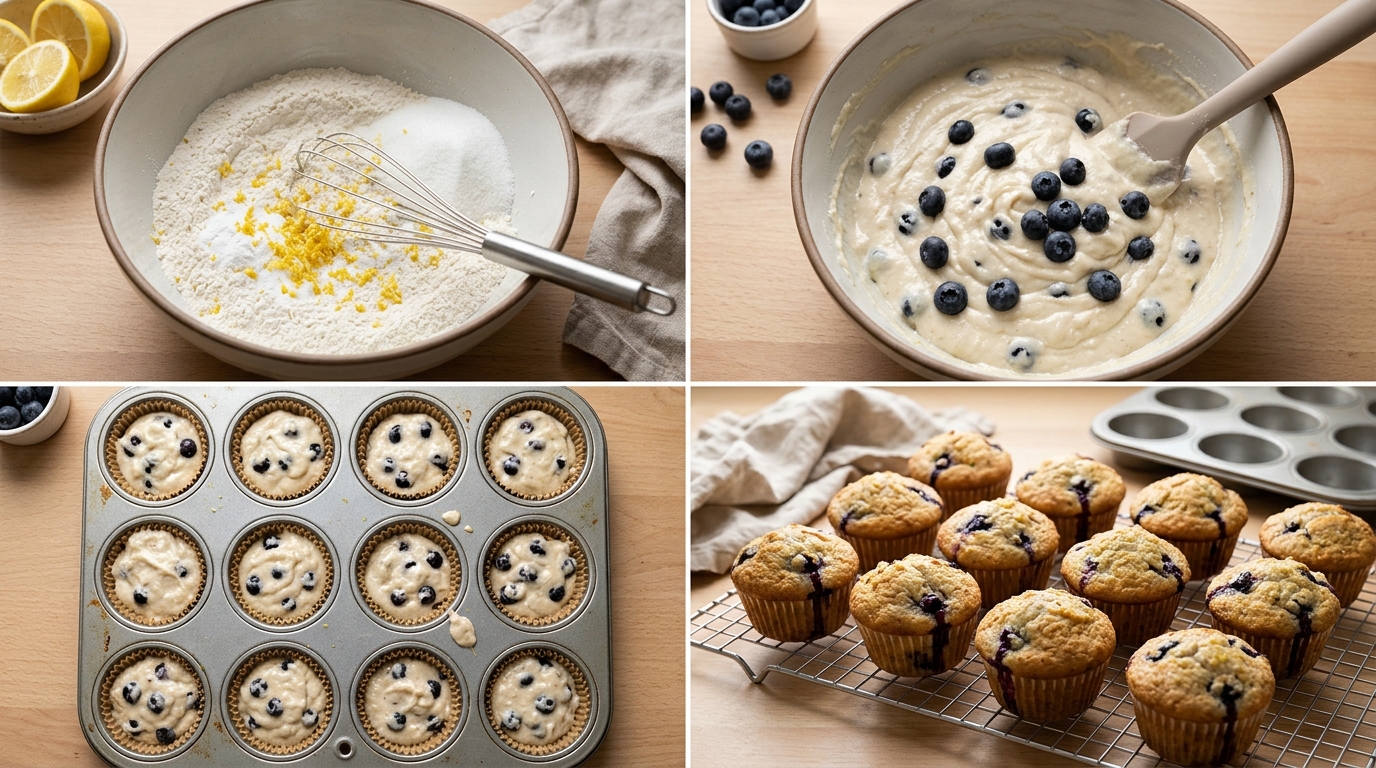
Heat a conventional oven to 375°F (190°C) with a rack in the center. Line all twelve muffin cups. Measure the ingredients before mixing, dry fresh blueberries if using them, and rub the lemon zest into the measured sugar with clean fingertips. This distributes the zest instead of leaving it in one fragrant clump.
2. Combine the dry ingredients
Whisk flour, lemon sugar, baking powder, baking soda, and salt in the larger bowl. Reach the bottom and sides so there are no concentrated pockets of leavener. Break up any lumps in the baking powder with the back of a spoon. Keep the berries separate for now rather than burying them in the dry mixture.
3. Whisk the wet ingredients
In the second bowl, whisk eggs, yogurt, milk, oil, lemon juice, and vanilla until evenly combined. Small yogurt flecks are acceptable, but there should not be a layer of oil sitting on top. Use a bowl large enough to whisk comfortably; splashing away part of the measured milk changes the batter balance.
4. Fold and portion
Pour the wet mixture into the dry ingredients. Fold with a spatula until only a few flour streaks remain, then add the blueberries and fold just until the flour is incorporated. Divide evenly among twelve liners, roughly three-quarters full depending on the pan. Do not beat the batter to remove every small lump or press berries into a dense layer.
5. Bake until the centers are set
Bake for about 22–26 minutes, allowing a little extra time for frozen fruit if needed. Tops should be lightly golden and spring back gently. A tester placed in crumb rather than a blueberry should come out without wet batter. Rotate the pan once near the end only if your oven browns unevenly; avoid repeatedly opening the door early.
6. Cool before packing
Let the muffins stand in the pan for 5 minutes, then move them to a wire rack for at least 10 minutes before eating. Allow them to cool completely before sealing for storage. A warm muffin tears more readily and releases steam into a closed container, which can leave the paper liners damp.
Tips and Troubleshooting
The muffins seem heavy
Check flour measurement and mixing before adding more leavener. A thick batter is expected, but dry flour pockets should disappear. Use fresh baking powder, and bake soon after folding; leaving mixed batter on the counter does not improve the rise.
The berries sink or burst
Some berry pockets near the base are normal. Very wet berries and vigorous stirring make the effect more noticeable. Dry fresh berries, break frozen clumps apart, and portion by alternating scoops around the pan so one muffin does not receive most of the fruit.
The tops brown too quickly
An oven thermometer can help identify an oven that runs hot. If the tops are colored but the centers still contain wet batter, loosely shield them with foil and continue baking. Dark metal pans can brown edges more strongly than light metal pans.
Variations
- For a lime version, replace the lemon zest and juice with the same measured amounts of lime; keep the milk and yogurt quantities unchanged.
- Replace up to 60 g of the all-purpose flour with whole-wheat flour for a heartier crumb. Expect a slightly firmer muffin rather than exactly the same texture.
Make-Ahead Plan
For a shorter morning, line the pan and measure dry ingredients the night before. Keep the separately combined wet ingredients refrigerated, then whisk again before using. Mix the batter only when the oven is ready. For an easier weekday option, bake the full batch in advance, cool it completely, and freeze individual muffins rather than holding raw batter overnight.
Storage and Freezing
Keep cooled muffins in a covered container at a cool room temperature for up to 2 days for best quality. In a hot or humid kitchen, refrigerate them and use within 3–4 days. A paper towel beneath the muffins can absorb surface moisture; replace it if it becomes damp.
Wrap cooled muffins individually and freeze in a sealed bag for up to 2 months for best quality. Thaw a wrapped muffin in the refrigerator overnight. Unwrap and warm briefly if desired; short microwave bursts preserve softness better than a long heating cycle.
Serving Ideas
Serve a muffin with plain yogurt and fresh fruit, or add eggs for a more substantial breakfast. Pack the muffin only after it has cooled, and keep refrigerated accompaniments in a separate chilled container. The recipe has no glaze, so it is easy to carry without a sticky topping transferring to the wrapper.
Frequently Asked Questions
Can I use frozen blueberries?
Yes. Add them frozen and separate any clumps first. Do not rinse them into a puddle of water or thaw them before folding. Frozen fruit chills the batter, so use the center doneness cues and allow a few extra minutes if necessary.
Can I make mini muffins?
Use a lined mini muffin pan and fill the cups about three-quarters full. The yield and baking time change, so start checking much earlier than the standard muffins. Do not assume the full 22–26 minutes will suit small cups.
Why use zest as well as juice?
The zest supplies much of the lemon aroma, while the juice adds a little sharpness to the batter. Adding extra juice to chase a stronger flavor changes the liquid balance. Increase aroma with a little more finely grated zest instead of pouring in unmeasured juice.
Blueberry Lemon Yogurt Muffins
Ingredients
Equipment
Method
- Prepare the pan and oven. Heat a conventional oven to 375°F (190°C) with a rack in the center. Line all twelve muffin cups. Measure the ingredients before mixing, dry fresh blueberries if using them, and rub the lemon zest into the measured sugar with clean fingertips. This distributes the zest instead of leaving it in one fragrant clump.
- Combine the dry ingredients. Whisk flour, lemon sugar, baking powder, baking soda, and salt in the larger bowl. Reach the bottom and sides so there are no concentrated pockets of leavener. Break up any lumps in the baking powder with the back of a spoon. Keep the berries separate for now rather than burying them in the dry mixture.
- Whisk the wet ingredients. In the second bowl, whisk eggs, yogurt, milk, oil, lemon juice, and vanilla until evenly combined. Small yogurt flecks are acceptable, but there should not be a layer of oil sitting on top. Use a bowl large enough to whisk comfortably; splashing away part of the measured milk changes the batter balance.
- Fold and portion. Pour the wet mixture into the dry ingredients. Fold with a spatula until only a few flour streaks remain, then add the blueberries and fold just until the flour is incorporated. Divide evenly among twelve liners, roughly three-quarters full depending on the pan. Do not beat the batter to remove every small lump or press berries into a dense layer.
- Bake until the centers are set. Bake for about 22–26 minutes, allowing a little extra time for frozen fruit if needed. Tops should be lightly golden and spring back gently. A tester placed in crumb rather than a blueberry should come out without wet batter. Rotate the pan once near the end only if your oven browns unevenly; avoid repeatedly opening the door early.
- Cool before packing. Let the muffins stand in the pan for 5 minutes, then move them to a wire rack for at least 10 minutes before eating. Allow them to cool completely before sealing for storage. A warm muffin tears more readily and releases steam into a closed container, which can leave the paper liners damp.
Notes
More Breakfast Recipes
Also try Cinnamon Apple Baked Oatmeal or Easy Pumpkin Banana Muffins, or browse the Food & Recipes collection.
Save this recipe to your Pinterest breakfast board so the ingredient list, pan size, and make-ahead directions are easy to find when planning your next bake.
Preparation and Storage References
For flour handling, see the FDA guidance on raw flour and batter. Do not taste unbaked batter.