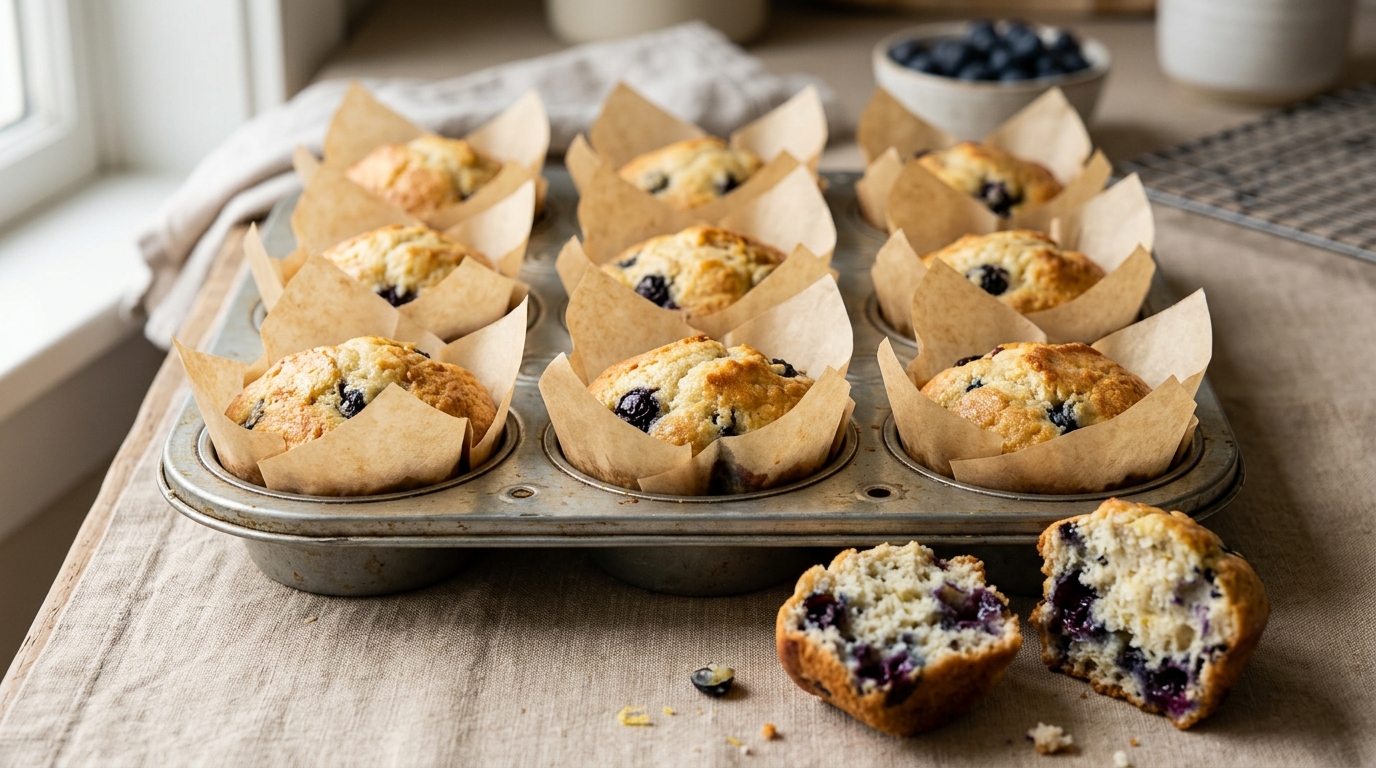
Ingredients
Equipment
Method
- Prepare the pan and oven. Heat a conventional oven to 375°F (190°C) with a rack in the center. Line all twelve muffin cups. Measure the ingredients before mixing, dry fresh blueberries if using them, and rub the lemon zest into the measured sugar with clean fingertips. This distributes the zest instead of leaving it in one fragrant clump.
- Combine the dry ingredients. Whisk flour, lemon sugar, baking powder, baking soda, and salt in the larger bowl. Reach the bottom and sides so there are no concentrated pockets of leavener. Break up any lumps in the baking powder with the back of a spoon. Keep the berries separate for now rather than burying them in the dry mixture.
- Whisk the wet ingredients. In the second bowl, whisk eggs, yogurt, milk, oil, lemon juice, and vanilla until evenly combined. Small yogurt flecks are acceptable, but there should not be a layer of oil sitting on top. Use a bowl large enough to whisk comfortably; splashing away part of the measured milk changes the batter balance.
- Fold and portion. Pour the wet mixture into the dry ingredients. Fold with a spatula until only a few flour streaks remain, then add the blueberries and fold just until the flour is incorporated. Divide evenly among twelve liners, roughly three-quarters full depending on the pan. Do not beat the batter to remove every small lump or press berries into a dense layer.
- Bake until the centers are set. Bake for about 22–26 minutes, allowing a little extra time for frozen fruit if needed. Tops should be lightly golden and spring back gently. A tester placed in crumb rather than a blueberry should come out without wet batter. Rotate the pan once near the end only if your oven browns unevenly; avoid repeatedly opening the door early.
- Cool before packing. Let the muffins stand in the pan for 5 minutes, then move them to a wire rack for at least 10 minutes before eating. Allow them to cool completely before sealing for storage. A warm muffin tears more readily and releases steam into a closed container, which can leave the paper liners damp.
Notes
Use plain Greek yogurt and measure flour lightly. Add frozen blueberries without thawing. Bake until the crumb is set, not simply until a berry-stained tester looks clean. Cooling time is included in the estimated total.
Keep cooled muffins in a covered container at a cool room temperature for up to 2 days for best quality. In a hot or humid kitchen, refrigerate them and use within 3–4 days. A paper towel beneath the muffins can absorb surface moisture; replace it if it becomes damp.
Wrap cooled muffins individually and freeze in a sealed bag for up to 2 months for best quality. Thaw a wrapped muffin in the refrigerator overnight. Unwrap and warm briefly if desired; short microwave bursts preserve softness better than a long heating cycle.