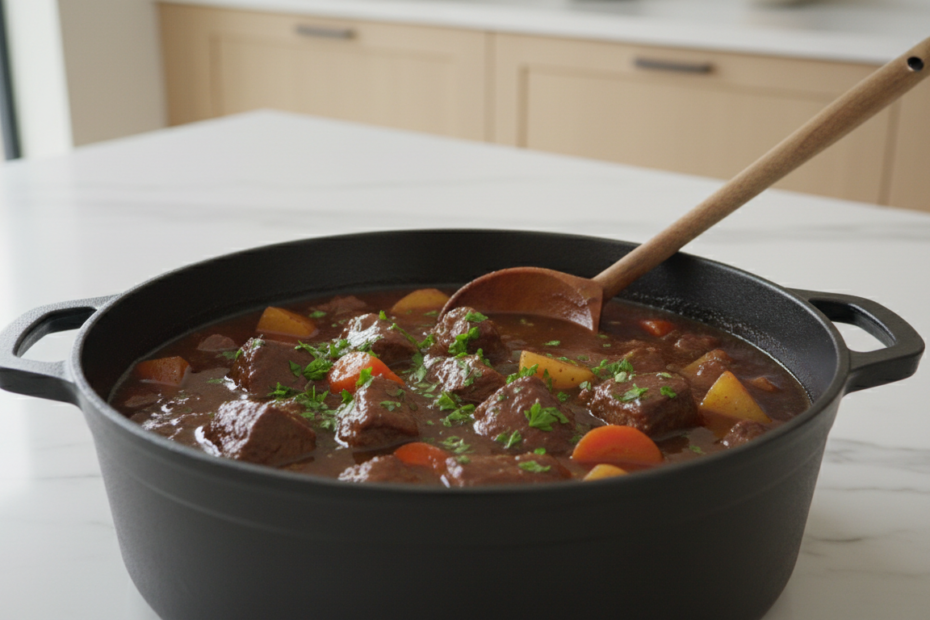
This Dutch oven beef stew recipe is everything a cold night demands — loaded with fork-tender beef chunks, hearty potatoes, and sweet carrots all simmered low and slow in a deeply rich red wine broth. Every spoonful is pure, soul-warming comfort food that tastes like it came straight from a farmhouse kitchen.
Follow this foolproof guide and you’ll have the most satisfying, thick, and absolutely delicious beef stew on your table tonight — no culinary degree required.
[toc]
Why You’ll Love This Beef Stew Recipe
This is not just any weeknight dinner — this beef stew recipe is the kind of meal that makes your whole house smell incredible for hours. The slow braise transforms cheap, tough cuts of beef into melt-in-your-mouth bites that are genuinely impressive without demanding hours of active kitchen work from you.
What sets this recipe apart is the flavor-building process. We sear the beef first to develop a deep, caramelized crust, then deglaze the pot with red wine to capture every last bit of those browned bits. The result is a broth so rich and glossy it rivals anything from a fancy restaurant.
It’s also incredibly versatile and meal-prep friendly. Make a big batch on Sunday and enjoy it all week — it honestly tastes even better on day two. Whether you’re feeding a hungry family or cooking for one with planned leftovers, this beef stew recipe delivers maximum reward for minimal effort.
Ingredients You’ll Need
- 2 lbs (900g) beef chuck roast, cut into 1.5-inch cubes — chuck is ideal because the fat and connective tissue melt during braising, creating incredible tenderness
- 3 tablespoons olive oil — for searing and building fond on the bottom of the pot
- 1 large yellow onion, diced — forms the aromatic base of the stew
- 4 cloves garlic, minced — adds depth and savory richness
- 3 tablespoons tomato paste — thickens the broth and adds umami complexity
- 1 cup dry red wine (such as Cabernet Sauvignon or Merlot) — deglazes the pan and gives the broth its signature depth
- 3 cups beef broth — the primary braising liquid; use low-sodium to control salt levels
- 1 lb (450g) baby potatoes, halved — absorb the broth beautifully and add heartiness
- 3 large carrots, cut into 1-inch chunks — add natural sweetness and color
- 2 stalks celery, sliced — adds subtle savory flavor to the background
- 2 tablespoons Worcestershire sauce — deepens the savory, umami notes
- 1 teaspoon fresh thyme (or ½ tsp dried) — earthy herb that pairs perfectly with beef
- 2 bay leaves — infuse the broth with subtle floral-herbal flavor
- 3 tablespoons all-purpose flour — coats the beef and helps thicken the stew naturally
- Salt and black pepper to taste
- Fresh parsley, chopped — for garnish and a pop of fresh color
Substitution notes: No red wine? Replace it with an equal amount of extra beef broth plus 1 tablespoon of balsamic vinegar for similar depth. Yukon Gold potatoes work beautifully in place of baby potatoes. For a gluten-free version, swap all-purpose flour with cornstarch or arrowroot powder.
Prep & Cooking Time
Prep Time: 20 minutes | Cook Time: 2 hours 15 minutes | Total Time: 2 hours 35 minutes | Servings: 6 generous portions
How to Make Beef Stew Recipe Step by Step
Making this classic beef stew recipe is all about layering flavors patiently — here’s exactly how to do it from start to finish.
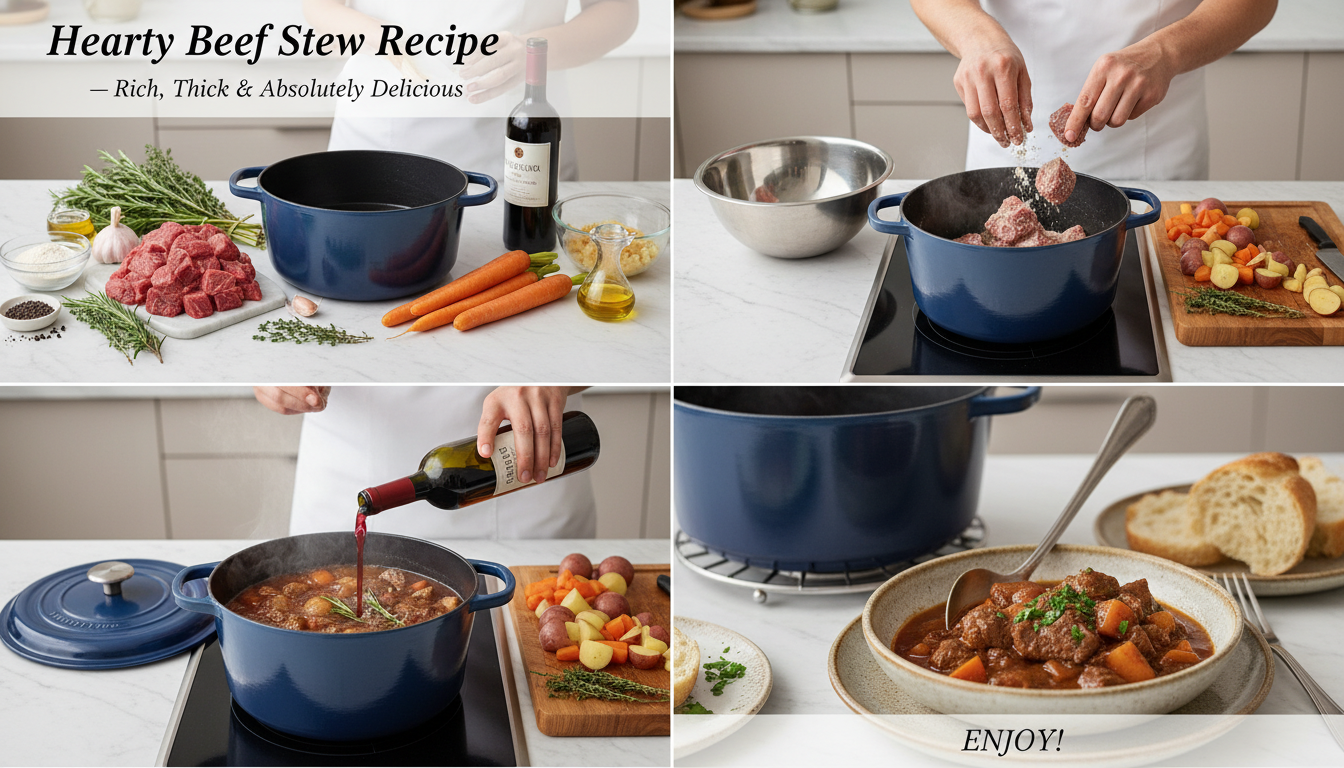
- Pat the beef dry and season generously. Use paper towels to thoroughly dry all beef cubes, then season with salt, black pepper, and the flour on all sides. Dry beef = better sear = deeper flavor. Don’t skip this step.
- Sear the beef in batches. Heat 2 tablespoons of olive oil in a large Dutch oven over medium-high heat until shimmering. Add the beef in a single layer — do NOT crowd the pan. Sear for 3–4 minutes per side until deeply browned. Work in 2–3 batches. Remove and set aside.
- Sauté the aromatics. Add the remaining olive oil to the same pot. Add diced onion and celery, cooking for 4–5 minutes until softened. Add the garlic and cook for another 60 seconds until fragrant.
- Add tomato paste and cook it down. Stir in the tomato paste and let it cook directly against the hot pan for 2 minutes, stirring constantly. This step caramelizes the paste and eliminates any tinny raw flavor.
- Deglaze with red wine. Pour in the red wine and use a wooden spoon to scrape up all the browned bits from the bottom of the pot. Let the wine reduce by half, about 3 minutes. Those browned bits are pure flavor gold.
- Add the broth and beef back in. Return the seared beef to the pot. Add beef broth, Worcestershire sauce, thyme, and bay leaves. Stir to combine, then bring to a gentle boil.
- Braise low and slow. Reduce heat to low, cover the Dutch oven with a tight-fitting lid, and let the stew simmer for 1 hour 30 minutes. The low, gentle heat is what transforms tough chuck into tender, silky beef.
- Add the vegetables. After 90 minutes, add potatoes and carrots. Stir gently, replace the lid, and continue simmering for another 30–35 minutes until the vegetables are completely fork-tender and the broth has thickened beautifully.
- Taste, adjust, and finish. Remove the bay leaves. Taste the stew and adjust seasoning with salt and pepper as needed. If you want an even thicker broth, mix 1 tablespoon of cornstarch with 2 tablespoons cold water and stir it in, simmering for 5 more minutes.
- Garnish and serve. Ladle into deep bowls and top with fresh chopped parsley. Serve immediately with crusty bread for dunking.
Nutritional Benefits of Beef Stew Recipe
Beyond its incredible taste, this beef stew recipe is genuinely nutritious. Beef chuck is an excellent source of high-quality protein, providing roughly 28–32 grams per 6-ounce serving, which supports muscle maintenance and satiety. It’s also rich in zinc, iron, and B vitamins — particularly B12 — which are essential for energy metabolism and immune function.
The vegetables in this stew add significant nutritional value as well. Carrots provide beta-carotene and vitamin A, potatoes deliver potassium and vitamin C, and celery contributes antioxidants and anti-inflammatory compounds. The red wine used in cooking contains resveratrol, a polyphenol associated with cardiovascular health when consumed in moderation.
Per serving (approximately 1.5 cups), this stew contains roughly 420 calories, 32g protein, 28g carbohydrates, and 18g fat. For more detailed nutritional guidance on beef and its health benefits, visit the NutritionValue.org beef chuck nutrition database.
Tips, Variations & Cooking Advice
1. Maximize Flavor with a Proper Sear: The single most important technique in any great beef stew recipe is achieving a deep, mahogany-brown crust on every piece of beef before braising. This Maillard reaction creates hundreds of flavor compounds that no amount of seasoning can replicate. Make sure your pan is truly hot before adding the meat, and resist the urge to move the beef — let it release naturally after 3–4 minutes.
2. Smart Substitutions: No Dutch oven? A heavy-bottomed oven-safe pot with a lid works perfectly. You can also transfer everything to a slow cooker after step 6 and cook on LOW for 8 hours or HIGH for 4–5 hours. For a lighter option, swap half the potatoes for turnips or parsnips to reduce the overall carbohydrate content.
3. Creative Variations: Turn this into a beef stew recipe with mushrooms by adding 8 oz of cremini mushrooms when you add the vegetables. For a Guinness-style stout stew, replace the red wine with one can of dark stout beer. Add a handful of frozen peas in the last 5 minutes of cooking for extra color and sweetness.
4. Storage Tips: Cool the stew completely before storing. It keeps in an airtight container in the refrigerator for up to 4 days. For best results, store the stew without added bread or garnish. Reheat gently on the stovetop over medium-low heat, adding a splash of broth if it has thickened too much overnight.
Common Mistakes to Avoid
Mistake #1 — Skipping the sear: Many home cooks try to save time by throwing raw beef directly into the broth. Don’t. The searing step is non-negotiable for depth of flavor. The browned exterior adds complexity that simply cannot be achieved any other way.
Mistake #2 — Boiling instead of simmering: A hard, rolling boil will make your beef tough and stringy, not tender. After the initial boil to get things started, you must reduce the heat to a gentle, lazy simmer. You should see just a few lazy bubbles breaking the surface. Low and slow is the entire philosophy of great beef stew.
Mistake #3 — Adding vegetables too early: If you add potatoes and carrots at the beginning, they’ll completely disintegrate into mush by the time the beef is tender. Always add root vegetables in the last 30–35 minutes of cooking so they hold their shape and have a pleasant, slightly firm texture.
Mistake #4 — Under-seasoning at the end: Braising concentrates flavors but can also mellow seasonings. Always taste your stew after it’s fully cooked and before serving, and adjust salt, pepper, and Worcestershire sauce as needed. A tiny squeeze of lemon juice at the end can also brighten the entire dish dramatically.
Serving Suggestions & Storage
This beef stew recipe is incredibly versatile when it comes to serving. The most classic pairing is a thick slice of crusty sourdough or French bread for soaking up that gorgeous, wine-rich broth. It’s also phenomenal served over creamy mashed potatoes, egg noodles, or a mound of buttery white rice.
For a lighter presentation, serve the stew alongside a simple green salad dressed with a tangy vinaigrette — the acidity cuts through the richness beautifully. A glass of the same red wine you used in cooking makes for a perfect table wine pairing. For an elevated dinner-party touch, garnish individual bowls with a small dollop of horseradish cream and fresh chives.
Storage: Refrigerate in an airtight container for up to 4 days. Freezing: This stew freezes exceptionally well. Let it cool completely, then freeze in individual portions in zip-lock freezer bags or sealed containers for up to 3 months. Reheating: Thaw overnight in the refrigerator, then reheat on the stovetop over medium-low heat, stirring occasionally and adding a splash of beef broth to restore the original consistency.
Conclusion
There’s a reason this classic beef stew recipe has been a beloved staple for generations — it’s rich, deeply satisfying, and utterly comforting in a way that very few dishes can match. With simple, accessible ingredients, a handful of easy techniques, and a bit of patience, you can create a bowl of pure magic that will have everyone at your table asking for seconds. Whether it’s a chilly Sunday evening or a weeknight when you need something truly special, this is the recipe to reach for. If you loved this recipe, be sure to check out our Ultimate Slow Cooker Pot Roast and our Cozy Homemade Chicken Soup for more hearty, soul-warming meals. Now grab your Dutch oven and get cooking — your best bowl of beef stew is waiting!
Frequently Asked Questions About Beef Stew Recipe
What is the best cut of beef for a beef stew recipe?
Beef chuck roast is widely considered the gold standard for any beef stew recipe. Its high content of collagen and connective tissue breaks down during the long, slow braise, transforming into rich gelatin that makes the broth thick, glossy, and incredibly flavorful. Other excellent options include beef brisket, beef shank, and short ribs. Avoid lean cuts like sirloin or tenderloin — they lack the fat and connective tissue needed for proper tenderness during braising and will become dry and tough.
Can I make this beef stew recipe in a slow cooker or Instant Pot?
Absolutely! For a slow cooker beef stew, complete steps 1 through 6 on the stovetop (the searing and deglazing steps are still important), then transfer everything to your slow cooker. Cook on LOW for 7–8 hours or HIGH for 4–5 hours, adding the potatoes and carrots in the last 2 hours on LOW or the last 1 hour on HIGH. For an Instant Pot, use the Sauté function for searing and building the base, then seal and pressure cook on HIGH for 35 minutes with a 15-minute natural pressure release before adding and sautéing the vegetables.
How do I make my beef stew thicker?
There are several effective methods. First, the flour coating on the beef before searing naturally thickens the broth as it cooks. If you want it even thicker, create a slurry by mixing 1–2 tablespoons of cornstarch with an equal amount of cold water, then stir it into the simmering stew during the last 5–10 minutes of cooking. Alternatively, you can remove about 1 cup of the cooked potato and mash it, then stir it back into the pot — this is a wonderfully natural way to add body to your beef stew without any additional thickeners.
Can I make this beef stew recipe ahead of time?
Yes — and you absolutely should! This beef stew recipe is one of those rare dishes that genuinely improves with time. Making it a day ahead allows all the flavors to meld and deepen overnight in the refrigerator. Simply reheat gently on the stovetop over medium-low heat, stirring occasionally. You may need to add a small splash of beef broth if the stew has thickened considerably during storage. It’s a perfect recipe for Sunday meal prep, dinner parties where you want stress-free hosting, or any situation where having a ready-made, spectacular meal is a serious advantage.