Buffalo Chicken Potato Meal Prep Bowls
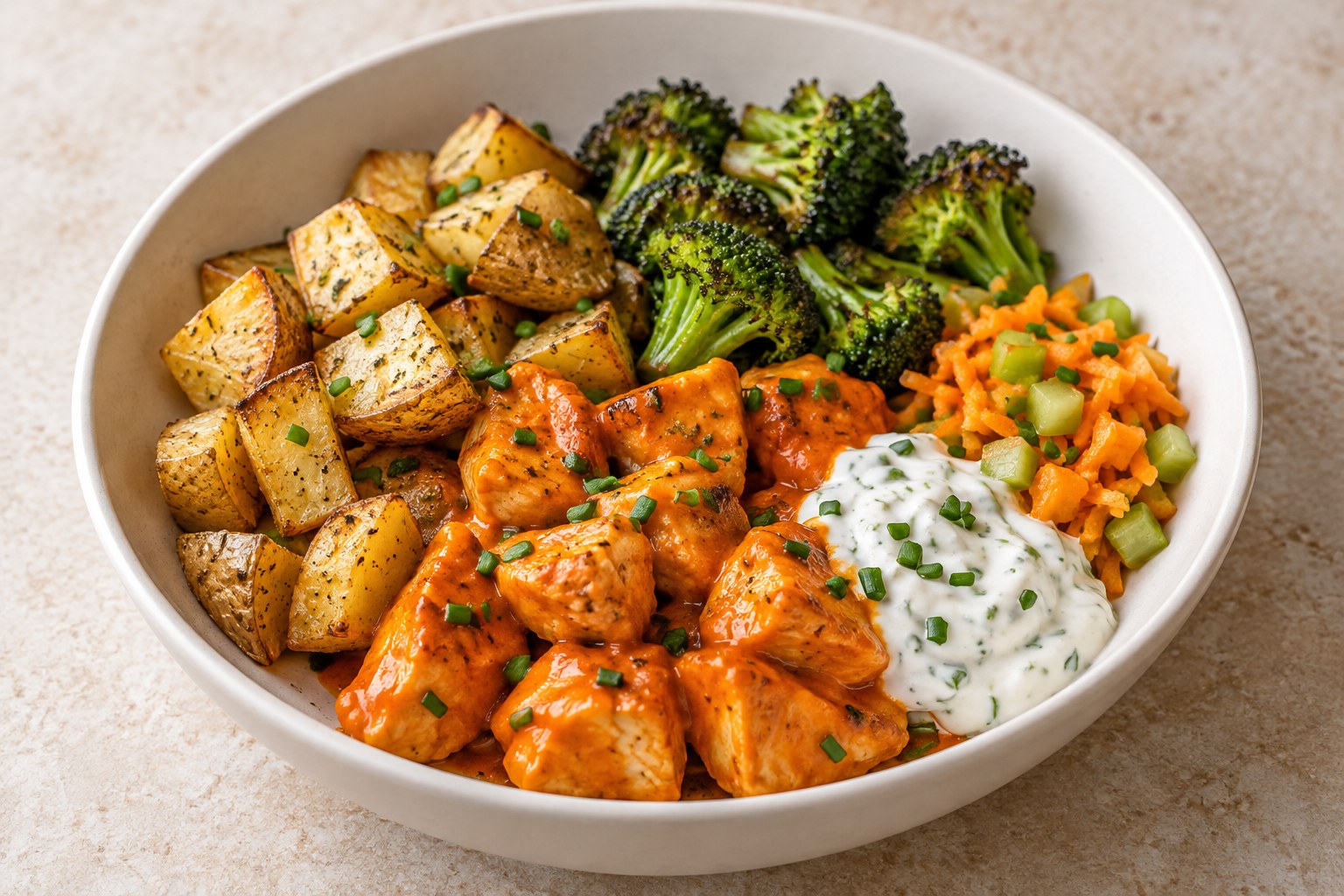
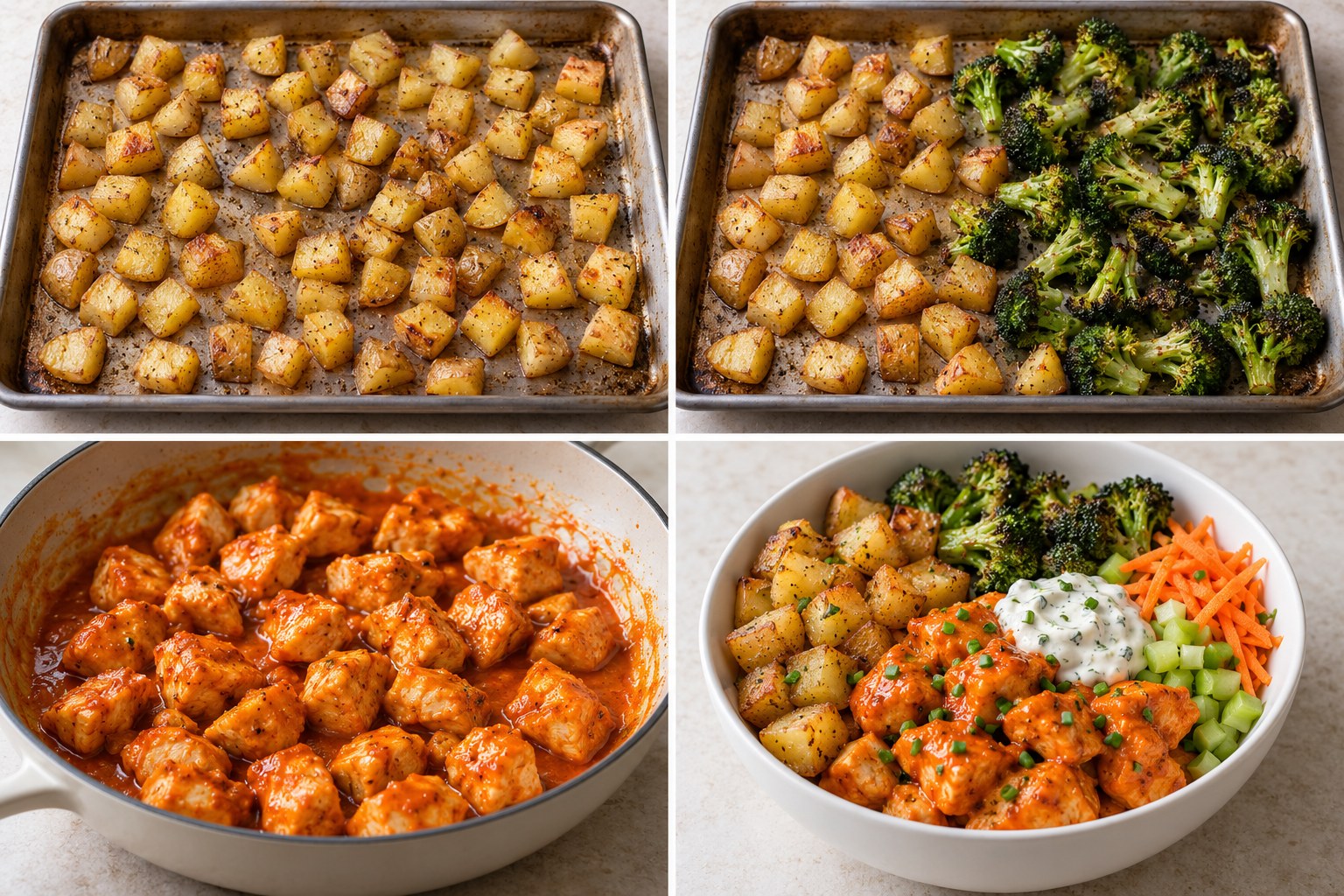
Buffalo chicken meal prep bowls combine lightly sauced chicken breast bites, roasted potatoes, broccoli, and a cool herb yogurt topping. Fresh celery and carrot add crunch after reheating, so the finished bowl has more contrast than a container of softened vegetables.
The potatoes roast while the chicken cooks in a skillet. Toss the chicken in buffalo-style sauce after it is safely cooked rather than coating raw pieces in a sauce that may scorch. The herb yogurt is mixed from plain ingredients and packed separately, ready for the final spoonful at lunch.
Recipe at a Glance
| Servings | 4 bowls |
|---|---|
| Prep time | 20 minutes |
| Cook time | 35 minutes |
| Estimated total | 55 minutes |
| Category | High Protein |
| Main equipment | Large rimmed baking sheet |
Times are estimates. Ingredient size, appliance performance, and grain package directions can change them.
Why Make This Recipe
- Chicken and Greek yogurt supply the main protein ingredients.
- Roasted potato cubes provide a grain-free starch option.
- Separate hot and cold components make the packed bowls easier to reheat.
Ingredient Notes and Substitutions
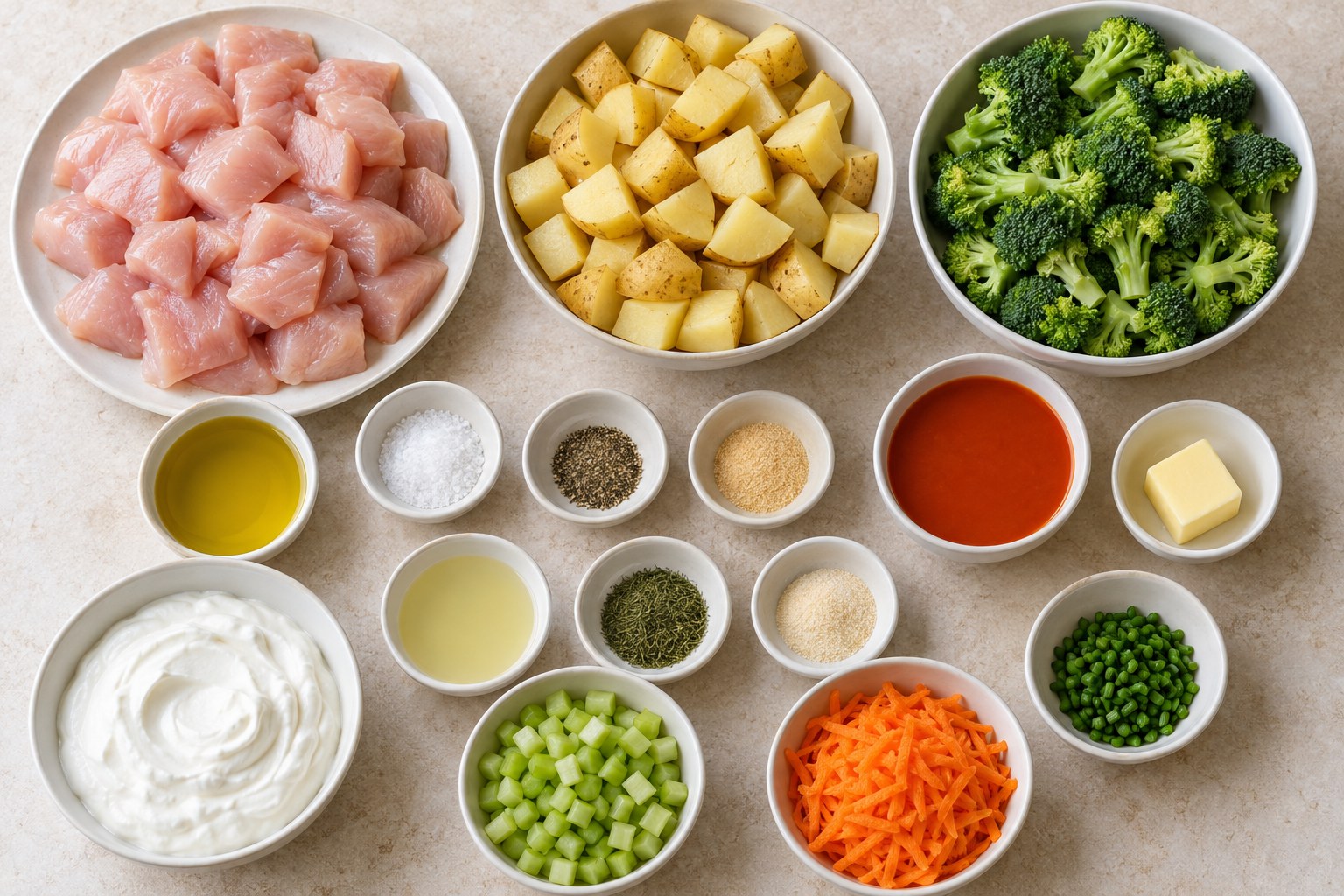
Dice potatoes evenly
Cut potatoes into roughly ¾-inch pieces and leave the skin on if clean and sound. Large uneven chunks stay firm inside while smaller pieces brown too quickly. Spread them in a single layer rather than making a deep pile on the tray.
Choose vinegar-based hot sauce
Use a pourable cayenne or similar pepper sauce rather than a thick sweet chili sauce. Heat and salt vary widely by brand. The measured amount makes a noticeable coating, so use a milder product if you prefer less heat.
Keep the yogurt cold
Yogurt, lemon, dill, chives, and onion powder make a cool topping. Do not add it to the chicken skillet; high heat changes the texture and removes the intended contrast. Thin with a teaspoon of water only if it is too stiff to spoon.
How to Make Buffalo Chicken Potato Meal Prep Bowls
1. Begin roasting potatoes
Heat a conventional oven to 425°F (220°C). Toss potatoes with 1 tablespoon oil, ½ teaspoon salt, and half the pepper. Spread on a large lined tray and roast for 15 minutes. Use a second tray if the potatoes cannot fit in a single layer.
2. Add the broccoli
Toss broccoli with ½ tablespoon oil and spread beside the potatoes, turning the potatoes at the same time. Roast for about 15–20 minutes more, until the potatoes are tender and broccoli edges have some color. Remove finished broccoli earlier if needed.
3. Cook the chicken in batches
Pat chicken dry and season with garlic powder, remaining salt, and remaining pepper. Heat the remaining ½ tablespoon oil in the skillet. Cook the chicken in two batches over medium-high heat for about 6–9 minutes per batch, turning and checking several thick pieces for 165°F (74°C).
4. Coat with buffalo sauce
Return cooked chicken to the pan, reduce the heat, and add hot pepper sauce and butter. Toss for about 1 minute, just until the butter melts and the sauce coats the chicken. Remove from the heat rather than boiling the sauce until it turns sticky and concentrated.
5. Mix the cool topping
Stir yogurt, lemon juice, dill, onion powder, and chives together. Divide into four small pots. Prepare celery and carrot with clean utensils and keep them refrigerated. Divide potatoes, broccoli, and chicken evenly among four bowls.
6. Serve or pack safely
For immediate serving, add the celery, carrot, and yogurt. For meal prep, chill the cooked components promptly in shallow containers and keep the cold toppings separate. Reheat chicken, potatoes, and broccoli to 165°F (74°C) before adding the chilled topping.
Tips and Troubleshooting
Potatoes stay firm
Cut them smaller and check with a knife rather than judging from browned edges. Crowding the tray traps steam. If needed, finish potatoes separately after removing cooked broccoli.
Sauce tastes too strong
Use the herb yogurt at serving and choose a milder hot sauce next time. Reducing a salty hot sauce over high heat concentrates it further rather than calming it down.
Chicken dries out
Use evenly sized pieces and check doneness early. Coat cooked chicken quickly, then stop cooking; the sauce does not need a long reduction.
Variations
- Use boneless chicken thighs cut into the same size pieces, checking for 165°F (74°C). Cook time may increase.
- Replace celery and carrot with a separate undressed cabbage slaw. Keep it cool until the hot bowl has finished reheating.
How to Pack These Meal Prep Bowls
Pack potatoes and broccoli alongside the chicken rather than under a deep layer of sauce. Store celery, carrot, and yogurt separately. For best potato texture, reheat the potatoes in an oven or air fryer if available, while still checking that the reheated meal reaches 165°F (74°C). Microwave reheating gives a softer result.
Storage, Freezing, and Reheating
Refrigerate within the safe cooling window and use within 3–4 days at 40°F (4°C) or colder. Store the yogurt and raw vegetables in their own sealed containers.
Freeze the buffalo chicken, potatoes, and broccoli without yogurt or raw vegetables for up to 1 month for best quality. The potatoes and broccoli soften after freezing. Thaw in the refrigerator before reheating.
Refrigerate perishable components promptly in shallow containers, within 2 hours of cooking or serving, or within 1 hour above 90°F (32°C). Keep cold components separate from food you plan to reheat.
Frequently Asked Questions
Are these bowls very hot?
The answer depends on the hot sauce. Choose a mild vinegar-based pepper sauce for a gentler batch and keep extra sauce on the table for people who want more heat.
Can I use sweet potatoes?
Yes, cut them into similar cubes and roast until tender. They may soften sooner than regular potatoes. Their sweeter flavor also changes the balance of the buffalo sauce.
Can I use a bottled ranch dressing?
Yes, as a serving alternative. Omit the yogurt, lemon, dill, onion powder, and chives if replacing that entire topping. Flavor, allergens, and protein contribution will change.
Buffalo Chicken Potato Meal Prep Bowls
Ingredients
Equipment
Method
- Begin roasting potatoes. Heat a conventional oven to 425°F (220°C). Toss potatoes with 1 tablespoon oil, ½ teaspoon salt, and half the pepper. Spread on a large lined tray and roast for 15 minutes. Use a second tray if the potatoes cannot fit in a single layer.
- Add the broccoli. Toss broccoli with ½ tablespoon oil and spread beside the potatoes, turning the potatoes at the same time. Roast for about 15–20 minutes more, until the potatoes are tender and broccoli edges have some color. Remove finished broccoli earlier if needed.
- Cook the chicken in batches. Pat chicken dry and season with garlic powder, remaining salt, and remaining pepper. Heat the remaining ½ tablespoon oil in the skillet. Cook the chicken in two batches over medium-high heat for about 6–9 minutes per batch, turning and checking several thick pieces for 165°F (74°C).
- Coat with buffalo sauce. Return cooked chicken to the pan, reduce the heat, and add hot pepper sauce and butter. Toss for about 1 minute, just until the butter melts and the sauce coats the chicken. Remove from the heat rather than boiling the sauce until it turns sticky and concentrated.
- Mix the cool topping. Stir yogurt, lemon juice, dill, onion powder, and chives together. Divide into four small pots. Prepare celery and carrot with clean utensils and keep them refrigerated. Divide potatoes, broccoli, and chicken evenly among four bowls.
- Serve or pack safely. For immediate serving, add the celery, carrot, and yogurt. For meal prep, chill the cooked components promptly in shallow containers and keep the cold toppings separate. Reheat chicken, potatoes, and broccoli to 165°F (74°C) before adding the chilled topping.
Notes
More High Protein Recipes
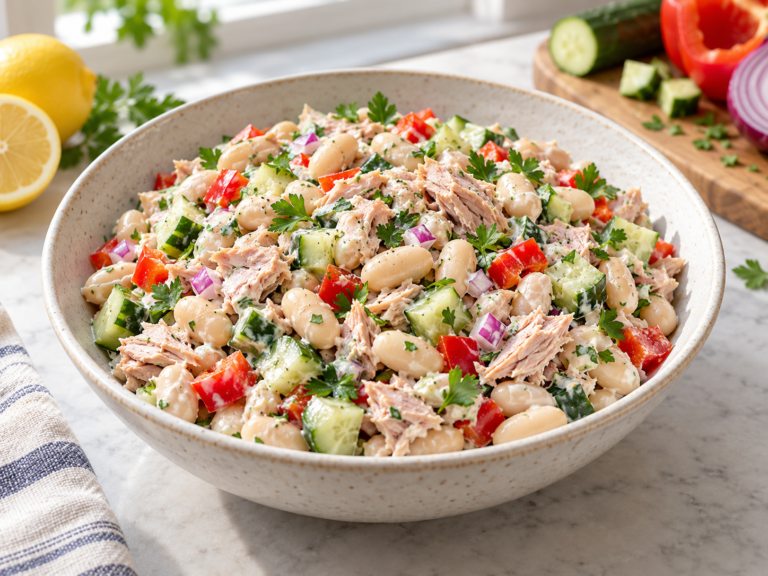
Browse the High Protein collection for more protein-focused meals, or try the tuna and white bean salad for another lunch idea.
Save this recipe to your Pinterest meal prep board so you can find the ingredient list and packing tips when planning your next batch.
Cooking and Storage References
General food handling guidance: safe cooking temperatures, refrigerated storage times, and safe preparation and cooling.