Teriyaki Salmon Edamame Rice Bowls
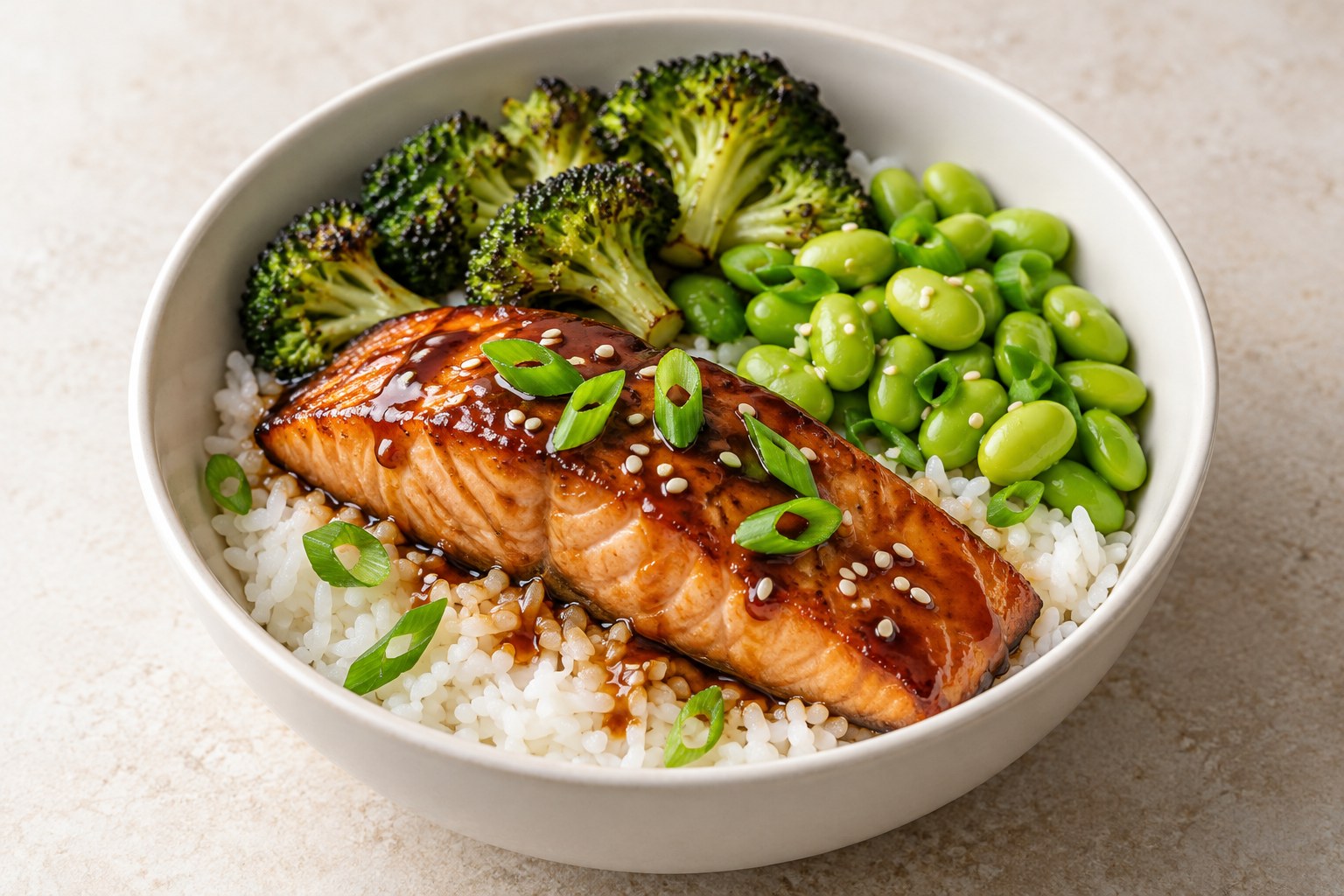
These salmon edamame rice bowls pair roasted salmon with broccoli, white rice, and shelled edamame. A small saucepan of teriyaki-style sauce adds a glossy finish without requiring the fish to sit in a sugary marinade while the vegetables roast.
Start with the broccoli, then add the salmon later so both can finish without drying out the fish. The sauce stays separate until the end, which gives you control over the amount on each bowl. For later lunches, keep cucumber or other cold extras out of the reheating container if you choose to add them.
Recipe at a Glance
| Servings | 4 bowls |
|---|---|
| Prep time | 20 minutes |
| Cook time | 30 minutes |
| Estimated total | 50 minutes |
| Category | High Protein |
| Main equipment | Rimmed baking sheet and parchment |
Times are estimates. Ingredient size, appliance performance, and grain package directions can change them.
Why Make This Recipe
- Salmon and edamame provide two substantial protein ingredients.
- Roasting the broccoli before adding fish gives the vegetables a useful head start.
- Cooking the sauce separately keeps a sweet glaze from burning on the tray.
Ingredient Notes and Substitutions
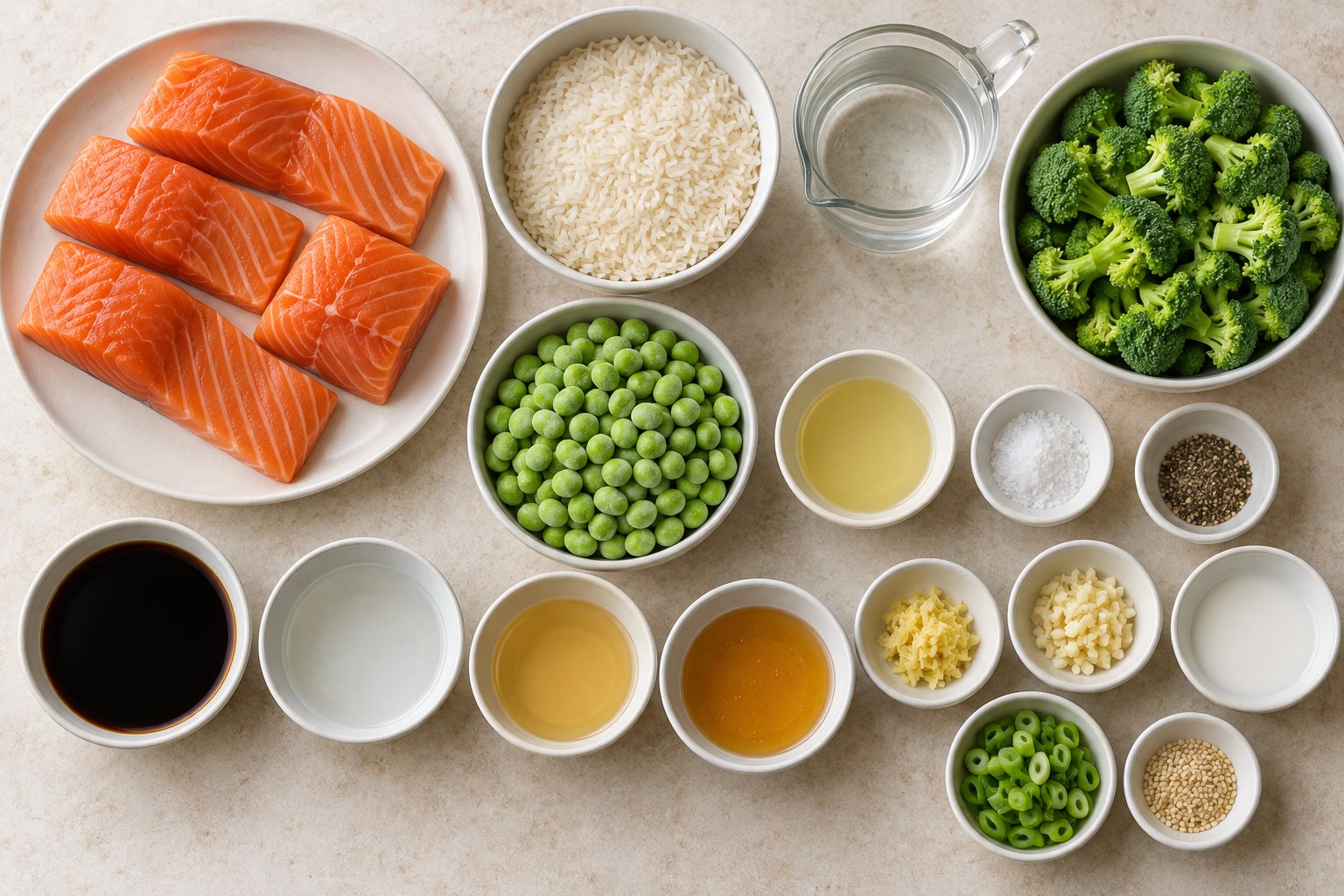
Select similar salmon portions
Use four portions of about 175 g each, with similar thickness when possible. A thin tail piece will finish earlier than a thick center cut. Skin-on portions work well; place them skin-side down and serve with or without the skin as preferred.
Use shelled edamame
Frozen shelled edamame can be cooked according to its package. Beans still inside pods are not a cup-for-cup substitute for shelled beans. Drain them after cooking so the bowls do not collect water underneath the rice.
Keep sauce away from raw fish
The sauce is cooked in a clean saucepan and spooned over cooked salmon. Do not use a spoon that touched raw fish to finish the bowls. Low-sodium soy sauce varies in saltiness, so additional salt is limited to the broccoli.
How to Make Teriyaki Salmon Edamame Rice Bowls
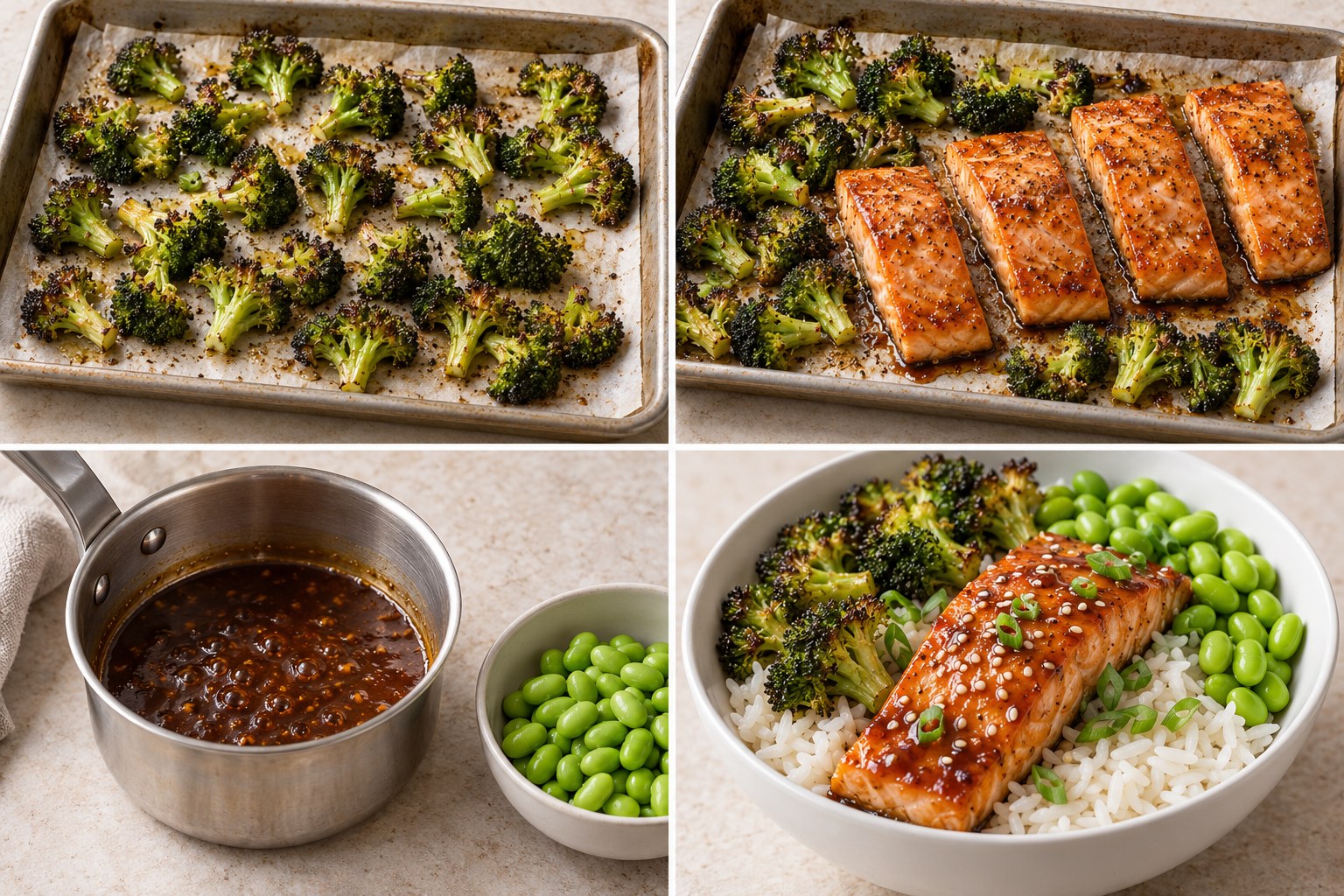
1. Start the grain and oven
Heat a conventional oven to 400°F (200°C). Cook the rinsed jasmine rice with its package-specified water in a covered saucepan. When tender, remove it from the heat and let it rest according to the package before fluffing. Line the baking sheet with parchment.
2. Give broccoli a head start
Toss the broccoli with 1½ tablespoons oil, salt, and half the pepper. Spread out on the sheet and roast for 10 minutes. Pat the salmon dry on a separate plate, rub with the remaining ½ tablespoon oil, and season with the remaining pepper.
3. Roast the salmon
Move the broccoli aside and add the salmon, skin-side down if using skin-on fish. Roast about 10–16 minutes more, depending on thickness, checking the thickest part for 145°F (63°C). Remove individual finished portions and continue broccoli separately if it needs longer.
4. Simmer the sauce
In the clean small saucepan, combine soy sauce, sauce water, rice vinegar, honey, ginger, and garlic. Simmer for 2 minutes. Stir the cornstarch slurry again, add it, and simmer about 1 minute until lightly thickened. It should pour easily, not set into a paste.
5. Cook the edamame
Cook shelled edamame according to its package and drain well. Divide rice, broccoli, and edamame among four bowls, then add one salmon portion to each. Spoon the sauce over the fish and finish with green onions and optional sesame seeds.
6. Pack and reheat gently
For meal prep, promptly refrigerate the cooked components in shallow containers and store extra sauce separately. Reheat a covered portion with a small splash of water, using short microwave intervals and checking for 165°F (74°C). Add fresh green onions after heating.
Tips and Troubleshooting
The sauce thickens too much
Whisk in hot water a teaspoon at a time. Cornstarch continues thickening as the sauce cools; keep the initial texture slightly looser than you want on the finished bowl.
Broccoli burns before the fish is ready
Keep florets similar in size and check them when adding salmon. Transfer finished broccoli to a clean bowl rather than leaving it on the tray for a thick fish portion.
Salmon dries during reheating
Warm just one serving at a time, covered, with a little moisture. Break the fish into large flakes only after heating, rather than exposing many small pieces to repeated microwave cycles.
Variations
- Replace broccoli with similarly sized cauliflower florets, allowing more roasting time before adding the fish if needed.
- Use maple syrup in place of honey. For gluten-free ingredients, use suitable tamari and check every packaged sauce; the flavor and salt level may change.
How to Pack These Meal Prep Bowls
Place the salmon beside the rice instead of hiding it under a thick pile of grain. This makes the fish easier to remove if you prefer heating the rice and vegetables first. Keep green onions separate for the freshest finish. Use an insulated lunch bag with cold packs whenever refrigeration is not immediately available.
Storage, Freezing, and Reheating
Keep refrigerated at 40°F (4°C) or colder and use within 3–4 days; for the best salmon texture, plan to eat these bowls earlier in that period. Keep them cold until serving or reheating.
Freeze salmon, rice, broccoli, and edamame in separate portions for up to 1 month for best quality. Freeze sauce separately and add fresh green onions after thawing and reheating.
Refrigerate perishable components promptly in shallow containers, within 2 hours of cooking or serving, or within 1 hour above 90°F (32°C). Keep cold components separate from food you plan to reheat.
Frequently Asked Questions
Can I use another rice?
Yes. Cook your chosen rice separately according to its own package. Brown rice takes longer and needs different liquid than jasmine rice, so start it before the oven work.
Do I need to marinate the salmon?
No. This method seasons the fish simply and finishes it with cooked sauce. A long sweet marinade is unnecessary and can scorch while the center of a thick portion is still cooking.
Can I use ready-cooked salmon?
Use cooked salmon only if it has been handled and refrigerated safely. Omit its roasting stage, cook the broccoli until tender, and reheat the fish separately to 165°F (74°C) if serving the bowl hot.
Teriyaki Salmon Edamame Rice Bowls
Ingredients
Equipment
Method
- Start the grain and oven. Heat a conventional oven to 400°F (200°C). Cook the rinsed jasmine rice with its package-specified water in a covered saucepan. When tender, remove it from the heat and let it rest according to the package before fluffing. Line the baking sheet with parchment.
- Give broccoli a head start. Toss the broccoli with 1½ tablespoons oil, salt, and half the pepper. Spread out on the sheet and roast for 10 minutes. Pat the salmon dry on a separate plate, rub with the remaining ½ tablespoon oil, and season with the remaining pepper.
- Roast the salmon. Move the broccoli aside and add the salmon, skin-side down if using skin-on fish. Roast about 10–16 minutes more, depending on thickness, checking the thickest part for 145°F (63°C). Remove individual finished portions and continue broccoli separately if it needs longer.
- Simmer the sauce. In the clean small saucepan, combine soy sauce, sauce water, rice vinegar, honey, ginger, and garlic. Simmer for 2 minutes. Stir the cornstarch slurry again, add it, and simmer about 1 minute until lightly thickened. It should pour easily, not set into a paste.
- Cook the edamame. Cook shelled edamame according to its package and drain well. Divide rice, broccoli, and edamame among four bowls, then add one salmon portion to each. Spoon the sauce over the fish and finish with green onions and optional sesame seeds.
- Pack and reheat gently. For meal prep, promptly refrigerate the cooked components in shallow containers and store extra sauce separately. Reheat a covered portion with a small splash of water, using short microwave intervals and checking for 165°F (74°C). Add fresh green onions after heating.
Notes
More High Protein Recipes
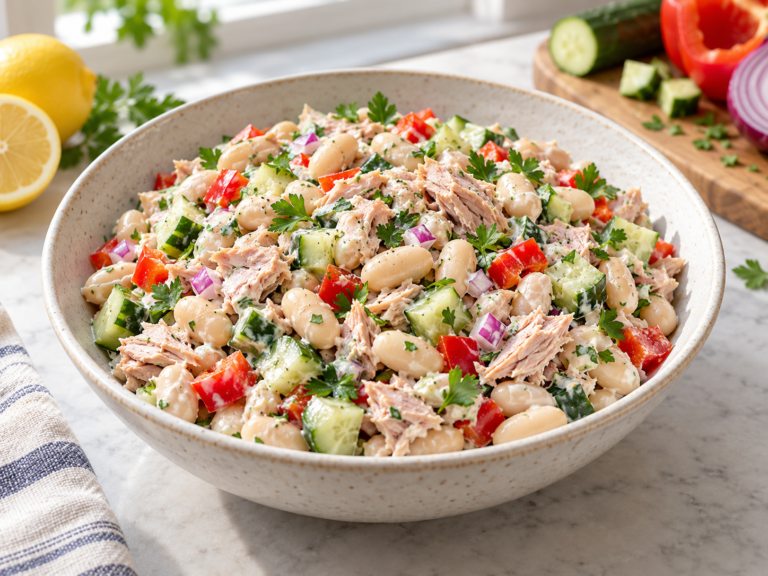
Browse the High Protein collection for more protein-focused meals, or try the tuna and white bean salad for another lunch idea.
Save this recipe to your Pinterest meal prep board so you can find the ingredient list and packing tips when planning your next batch.
Cooking and Storage References
General food handling guidance: safe cooking temperatures, refrigerated storage times, and safe preparation and cooling.