Peanut Tofu Edamame Quinoa Bowls
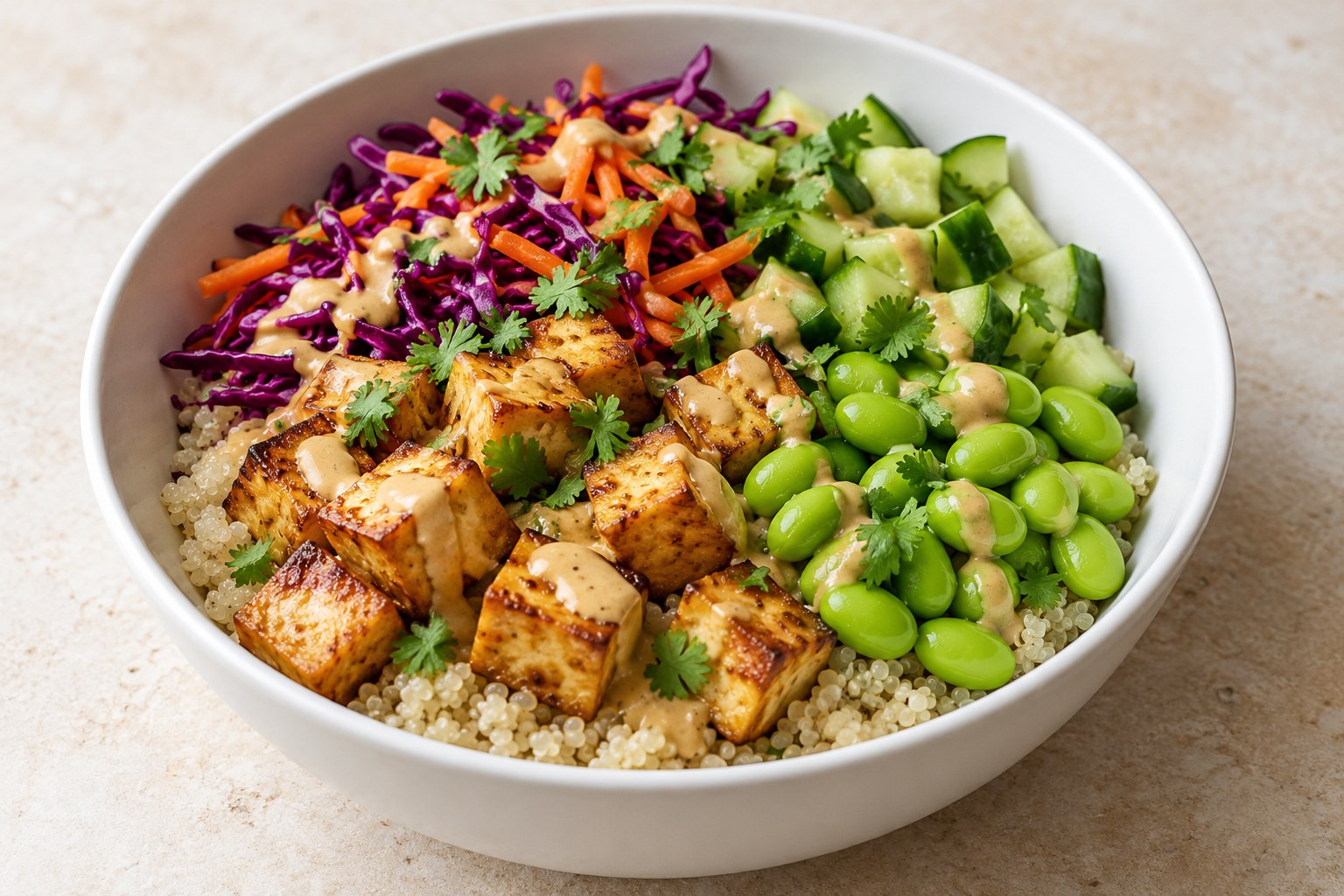
Tofu edamame quinoa bowls combine baked tofu cubes, fluffy quinoa, shelled edamame, crunchy slaw, and a peanut-lime sauce. Tofu and edamame make this a protein-focused plant-based lunch, while the grain and vegetables provide a useful contrast of textures.
The tofu needs time to drain before it goes into the oven. That extra preparation helps the coating brown and keeps the cubes from sitting in released water. Bake the tofu while the quinoa cooks, then store the crisp vegetables and sauce separately from the components you intend to reheat.
Recipe at a Glance
| Servings | 4 bowls |
|---|---|
| Prep time | 35 minutes |
| Cook time | 30 minutes |
| Estimated total | 65 minutes |
| Category | High Protein |
| Main equipment | Rimmed baking sheet and parchment |
Times are estimates. Ingredient size, appliance performance, and grain package directions can change them.
Why Make This Recipe
- Tofu, edamame, quinoa, and peanut butter all contribute protein.
- The oven cooks the tofu with minimal turning compared with pan-frying several batches.
- The sauce is mixed cold and can be loosened easily after refrigeration.
Ingredient Notes and Substitutions
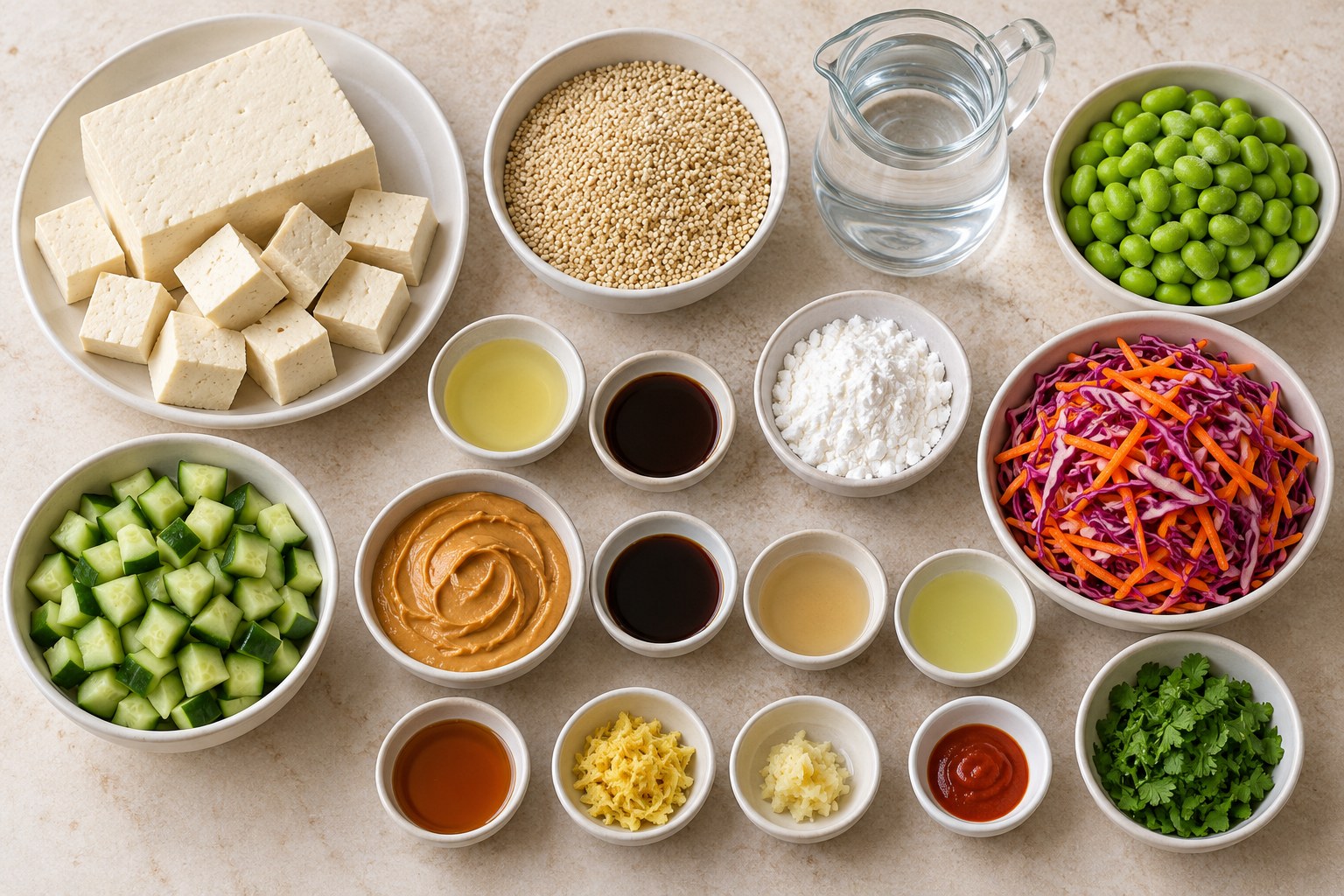
Use extra-firm tofu
Choose 800 g extra-firm tofu, preferably a variety with at least 12 g protein per 100 g on its label. Silken tofu is too delicate for cubes. Press wrapped tofu under a moderate weight for about 15 minutes, following the package if it gives specific preparation instructions.
Keep the coating light
The tofu is tossed with a measured amount of oil, soy sauce, and cornstarch. It should look lightly dusted rather than covered in a thick batter. Spread cubes apart on the tray so hot air can reach their edges.
Choose smooth peanut butter
Smooth peanut butter mixes most easily into the sauce. Unsweetened varieties let the measured maple syrup control sweetness. Add warm water gradually; different brands produce noticeably different thicknesses, especially after the sauce chills.
How to Make Peanut Tofu Edamame Quinoa Bowls
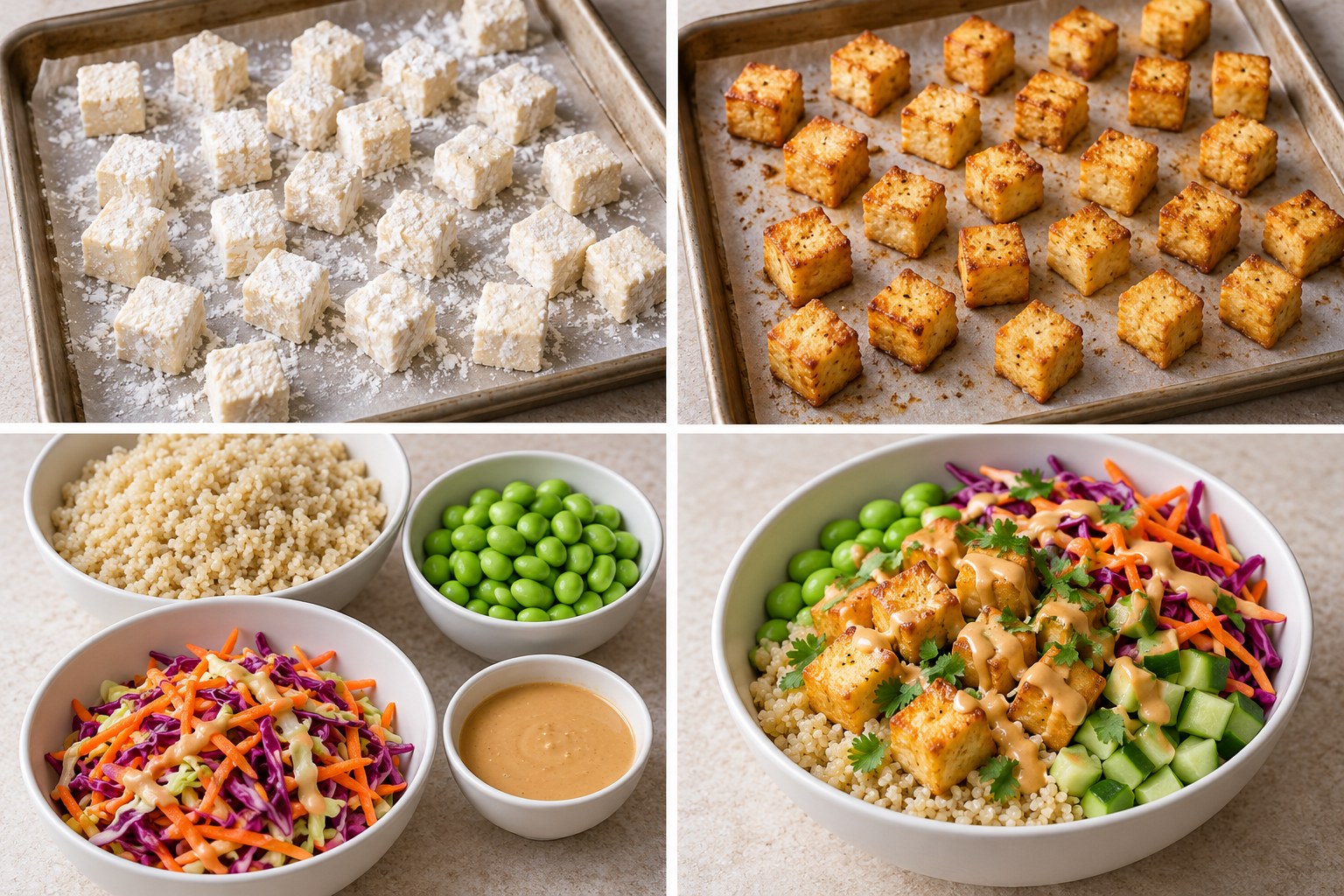
1. Press and prepare tofu
Wrap the drained tofu in a clean towel and press under a plate with a moderate weight for about 15 minutes. Heat a conventional oven to 425°F (220°C). Cut the pressed tofu into roughly 1-inch cubes and line a large baking sheet with parchment.
2. Coat and bake
Toss the cubes gently with oil and the tablespoon soy sauce. Sprinkle with cornstarch and turn to distribute a thin coating. Spread with space between the cubes. Bake about 25–30 minutes, turning after 15 minutes, until the edges are lightly browned and firm.
3. Cook the quinoa and edamame
While tofu bakes, simmer the quinoa with package-specified water in the lidded saucepan, usually about 15 minutes followed by a 5-minute covered rest. Fluff with a fork. Cook shelled edamame separately according to its package and drain thoroughly.
4. Whisk the peanut sauce
Mix peanut butter, sauce soy sauce, rice vinegar, lime juice, maple syrup, ginger, garlic, and optional sriracha. Whisk in 4 tablespoons warm water, then add more a teaspoon at a time until the sauce pours in a thick ribbon. Keep it separate from the slaw.
5. Build four bowls
Divide quinoa, baked tofu, and edamame evenly among four bowls. Add the cabbage-carrot slaw, cucumber, cilantro, and peanut sauce for immediate serving. For meal prep, pack the raw vegetables and sauce in separate compartments or small containers.
6. Chill and serve later
Refrigerate the cooked components promptly in shallow containers. Reheat quinoa, tofu, and edamame to 165°F (74°C), adding a little water to the grain. Tofu softens during storage; add the cool vegetables and sauce after heating. Loosen chilled sauce with a little water if needed.
Tips and Troubleshooting
Tofu is pale
Drain and press it first, avoid crowding the tray, and give it the full baking stage. Very wet tofu will steam before its edges can color.
Sauce seems separated
Stir or whisk firmly while adding warm water gradually. Peanut butter can tighten at first when liquid is added, then smooth out as you keep mixing.
The slaw goes limp
Keep it undressed until serving. Mixing all four portions with sauce on prep day makes the vegetables softer and prevents you from heating only the cooked components.
Variations
- Use sunflower seed butter instead of peanut butter if suitable for your dietary needs, checking all labels for cross-contact. Its flavor and protein content differ.
- Swap cucumber for thinly sliced radishes for a different crunch. Keep them separate from the hot quinoa and tofu in storage.
How to Pack These Meal Prep Bowls
Divide tofu cubes and edamame evenly across four containers before filling gaps with quinoa. Use separate containers for the peanut sauce and raw vegetables. If you prefer a fully cold bowl, keep every component refrigerated until lunch and loosen the sauce immediately before eating.
Storage, Freezing, and Reheating
Refrigerate at 40°F (4°C) or colder and use within 3–4 days. Baked tofu loses crispness in storage, but the sauce and fresh slaw give the bowls contrast when served.
Freeze tofu, quinoa, and edamame without slaw, cucumber, or sauce for up to 1 month for best quality. Thawed tofu becomes more porous and chewy. Make the fresh toppings and sauce separately.
Refrigerate perishable components promptly in shallow containers, within 2 hours of cooking or serving, or within 1 hour above 90°F (32°C). Keep cold components separate from food you plan to reheat.
Frequently Asked Questions
Can I use silken tofu?
No. It breaks apart easily and does not suit this pressed-cube baking method. Use extra-firm tofu and check the package protein value if protein contribution is important to your meal planning.
Will the tofu stay crispy for four days?
No. Refrigeration softens the coating. The recipe is still useful for meal prep, but the just-baked texture and the reheated texture are different. Keep sauce away from the cubes until serving.
Is this recipe gluten-free?
Only if you use suitable gluten-free tamari in place of soy sauce and verify every packaged ingredient, including sriracha. Quinoa itself does not make the complete recipe automatically gluten-free.
Peanut Tofu Edamame Quinoa Bowls
Ingredients
Equipment
Method
- Press and prepare tofu. Wrap the drained tofu in a clean towel and press under a plate with a moderate weight for about 15 minutes. Heat a conventional oven to 425°F (220°C). Cut the pressed tofu into roughly 1-inch cubes and line a large baking sheet with parchment.
- Coat and bake. Toss the cubes gently with oil and the tablespoon soy sauce. Sprinkle with cornstarch and turn to distribute a thin coating. Spread with space between the cubes. Bake about 25–30 minutes, turning after 15 minutes, until the edges are lightly browned and firm.
- Cook the quinoa and edamame. While tofu bakes, simmer the quinoa with package-specified water in the lidded saucepan, usually about 15 minutes followed by a 5-minute covered rest. Fluff with a fork. Cook shelled edamame separately according to its package and drain thoroughly.
- Whisk the peanut sauce. Mix peanut butter, sauce soy sauce, rice vinegar, lime juice, maple syrup, ginger, garlic, and optional sriracha. Whisk in 4 tablespoons warm water, then add more a teaspoon at a time until the sauce pours in a thick ribbon. Keep it separate from the slaw.
- Build four bowls. Divide quinoa, baked tofu, and edamame evenly among four bowls. Add the cabbage-carrot slaw, cucumber, cilantro, and peanut sauce for immediate serving. For meal prep, pack the raw vegetables and sauce in separate compartments or small containers.
- Chill and serve later. Refrigerate the cooked components promptly in shallow containers. Reheat quinoa, tofu, and edamame to 165°F (74°C), adding a little water to the grain. Tofu softens during storage; add the cool vegetables and sauce after heating. Loosen chilled sauce with a little water if needed.
Notes
More High Protein Recipes
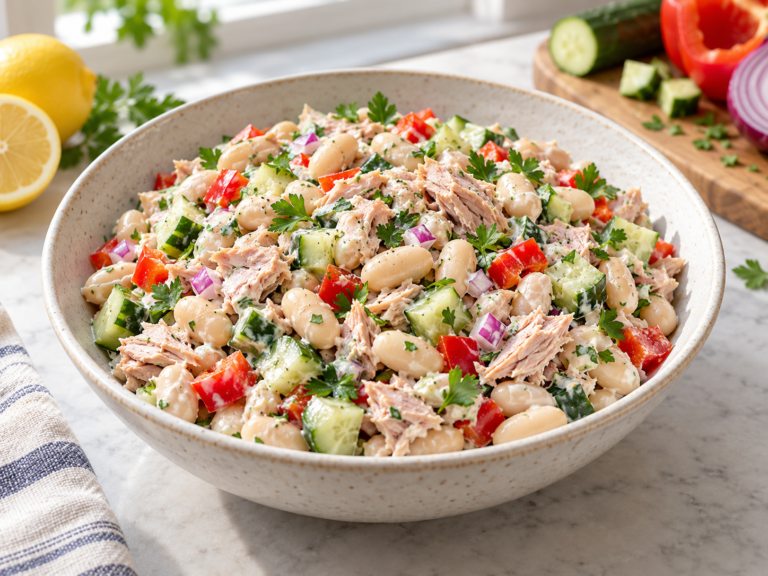
Browse the High Protein collection for more protein-focused meals, or try the tuna and white bean salad for another lunch idea.
Save this recipe to your Pinterest meal prep board so you can find the ingredient list and packing tips when planning your next batch.
Cooking and Storage References
General food handling guidance: safe cooking temperatures, refrigerated storage times, and safe preparation and cooling.