Lime Shrimp and Black Bean Meal Prep Bowls
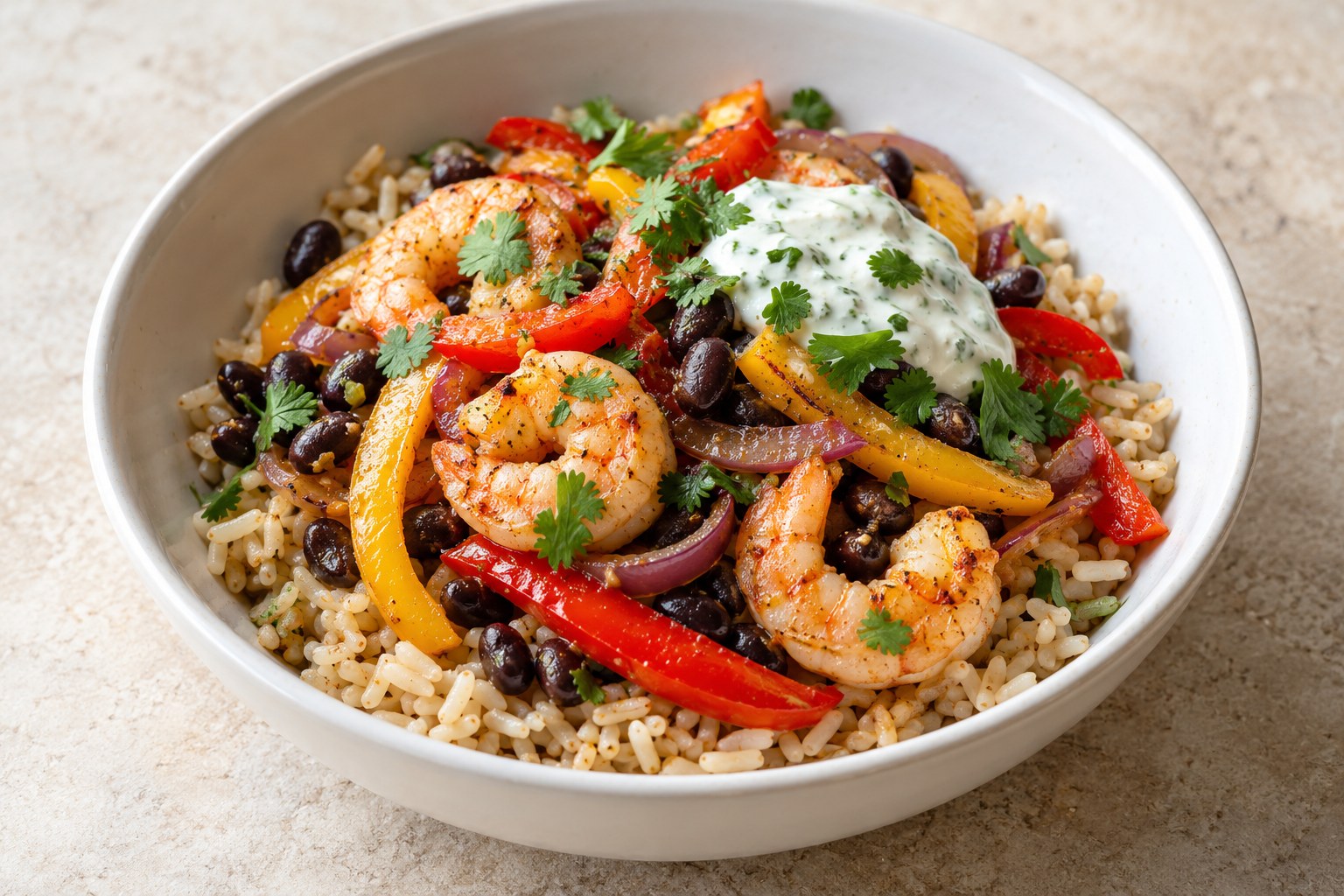
These shrimp black bean meal prep bowls put quick-cooking shrimp over brown rice with peppers, onion, black beans, and a lime yogurt topping. Start the grain before preparing the shrimp so the seafood only spends a few minutes in the hot skillet.
The filling is cooked in stages rather than all at once. Peppers need time to soften, beans need warming, and shrimp can turn rubbery if they stay over heat for that entire process. Keeping those stages distinct gives you more control over the finished bowl and the reheated leftovers.
Recipe at a Glance
| Servings | 4 bowls |
|---|---|
| Prep time | 20 minutes |
| Cook time | 50 minutes |
| Estimated total | 70 minutes |
| Category | High Protein |
| Main equipment | Saucepan with a fitted lid |
Times are estimates. Ingredient size, appliance performance, and grain package directions can change them.
Why Make This Recipe
- Shrimp and black beans create a protein-focused bowl with a measured grain base.
- The vegetables can be prepared while the brown rice cooks.
- Lime yogurt adds moisture at serving without drowning the stored rice.
Ingredient Notes and Substitutions
Thaw and dry shrimp
Choose peeled, deveined raw shrimp, ideally a large size so they are easy to handle. Thaw frozen shrimp in the refrigerator and drain thoroughly. Pat dry before seasoning; excess surface water dilutes the spices and prevents light browning.
Keep the rice directions separate
Brown rice timing depends on variety. Use the package liquid ratio and cook it separately. Microwave rice can be used if heated according to its instructions, but do not add the measured dry-rice water to an already cooked product.
Use cooked black beans
Canned beans are already cooked and only need warming. Drain and rinse them before adding to the vegetables. Dry uncooked black beans cannot be used directly in this short skillet stage.
How to Make Lime Shrimp and Black Bean Meal Prep Bowls
1. Cook the brown rice
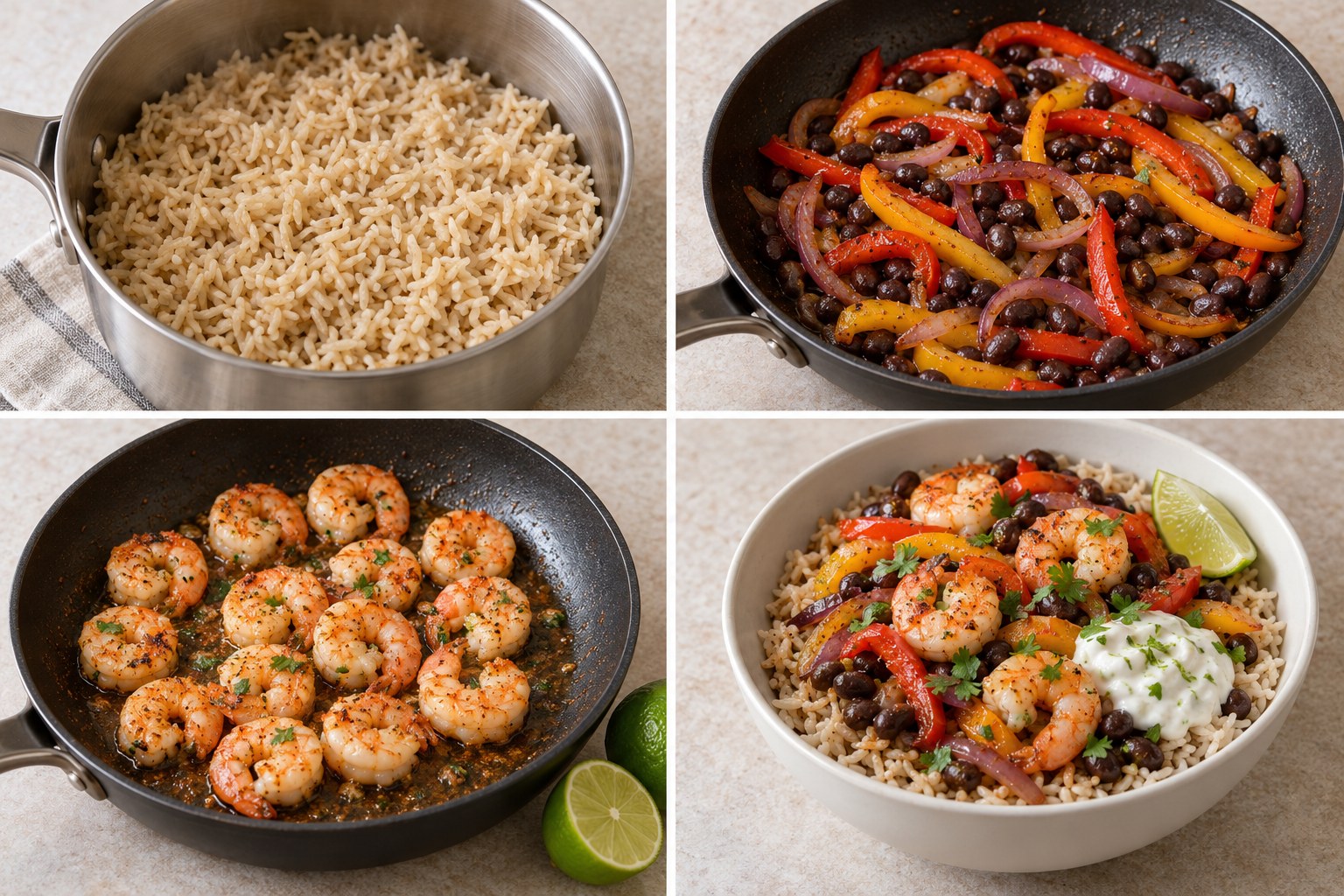
Cook the rice with its package-specified water in the lidded saucepan, usually about 35–45 minutes plus a covered rest. Begin the shrimp and vegetables near the end of that cooking time. Prepare all cold toppings using clean utensils before handling raw shrimp.
2. Soften peppers and onion
Heat 1 tablespoon oil in the skillet over medium-high heat. Add peppers, onion, and ¼ teaspoon salt. Cook for about 6–8 minutes, stirring occasionally, until softened with a little color. Add half the garlic for the last 30 seconds.
3. Warm the beans
Add the drained black beans and 2 tablespoons water to the vegetables. Stir for 2–3 minutes until the beans are hot. Transfer this mixture to a clean bowl and cover loosely while cooking the shrimp; do not reuse a plate that held raw seafood.
4. Cook shrimp briefly
Toss the dry shrimp with the remaining oil, cumin, paprika, remaining salt, pepper, and remaining garlic. Cook in two batches if necessary, turning after about 2 minutes. Continue until the flesh is pearly or white and opaque throughout, usually about 3–5 minutes total depending on size.
5. Finish the lime topping
Remove the shrimp from the heat and toss with 2 tablespoons lime juice. Mix the yogurt with the remaining tablespoon lime juice and half the cilantro. Divide rice, vegetables, beans, and shrimp evenly among four bowls; serve the yogurt and remaining cilantro separately.
6. Chill or reheat portions
For meal prep, refrigerate the cooked components promptly in shallow containers with the yogurt kept separate. Reheat a covered portion in short intervals with a little water, stirring the rice and checking that leftovers reach 165°F (74°C). Add the yogurt after heating.
Tips and Troubleshooting
Shrimp become tough
Remove each batch as soon as the flesh is opaque and cooked through. Do not leave finished shrimp in the pan while waiting for the rice or softening peppers.
The bowl seems dry after chilling
The grain absorbs moisture during storage. Add a small splash of water before reheating and use the reserved lime yogurt at serving rather than increasing oil in the original batch.
Vegetables release lots of water
Use a wide skillet and avoid covering the pepper stage. Frozen peppers need more time to shed moisture and will give a softer result than fresh strips.
Variations
- Use white rice cooked according to its own package if you want a shorter grain stage.
- Replace the yogurt topping with chopped tomatoes and extra lime at serving for a dairy-free version. Keep fresh tomatoes in a separate container.
How to Pack These Meal Prep Bowls
Put rice on one side and the bean-and-pepper mixture on the other, then divide the shrimp evenly across all four portions. Keep the lime yogurt chilled in separate small pots. Use a cool bag with ice packs for transport; a closed lunch container alone does not keep seafood refrigerated.
Storage, Freezing, and Reheating
Keep the bowls at 40°F (4°C) or colder and use within 3–4 days. The shrimp texture is best earlier in that window, so prioritize these portions before firmer meat or legume-based lunches.
Freeze the cooked rice, beans, vegetables, and shrimp without yogurt for up to 1 month for best quality. Thaw overnight in the refrigerator. Expect softer peppers and a slightly firmer shrimp texture after reheating.
Refrigerate perishable components promptly in shallow containers, within 2 hours of cooking or serving, or within 1 hour above 90°F (32°C). Keep cold components separate from food you plan to reheat.
Frequently Asked Questions
Can I use cooked shrimp?
Yes, if safely stored. Omit the raw-shrimp skillet stage. Heat cooked shrimp only until the reheated leftovers reach 165°F (74°C), then add lime; repeated long frying will make them tough.
Can I use kidney beans?
Drained canned kidney beans work, although the flavor and texture change. Dry beans must be cooked separately using a suitable method before going into this recipe.
Should I leave the tails on?
Tail-off shrimp are easier for packed lunches because the whole bowl can be eaten with a fork. Tail-on shrimp are suitable for immediate serving if you prefer that presentation.
Lime Shrimp and Black Bean Meal Prep Bowls
Ingredients
Equipment
Method
- Cook the brown rice. Cook the rice with its package-specified water in the lidded saucepan, usually about 35–45 minutes plus a covered rest. Begin the shrimp and vegetables near the end of that cooking time. Prepare all cold toppings using clean utensils before handling raw shrimp.
- Soften peppers and onion. Heat 1 tablespoon oil in the skillet over medium-high heat. Add peppers, onion, and ¼ teaspoon salt. Cook for about 6–8 minutes, stirring occasionally, until softened with a little color. Add half the garlic for the last 30 seconds.
- Warm the beans. Add the drained black beans and 2 tablespoons water to the vegetables. Stir for 2–3 minutes until the beans are hot. Transfer this mixture to a clean bowl and cover loosely while cooking the shrimp; do not reuse a plate that held raw seafood.
- Cook shrimp briefly. Toss the dry shrimp with the remaining oil, cumin, paprika, remaining salt, pepper, and remaining garlic. Cook in two batches if necessary, turning after about 2 minutes. Continue until the flesh is pearly or white and opaque throughout, usually about 3–5 minutes total depending on size.
- Finish the lime topping. Remove the shrimp from the heat and toss with 2 tablespoons lime juice. Mix the yogurt with the remaining tablespoon lime juice and half the cilantro. Divide rice, vegetables, beans, and shrimp evenly among four bowls; serve the yogurt and remaining cilantro separately.
- Chill or reheat portions. For meal prep, refrigerate the cooked components promptly in shallow containers with the yogurt kept separate. Reheat a covered portion in short intervals with a little water, stirring the rice and checking that leftovers reach 165°F (74°C). Add the yogurt after heating.
Notes
More High Protein Recipes
Browse the High Protein collection for more protein-focused meals, or try the tuna and white bean salad for another lunch idea.
Save this recipe to your Pinterest meal prep board so you can find the ingredient list and packing tips when planning your next batch.
Cooking and Storage References
General food handling guidance: safe cooking temperatures, refrigerated storage times, and safe preparation and cooling.