Tuna Chickpea Pasta Meal Prep Bowls
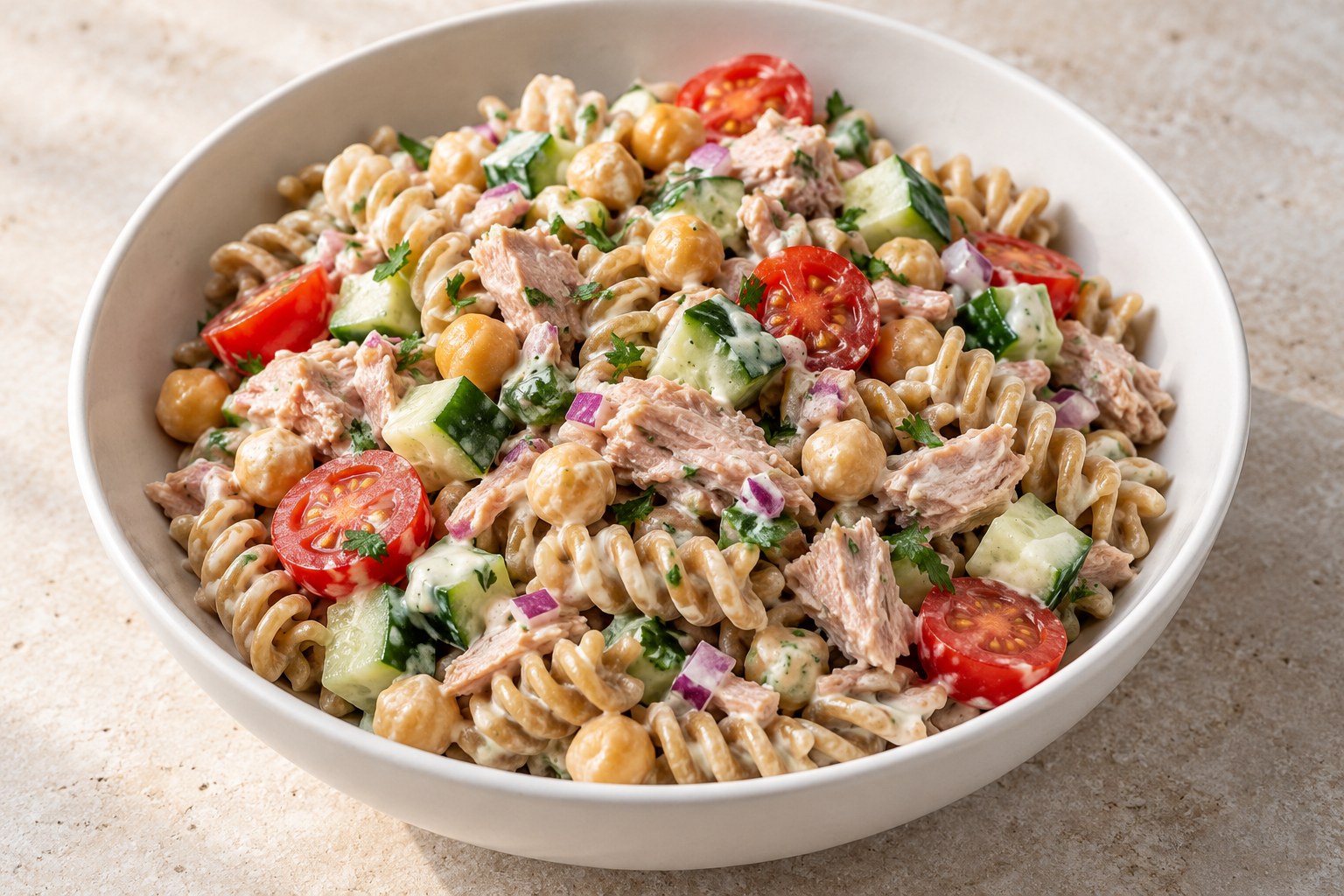
Tuna chickpea pasta bowls are a cold meal prep option with flaked canned tuna, whole-wheat short pasta, chickpeas, cucumber, and tomatoes. A lemon-Dijon yogurt dressing coats the pasta lightly while keeping the salad easy to portion for packed lunches.
Use the drained tuna weight rather than assuming every can contains the same amount of fish. The vegetables and chickpeas should also be well drained before mixing. Surface water thins the dressing and collects at the bottom of the container, especially after the salad rests overnight.
Recipe at a Glance
| Servings | 4 bowls |
|---|---|
| Prep time | 20 minutes |
| Cook time | 15 minutes |
| Estimated total | 35 minutes |
| Category | High Protein |
| Main equipment | Large saucepan and colander |
Times are estimates. Ingredient size, appliance performance, and grain package directions can change them.
Why Make This Recipe
- Tuna, chickpeas, Greek yogurt, and whole-wheat pasta contribute protein.
- The recipe is served cold and does not require an office microwave.
- A separate final portion of dressing helps refresh pasta that absorbs sauce in storage.
Ingredient Notes and Substitutions
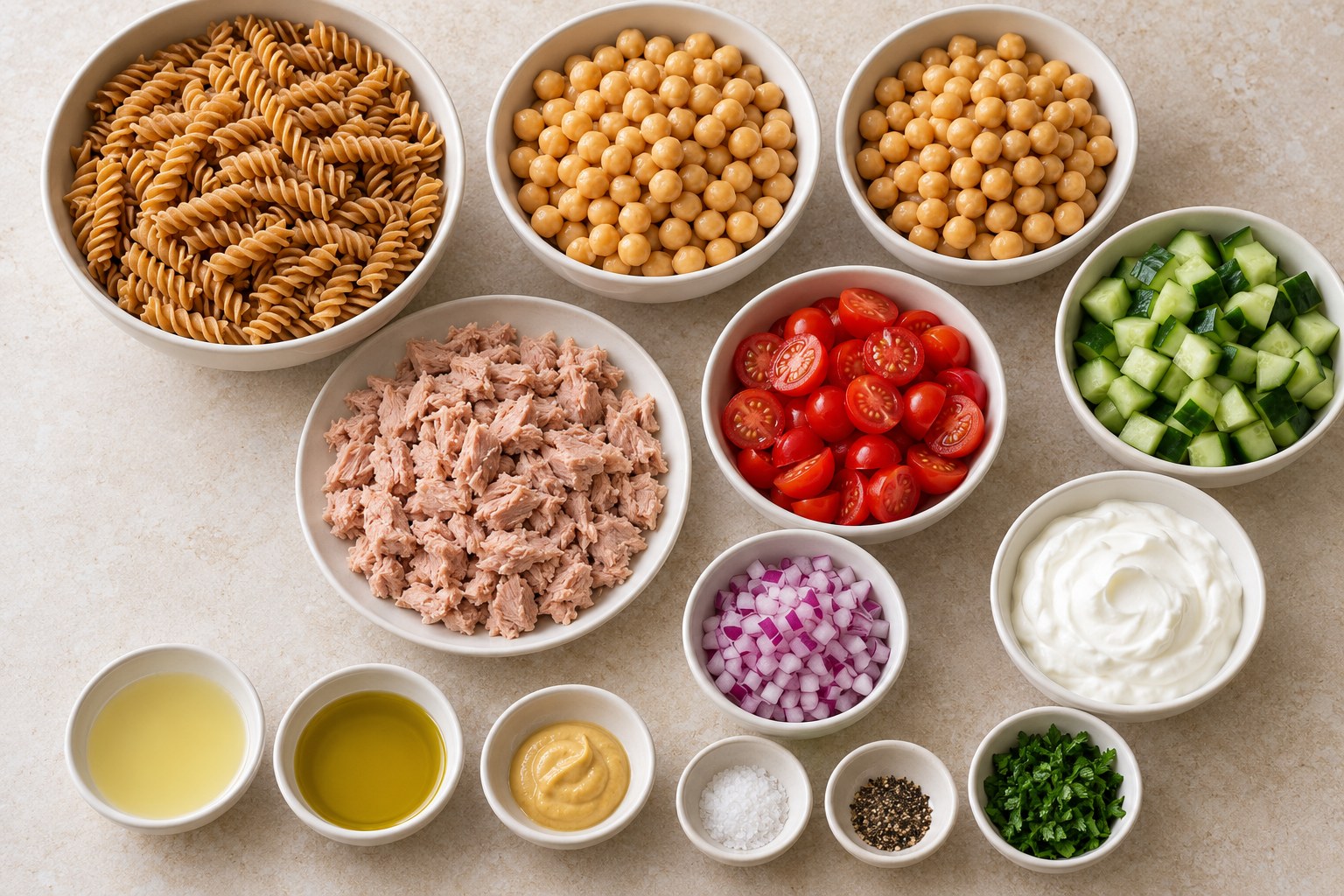
Measure tuna after draining
Use 400 g drained canned tuna packed in water, choosing enough cans to reach that amount. Can sizes and drained yields vary. Drain gently but thoroughly, then break the fish into larger flakes rather than mashing it into the dressing.
Choose short pasta
Whole-wheat fusilli, penne, or another small shape holds dressing and fits a lunch fork. Cook to the package timing and check texture before draining. The pasta is meant to be tender but still hold its shape after chilling.
Prepare the vegetables for storage
Dice cucumber and halve tomatoes with clean utensils. Remove very watery cucumber seeds if needed and drain excess tomato juice. Add the fresh vegetables only after the pasta has cooled; warm pasta softens them and loosens the yogurt dressing.
How to Make Tuna Chickpea Pasta Meal Prep Bowls
1. Cook the pasta
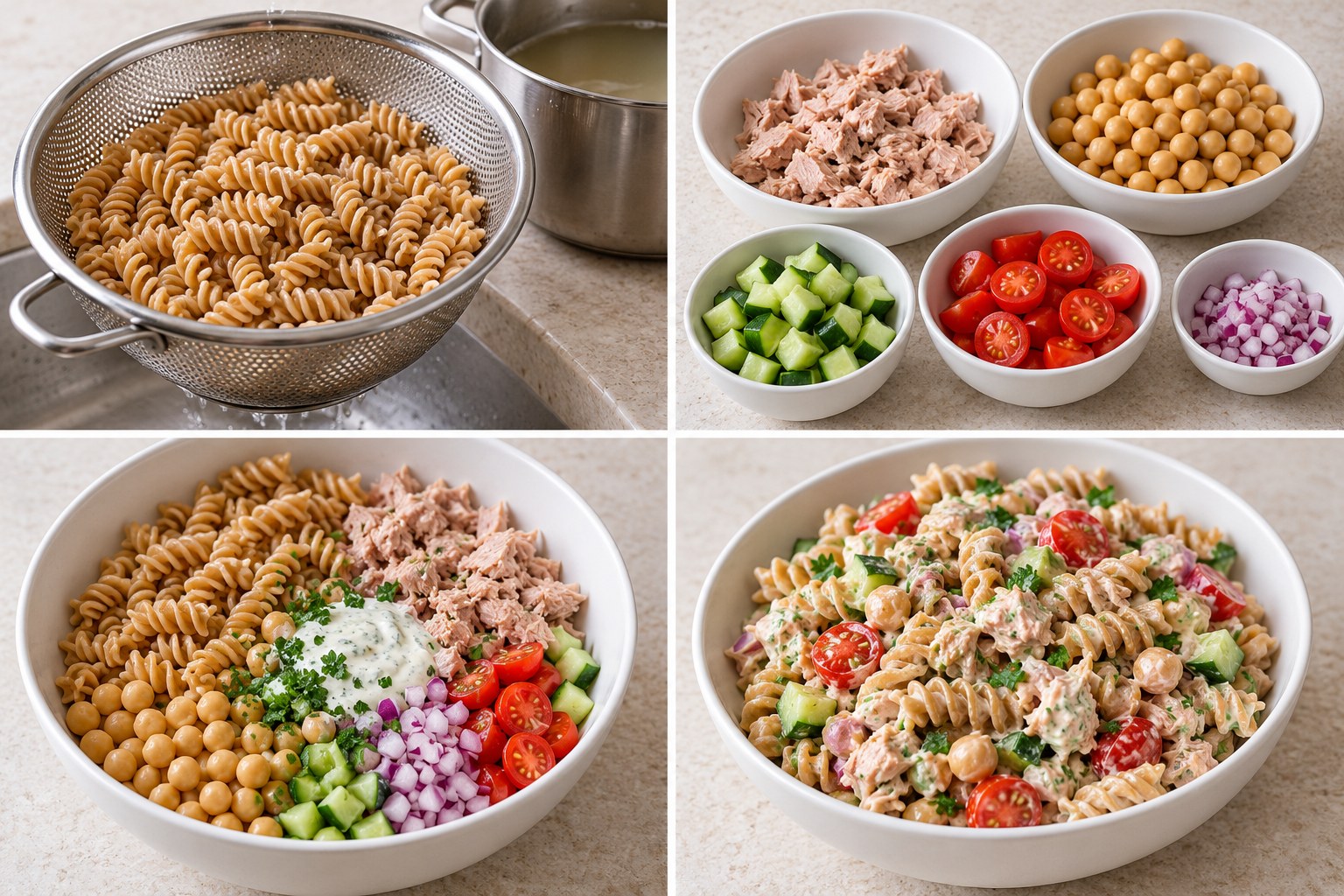
Bring a large pot of water to a boil and cook the pasta according to the package until just tender. Drain, rinse briefly under cold running water for this cold salad, and drain thoroughly again. Spread loosely in a shallow bowl so it finishes cooling without sitting in trapped water.
2. Drain the protein ingredients
Drain the tuna and measure 400 g of fish. Rinse and drain the chickpeas well. Keep the tuna refrigerated while preparing the vegetables and dressing, using clean utensils and bowls for the ready-to-eat ingredients.
3. Mix the lemon dressing
Whisk Greek yogurt, lemon juice, olive oil, Dijon, salt, and pepper until smooth. Reserve about a quarter of the dressing in a small pot to refresh the portions later. Different mustard brands vary in strength, so taste before adding extra.
4. Fold the salad gently
When the pasta is cool, combine it with chickpeas, cucumber, tomatoes, onion, and parsley. Fold in the larger tuna flakes and about three-quarters of the dressing. Turn gently so the tuna remains visible rather than disappearing into a thick paste.
5. Divide into four lunches
Divide the salad evenly among four containers, making sure each gets a comparable amount of tuna and chickpeas. Add a little of the reserved dressing when serving. Refrigerate promptly rather than leaving the complete salad on the counter while preparing other meals.
6. Serve cold
Keep the bowls at 40°F (4°C) or colder until lunch, using cold packs for transport. Stir gently and add the reserved dressing or a teaspoon of water if the pasta has absorbed the coating. This recipe is intended for cold serving, so no reheating stage is needed.
Tips and Troubleshooting
The dressing disappears overnight
Pasta absorbs liquid as it rests. Reserve some dressing rather than adding a large amount at the start. Refresh one serving just before eating so the remaining portions stay undisturbed.
The salad becomes watery
Drain the pasta, tuna, and chickpeas thoroughly and keep obvious tomato juice out. Brief rinsing cools pasta, but it still needs a proper second draining before mixing.
The tuna breaks down too much
Add it last in large flakes and fold gently. Vigorous stirring after every ingredient turns the dressing into a tuna spread instead of leaving distinct pieces.
Variations
- Use suitable gluten-free short pasta and check the mustard and other packaged ingredients if avoiding gluten. The chilling texture may differ from whole-wheat pasta.
- Replace parsley with chopped dill for a different herb profile. Start with 1–2 tablespoons and taste before adding more because dill can dominate the dressing.
How to Pack These Meal Prep Bowls
Use leak-resistant containers and keep any extra dressing in a small sealed pot. This is a cold lunch, so pack it with ice packs if you will be away from refrigeration. Do not put the container in a warm bag in the morning and assume it remains chilled until lunchtime. Add delicate herbs closer to serving if you want their freshest appearance.
Storage, Freezing, and Reheating
Refrigerate promptly at 40°F (4°C) or colder and use within 3–4 days. Stir only the serving you plan to eat, leaving the remaining containers refrigerated.
Freezing the assembled salad is not recommended for quality: cucumber, tomatoes, and yogurt dressing lose their texture. Make a smaller batch if four refrigerated portions are more than you need.
Refrigerate perishable components promptly in shallow containers, within 2 hours of cooking or serving, or within 1 hour above 90°F (32°C). Keep cold components separate from food you plan to reheat.
Frequently Asked Questions
Can I use tuna in oil?
Yes, but drain it well and consider omitting the tablespoon olive oil from the dressing. The flavor, calories, and fat content will differ from tuna packed in water.
How many cans of tuna do I need?
Enough to supply 400 g drained tuna. Read the drained-weight information if provided, or weigh the fish after draining. Four cans do not automatically equal 400 g because product sizes vary.
Can I use mayonnaise?
You may replace some or all of the yogurt with mayonnaise to taste, but the flavor and protein contribution change. Keep the same cold storage and transport practices for the finished salad.
Tuna Chickpea Pasta Meal Prep Bowls
Ingredients
Equipment
Method
- Cook the pasta. Bring a large pot of water to a boil and cook the pasta according to the package until just tender. Drain, rinse briefly under cold running water for this cold salad, and drain thoroughly again. Spread loosely in a shallow bowl so it finishes cooling without sitting in trapped water.
- Drain the protein ingredients. Drain the tuna and measure 400 g of fish. Rinse and drain the chickpeas well. Keep the tuna refrigerated while preparing the vegetables and dressing, using clean utensils and bowls for the ready-to-eat ingredients.
- Mix the lemon dressing. Whisk Greek yogurt, lemon juice, olive oil, Dijon, salt, and pepper until smooth. Reserve about a quarter of the dressing in a small pot to refresh the portions later. Different mustard brands vary in strength, so taste before adding extra.
- Fold the salad gently. When the pasta is cool, combine it with chickpeas, cucumber, tomatoes, onion, and parsley. Fold in the larger tuna flakes and about three-quarters of the dressing. Turn gently so the tuna remains visible rather than disappearing into a thick paste.
- Divide into four lunches. Divide the salad evenly among four containers, making sure each gets a comparable amount of tuna and chickpeas. Add a little of the reserved dressing when serving. Refrigerate promptly rather than leaving the complete salad on the counter while preparing other meals.
- Serve cold. Keep the bowls at 40°F (4°C) or colder until lunch, using cold packs for transport. Stir gently and add the reserved dressing or a teaspoon of water if the pasta has absorbed the coating. This recipe is intended for cold serving, so no reheating stage is needed.
Notes
More High Protein Recipes
Browse the High Protein collection for more protein-focused meals, or try the tuna and white bean salad for another lunch idea.
Save this recipe to your Pinterest meal prep board so you can find the ingredient list and packing tips when planning your next batch.
Cooking and Storage References
General food handling guidance: safe cooking temperatures, refrigerated storage times, and safe preparation and cooling.