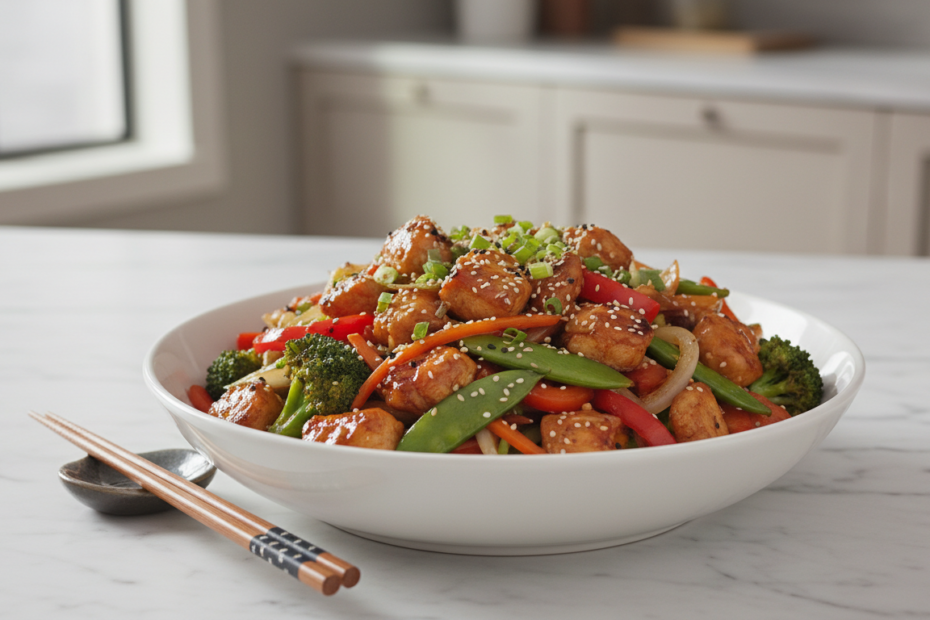
Skip the takeout tonight — this chicken stir fry recipe is saucy, colorful, packed with crisp vegetables, and hits the table in just 20 minutes flat. If you’ve ever stared down a sad takeout menu wondering why delivery always disappoints, this dish is your answer. It’s fresher, cheaper, and honestly just better than anything that arrives in a paper bag.
Follow this simple guide and you’ll have a restaurant-quality meal on your dinner table tonight — no wok experience required.
[toc]
Why You’ll Love This Chicken Stir Fry Recipe
This chicken stir fry recipe checks every box a busy weeknight meal needs to check. It’s fast — genuinely 20 minutes from fridge to fork. It’s flexible — swap in whatever vegetables are lingering in your crisper drawer. And it’s deeply satisfying in a way that frozen meals and soggy delivery boxes simply cannot match.
The magic is in the sauce. A balance of savory soy, nutty sesame, a touch of honey, and a whisper of garlic and ginger creates that glossy, clingy coating you love from your favorite Chinese restaurant. Once you taste it homemade, you’ll wonder why you ever ordered out.
Beyond flavor, this dish is genuinely nutritious. Lean chicken breast, a rainbow of vegetables, and a light sauce mean you’re getting a high-protein, nutrient-dense dinner without the excess sodium and mystery oil that comes with restaurant versions. It’s a win on every level.
Ingredients You’ll Need
- 1½ lbs boneless, skinless chicken breast — sliced thin for quick, even cooking
- 2 tablespoons vegetable oil — high smoke point keeps the pan screaming hot
- 1 red bell pepper, sliced — adds sweetness and stunning color
- 1 cup broccoli florets — brings crunch and loads of nutrients
- 1 cup snap peas — stays crisp and pops with fresh flavor
- 1 medium carrot, julienned — adds natural sweetness and texture
- 3 cloves garlic, minced — the aromatic backbone of the dish
- 1 teaspoon fresh ginger, grated — brightens the entire sauce
- 3 tablespoons low-sodium soy sauce — savory, umami-rich base
- 1 tablespoon oyster sauce — adds depth and a subtle sweetness
- 1 tablespoon honey — balances the salt with gentle sweetness
- 1 teaspoon sesame oil — nutty finish that defines the flavor
- 1 tablespoon cornstarch + 2 tablespoons water — creates that thick, glossy restaurant-style sauce
- Sesame seeds & sliced green onions — for garnish and a fresh finish
Substitution note: No oyster sauce? Use hoisin sauce or an extra splash of soy. Swap chicken breast for chicken thighs for richer flavor, or use tofu for a vegetarian spin. Any crunchy vegetable works — zucchini, mushrooms, baby corn, and bok choy are all excellent additions.
Prep & Cooking Time
Prep Time: 10 minutes | Cook Time: 10 minutes | Total Time: 20 minutes | Servings: 4 | Difficulty: Easy
How to Make Chicken Stir Fry Recipe Step by Step
Making this chicken stir fry recipe is straightforward — the key is having everything prepped and ready before you ever turn on the heat, because once that wok is hot, things move fast.
-
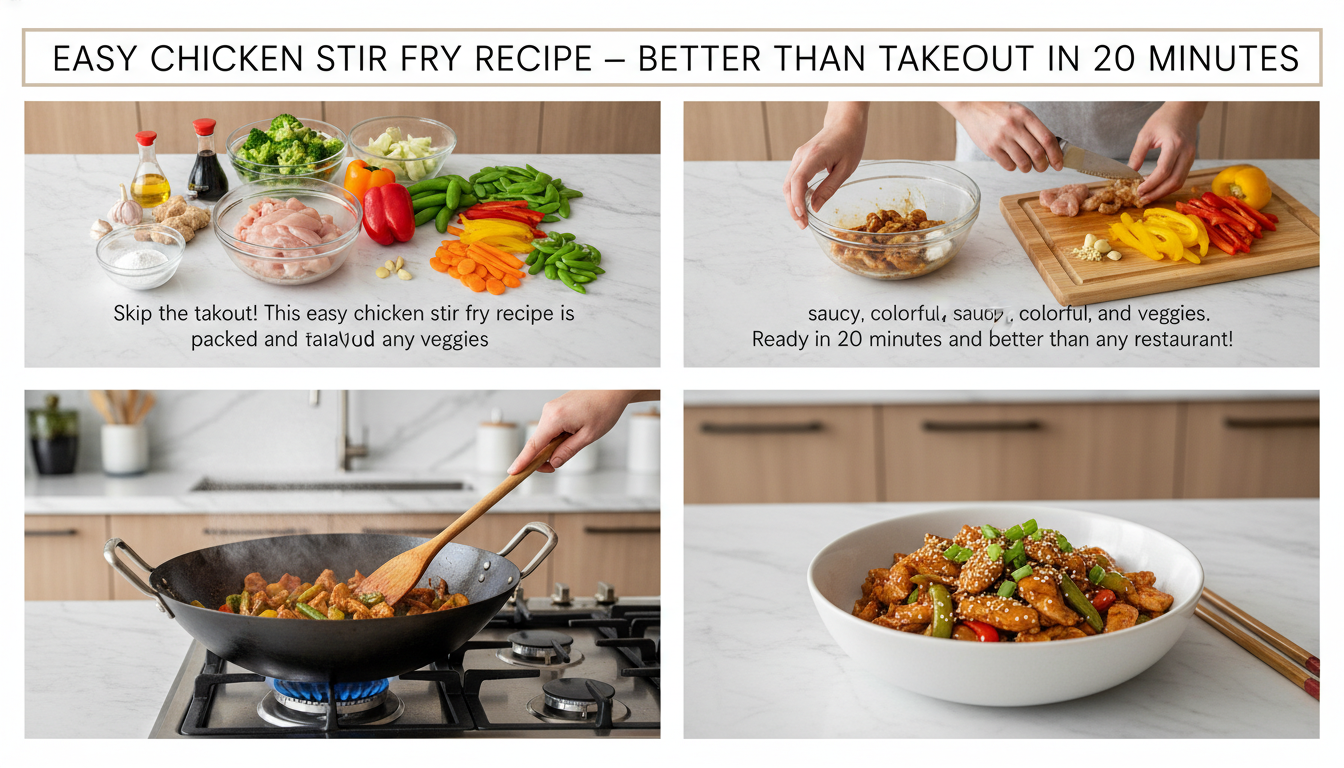
Make the sauce first. In a small bowl, whisk together soy sauce, oyster sauce, honey, sesame oil, minced garlic, and grated ginger. In a separate tiny bowl, mix the cornstarch with water to create a slurry. Set both aside — you’ll need them fast once cooking starts.
Tip: Pre-mixing the sauce is the #1 trick to a smooth, stress-free stir fry. -
Prep the chicken. Slice chicken breast against the grain into thin, ¼-inch strips. Pat them completely dry with paper towels — moisture is the enemy of a good sear. Season lightly with salt and pepper.
Tip: For ultra-tender chicken, toss the slices with 1 teaspoon of cornstarch before cooking (a technique called velveting). - Get your pan screaming hot. Heat a large wok or wide skillet over high heat until you see wisps of smoke. Add 1 tablespoon of oil. This high-heat step is what gives stir fry its signature smoky, slightly charred depth of flavor — called “wok hei.”
-
Cook the chicken in a single layer. Add the chicken strips without crowding the pan. Let them sear, untouched, for 60 to 90 seconds before tossing. Cook until golden and just cooked through, about 4 to 5 minutes total. Remove chicken from the wok and set aside.
Tip: If your pan is small, cook chicken in two batches. Crowding causes steaming, not searing. - Stir fry the vegetables. Add the remaining tablespoon of oil to the hot wok. Toss in the carrots first (they take the longest), then the broccoli, followed by the bell pepper and snap peas. Stir fry over high heat for 3 to 4 minutes — you want them tender-crisp, not mushy. They should still have vibrant color and a satisfying snap.
- Bring it all together. Return the cooked chicken to the wok. Pour the sauce over everything and toss to coat. Add the cornstarch slurry and stir constantly for 1 to 2 minutes until the sauce thickens into a gorgeous, glossy glaze that clings to every piece.
- Finish and serve. Remove from heat. Drizzle with a tiny extra drop of sesame oil if desired. Garnish generously with toasted sesame seeds and sliced green onions. Serve immediately over steamed white rice, brown rice, or noodles.
Nutritional Benefits of Chicken Stir Fry Recipe
This chicken stir fry recipe isn’t just delicious — it’s a legitimately balanced meal. A single serving delivers approximately 320–380 calories, 35–38 grams of lean protein from the chicken breast, and a wide spectrum of vitamins and antioxidants from the colorful vegetable lineup.
Bell peppers are loaded with vitamin C — one red pepper alone contains more than 150% of your daily recommended intake. Broccoli provides vitamin K, folate, and potent cancer-fighting compounds called glucosinolates. Snap peas contribute fiber and vitamin A. Together, these vegetables make this dish a nutritional powerhouse dressed up in a delicious sauce.
The sauce, when made at home with low-sodium soy sauce, contains a fraction of the sodium found in restaurant versions, which can exceed 2,000mg per serving. For a deeper dive into the health benefits of common stir fry vegetables, Healthline’s guide to the healthiest vegetables is an excellent resource. For more high-protein weeknight meals, check out our High-Protein Chicken Recipes.
Tips, Variations & Cooking Advice
1. Build maximum flavor: Don’t skip the fresh ginger and garlic — they are non-negotiable flavor pillars. If you want extra heat, add a teaspoon of chili garlic sauce or a pinch of red pepper flakes to the sauce.
2. Easy protein substitutions: This recipe works beautifully with thinly sliced beef (flank steak or sirloin), shrimp, pork tenderloin, or firm tofu. Adjust cooking times accordingly — shrimp cooks in just 2 to 3 minutes, while beef cooks similarly to chicken.
3. Sauce variations: For a teriyaki-style version, increase the honey to 2 tablespoons and add a splash of rice vinegar. For a spicy kung pao variation, add dried chilies and a tablespoon of hoisin sauce. The base formula is endlessly adaptable.
4. Storage tips: Store leftovers in an airtight container in the refrigerator for up to 4 days. The flavors actually deepen overnight, making this a fantastic meal prep option. Reheat in a hot skillet with a splash of water to loosen the sauce — the microwave works in a pinch but dulls the textures.
Common Mistakes to Avoid
Mistake 1: Not getting the pan hot enough. A lukewarm pan means the chicken steams instead of sears. You need HIGH heat — your exhaust fan should be running. Wait until the oil shimmers and almost smokes before adding food.
Mistake 2: Overcrowding the pan. This is the most common stir fry error. Too much food drops the pan temperature instantly, trapping steam and creating soggy, pale chicken instead of golden, caramelized pieces. Cook in batches if needed.
Mistake 3: Skipping the prep work. Stir frying happens in minutes — there’s zero time to mince garlic once the heat is on. Have every single ingredient chopped, measured, and ready in bowls before you light the burner.
Mistake 4: Overcooking the vegetables. Stir fry vegetables should be vibrant, crisp, and colorful. If they’re gray and limp, they’ve been in the pan too long. Err on the side of slightly underdone — residual heat will finish them perfectly.
Serving Suggestions & Storage
This dish shines served over steamed jasmine rice — the fluffy grains soak up every drop of that incredible sauce. Brown rice adds a nutty, wholesome quality and extra fiber. For a low-carb option, cauliflower rice works surprisingly well and keeps the dish light. Lo mein noodles or even spaghetti cooked al dente are fun and satisfying alternatives.
For a complete meal, serve alongside egg rolls, spring rolls, or a simple Asian cucumber salad with rice vinegar and sesame. A bowl of miso soup makes an elegant, warming side.
Storage: Refrigerate in an airtight container for up to 4 days. Freezing: This stir fry freezes reasonably well for up to 2 months — the vegetables will soften upon thawing but the flavors remain excellent. Store sauce and proteins together, freeze in flat zip-lock bags. Reheating: Best reheated in a hot skillet over medium-high heat with 1 to 2 tablespoons of water or chicken broth to revive the sauce’s glossy consistency.
Conclusion
There you have it — the only chicken stir fry recipe you’ll ever need. It’s fast, flexible, deeply flavorful, and genuinely better than takeout in every measurable way. Once you master the sauce and the high-heat technique, you’ll find yourself making this on repeat every single week. If you loved this recipe, be sure to explore our Easy Weeknight Dinner Recipes for more 30-minute meals that deliver big flavor without the stress. Now get that wok hot — dinner is waiting!
Frequently Asked Questions About Chicken Stir Fry Recipe
Can I use frozen vegetables in this chicken stir fry recipe?
Yes, but with a caveat. Frozen vegetables contain extra moisture that can make your stir fry watery and prevent that beautiful sear. If using frozen, thaw them completely and pat dry with paper towels before they hit the pan. Fresh vegetables will always deliver better texture and color, but a frozen stir fry blend is a perfectly acceptable weeknight shortcut.
What’s the best pan if I don’t have a wok?
A large, wide skillet or a cast iron pan works very well. The key is surface area — you want enough room so the food isn’t stacked on top of itself. A 12-inch stainless steel or cast iron skillet can achieve excellent high-heat results that rival a traditional wok on a standard home burner.
How do I make the chicken extra tender like at a restaurant?
The secret is a technique called velveting, used in Chinese restaurant kitchens. Before cooking, toss your chicken slices in a mixture of 1 teaspoon cornstarch, 1 teaspoon soy sauce, and 1 teaspoon of oil. Let it rest for 10 to 15 minutes. This coating protects the protein during high-heat cooking and results in silky, impossibly tender chicken every single time.
Can I make the sauce ahead of time?
Absolutely — and it’s one of the best meal prep moves you can make. The sauce (without the cornstarch slurry) can be mixed and refrigerated in a sealed jar for up to one week. When ready to cook, just shake it up, add your freshly mixed cornstarch slurry, and you’re ready to go. This shaves precious minutes off an already-fast recipe and makes weeknight cooking almost effortless.