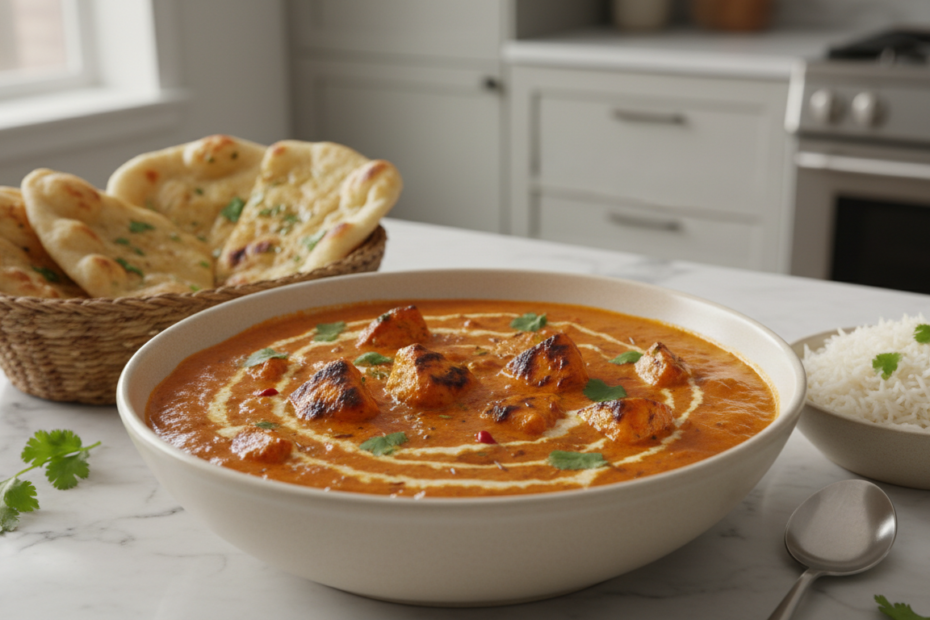
This homemade chicken tikka masala recipe is everything you’ve been craving — rich, creamy, and loaded with bold, warming spices that fill your entire kitchen with incredible aroma. If you think restaurant-style Indian curry is too complicated to make at home, think again. This version is better than your favorite takeout spot and comes together in just about 40 minutes from start to finish.
Follow along and you’ll have a deeply flavorful, velvety tomato-cream sauce wrapped around perfectly tender marinated chicken — all made with pantry-friendly ingredients you likely already have on hand.
[toc]
Why You’ll Love This Chicken Tikka Masala Recipe
First and foremost, this chicken tikka masala recipe is weeknight-friendly without cutting any corners on flavor. The marinade does the heavy lifting ahead of time, so when you’re ready to cook, everything moves fast. You get that slow-simmered, complex taste in a fraction of the usual time.
Beyond speed, this dish is endlessly crowd-pleasing. It hits every flavor note — savory, smoky, slightly tangy from the yogurt marinade, and luxuriously creamy from the coconut milk and heavy cream finish. Kids love it, dinner guests are always impressed, and leftovers (if there are any) taste even better the next day.
It’s also incredibly flexible. Whether you’re feeding someone who keeps halal, someone avoiding gluten, or a household that loves heat, this recipe adapts beautifully. Mild or spicy, chicken thighs or breast — it works every single time.
Ingredients You’ll Need
- 1.5 lbs boneless chicken thighs — thighs stay juicier and more flavorful than breast during high-heat cooking
- 1 cup plain whole-milk yogurt — tenderizes the chicken and forms the marinade base
- 2 tbsp lemon juice — adds brightness and helps break down the protein
- 2 tsp garam masala — the essential warming spice blend for authentic flavor
- 1 tsp ground cumin — earthy depth in both the marinade and the sauce
- 1 tsp turmeric — gorgeous golden color and subtle bitterness
- 1 tsp smoked paprika — mimics the traditional tandoor char
- 1 tsp chili powder — adjust up or down based on your heat preference
- 3 cloves garlic, minced — building block of the sauce’s savory base
- 1 tbsp fresh ginger, grated — warm, slightly peppery kick throughout
- 2 tbsp neutral oil or ghee — ghee adds buttery richness and is the traditional choice
- 1 large yellow onion, finely diced — sweet foundation for the masala sauce
- 1 can (15 oz) crushed tomatoes — forms the body of the rich, tangy sauce
- 1 cup heavy cream — creates that signature silky, restaurant-quality finish
- ½ cup coconut milk (optional) — adds subtle sweetness and extra creaminess
- Salt to taste
- Fresh cilantro for garnish — brightens the dish right before serving
Substitution note: You can swap heavy cream for full-fat coconut cream to make this dairy-free. Chicken breast works in place of thighs — just reduce cook time slightly to avoid drying out. If you don’t have garam masala on hand, combine equal parts cumin, coriander, cinnamon, and cardamom as a quick substitute.
Prep & Cooking Time
Marinate: 30 minutes (or up to 24 hours overnight for best results)
Prep Time: 15 minutes
Cook Time: 25 minutes
Total Active Time: ~40 minutes
Servings: 4–6
How to Make Chicken Tikka Masala Recipe Step by Step
Making this chicken tikka masala recipe at home is simpler than you think — here’s the complete process broken down so every step is clear and foolproof.
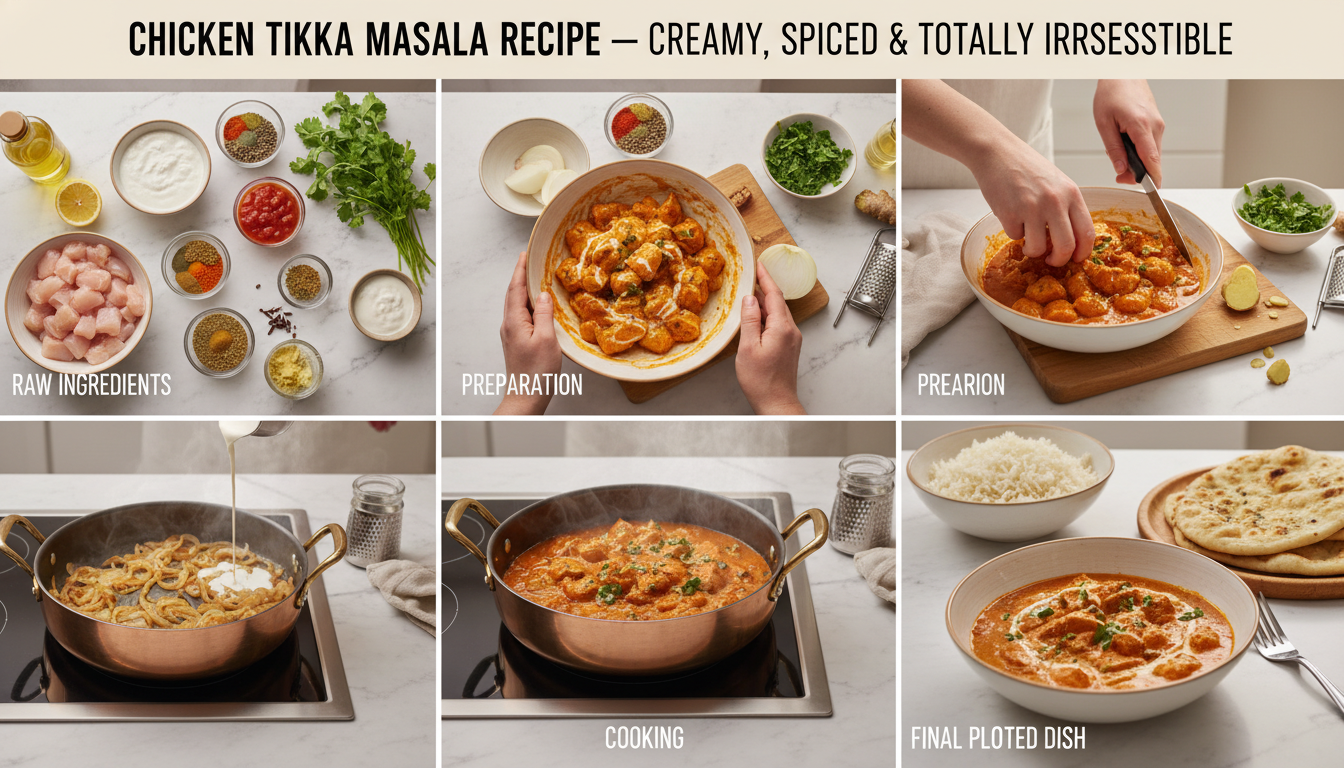
- Marinate the chicken: In a large bowl, combine yogurt, lemon juice, garlic, ginger, garam masala, cumin, turmeric, smoked paprika, chili powder, and a generous pinch of salt. Add chicken thighs and toss until fully coated. Cover and refrigerate for at least 30 minutes — overnight is ideal for maximum tenderness and flavor penetration.
- Char the chicken: Heat a large cast-iron skillet or grill pan over medium-high heat. Add a drizzle of oil and cook the marinated chicken pieces for 4–5 minutes per side until nicely charred on the outside. You’re not cooking through completely here — just building that beautiful smoky crust. Set aside and slice into bite-sized chunks.
- Build the masala base: In the same pan, add ghee or oil over medium heat. Add the diced onion and cook for 7–8 minutes, stirring often, until soft and golden. Don’t rush this step — caramelized onions are the flavor backbone of a great masala sauce.
- Bloom the spices: Add minced garlic, grated ginger, and a pinch each of garam masala and cumin directly to the onions. Stir constantly for 60–90 seconds until the spices become fragrant and start sticking to the pan. This step unlocks the full depth of flavor.
- Add tomatoes and simmer: Pour in the crushed tomatoes, stir to combine, and bring to a gentle simmer. Cook uncovered for 10 minutes, stirring occasionally, until the sauce thickens slightly and the raw tomato smell cooks off. Season with salt.
- Make it creamy: Lower the heat and stir in the heavy cream (and coconut milk if using). Let the sauce simmer gently for another 5 minutes — do not boil at this stage or the cream may separate. The color should shift from bright red to that iconic deep orange-red.
- Add chicken and finish: Return the sliced chicken to the pan. Stir everything together and simmer on low for 5–7 minutes until the chicken is fully cooked through and completely coated in sauce. Taste and adjust salt or spice as needed.
- Garnish and serve: Finish with a generous handful of fresh cilantro and an optional swirl of cream on top. Serve immediately over basmati rice or with warm naan bread.
Nutritional Benefits of Chicken Tikka Masala
Beyond being absolutely delicious, this chicken tikka masala recipe offers some solid nutritional value worth noting. Chicken thighs are an excellent source of high-quality protein, zinc, and B vitamins — especially niacin and B6 — which support energy metabolism and immune function. A single serving delivers roughly 35–40 grams of protein depending on portion size.
The spices used in this dish are nutritional powerhouses in their own right. Turmeric contains curcumin, a well-studied anti-inflammatory compound. Ginger has been linked to improved digestion and reduced nausea. Garlic is rich in allicin, which supports cardiovascular health. Tomatoes provide lycopene, a potent antioxidant that becomes more bioavailable when cooked in oil — which is exactly what happens in this sauce.
For a more detailed breakdown of the health benefits of individual spices, Healthline’s guide on turmeric benefits is a thorough and well-researched resource. Per serving (approximately 1.5 cups), this dish provides roughly 480–520 calories, 35g protein, 28g fat, and 18g carbohydrates — making it a satisfying, protein-forward meal.
Tips, Variations & Cooking Advice
🔥 Flavor tip: The single most impactful thing you can do for flavor is marinate the chicken overnight. Even two hours makes a significant difference over a 30-minute marinade. The yogurt enzymes genuinely break down the proteins and allow the spices to penetrate deeply.
🔄 Substitution tip: Out of heavy cream? Full-fat Greek yogurt stirred in off the heat works as an emergency substitute. Just make sure the sauce isn’t boiling when you add it or it will curdle. Cashew cream is another excellent plant-based option that keeps the sauce thick and luxurious.
🌶️ Variation: Love heat? Add one finely chopped serrano pepper along with the onions and double the chili powder. Want a smokier profile? A half teaspoon of ground cardamom and a pinch of ground cloves added with the other spices create a beautifully complex, restaurant-style depth.
📦 Storage tip: This dish stores exceptionally well. Refrigerate in an airtight container for up to 4 days. The flavors continue to develop overnight, making leftovers arguably better than day one. Freeze portions flat in zip-lock bags for up to 3 months — thaw overnight in the fridge before reheating.
Common Mistakes to Avoid
Skipping the marinade time: Marinating for less than 30 minutes leaves the chicken tough and under-seasoned at its core. If you’re pressed for time, even a quick 30-minute sit at room temperature makes a difference. Plan ahead and marinate overnight when possible.
Rushing the onion cook: Pale, undercooked onions produce a sharp, raw flavor in the final sauce. Commit to those 7–8 minutes over medium heat. The onions should be deeply golden and very soft before you add anything else.
Adding cream over high heat: This is the number one reason homemade tikka masala sauces break or look grainy. Always reduce heat to a low simmer before incorporating cream or yogurt. Let it warm through gently rather than boil.
Under-seasoning at the end: This sauce is thick and rich, which means it needs confident seasoning. Always taste just before serving and add a final pinch of salt if needed. A small squeeze of fresh lemon juice right at the end can also brighten the entire dish dramatically.
Serving Suggestions & Storage
The classic pairing for chicken tikka masala is fluffy basmati rice — the long grains are perfectly suited to soaking up all that gorgeous orange sauce. Warm naan bread (store-bought or homemade) is equally essential for scooping up every last drop. For a lower-carb option, cauliflower rice works surprisingly well and doesn’t overpower the sauce’s flavor.
Round out the meal with simple sides like cucumber raita, mango chutney, or a simple salad of sliced onions, cucumber, and lemon juice. If you’re entertaining, a starter of homemade samosas makes this into a complete and memorable Indian-inspired dinner spread.
For storage, cool the curry completely before transferring to airtight containers. Refrigerate for up to 4 days or freeze for up to 3 months. Reheat gently on the stovetop over low heat with a splash of water or cream to loosen the sauce back to its original consistency. Avoid microwaving at high power as it can dry out the chicken unevenly.
Conclusion
There’s a reason this chicken tikka masala recipe has become one of the most beloved dishes in the world — it delivers bold, comforting, deeply satisfying flavor in every single bite. Whether you’re cooking it for a weeknight dinner, a special occasion, or meal prepping for the week ahead, this recipe will never let you down. Once you make it at home, ordering takeout will feel entirely unnecessary. If you loved this recipe, you’ll want to explore our homemade butter chicken recipe next — another creamy, spiced classic that’s equally irresistible. Drop a comment below and let us know how yours turned out — we’d love to hear from you!
Frequently Asked Questions About Chicken Tikka Masala Recipe
What’s the difference between chicken tikka masala and butter chicken?
While these two dishes look similar, they have distinct differences. Butter chicken (murgh makhani) has a milder, sweeter, and more buttery sauce — it was created to use leftover tandoori chicken. Chicken tikka masala has a bolder, spicier, more complex tomato-forward sauce and typically uses marinated, charred chicken pieces as its base. Both are absolutely delicious, but tikka masala tends to carry more heat and spice depth.
Can I make chicken tikka masala ahead of time?
Absolutely — and it’s actually encouraged. The flavors in this dish develop and deepen significantly overnight, making it one of the best make-ahead curry recipes out there. Prepare the full dish, cool it completely, and refrigerate for up to 4 days. You can also marinate the chicken up to 24 hours in advance so day-of cooking is quick and easy.
Is chicken tikka masala actually Indian?
This is a genuinely fascinating culinary debate! While the dish uses Indian spices and techniques, many food historians believe it was created or popularized in the UK — possibly in Glasgow — by South Asian restaurant chefs adapting to British tastes. It’s been called Britain’s unofficial national dish. Regardless of its precise origin, it draws deeply from North Indian tikka and masala traditions and is celebrated worldwide.
How do I make chicken tikka masala less spicy?
Simply reduce or eliminate the chili powder and use mild paprika instead of hot. Adding more heavy cream or a dollop of plain yogurt to the finished sauce will also mellow the heat significantly. Serving it over a larger portion of basmati rice is another easy way to dilute the spice per bite without altering the recipe itself. This dish is very easy to customize on the heat scale.