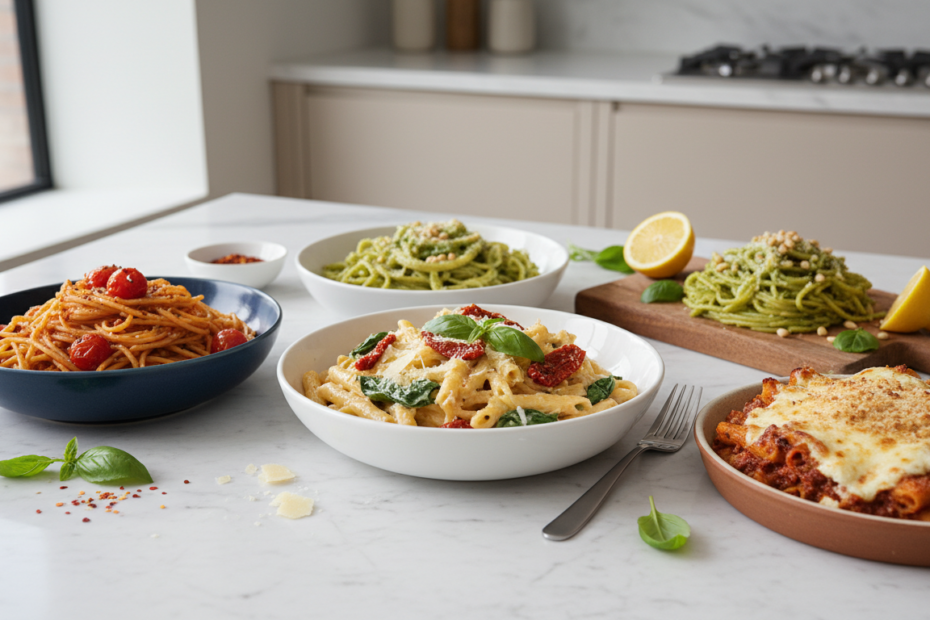
Pasta is always a good idea — and these easy pasta recipes prove it every single weeknight. Whether you’re racing through a Tuesday or winding down on a Friday, a bowl of perfectly sauced pasta is the answer. Quick to cook, incredibly satisfying, and endlessly versatile, these dishes bring serious comfort to the table without a mountain of effort or a sink full of dishes.
In this roundup, you’ll find 20 crowd-pleasing pasta recipes — from creamy and cheesy to bold and saucy — that you’ll genuinely want to put on repeat. Bookmark this one. You’re going to need it.
[toc]
Why You’ll Love These Easy Pasta Recipes
The beauty of easy pasta recipes is that they meet you exactly where you are. Tired after work? A 20-minute garlic butter spaghetti has you covered. Feeding a crowd on a budget? A big pot of baked ziti stretches beautifully without sacrificing flavor. These recipes are designed for real life — minimal prep, maximum payoff, and ingredients you probably already have in your pantry.
Another reason to love this collection: the variety is genuinely impressive. You’ll find one-pot wonders that cut down on cleanup, creamy sauces that taste indulgent without being fussy, and lighter tomato-based options loaded with vegetables. Whether your family loves classic Italian-American flavors or you’re craving something with a little heat, there’s a recipe here that will land on your weekly rotation.
And let’s talk about flexibility. Easy pasta recipes are some of the most forgiving dishes in the home cook’s arsenal. Swap proteins, load in extra veggies, or adjust the spice level — the base technique stays the same, and the results are always delicious. That’s the kind of cooking that builds real confidence in the kitchen.
Ingredients You’ll Need
While each of the 20 recipes has its own unique ingredient list, most of these easy pasta recipes are built around the same reliable pantry staples. Here’s what you’ll want to keep stocked:
- Pasta (12 oz / 340g) — The star of the show. Spaghetti, penne, rigatoni, fettuccine, or bowties all work beautifully depending on the sauce.
- Olive oil (2–3 tablespoons) — A good extra-virgin olive oil adds depth and richness to any sauce base.
- Garlic (4–6 cloves, minced) — Non-negotiable. Fresh garlic forms the aromatic backbone of most pasta dishes.
- Crushed tomatoes or tomato sauce (28 oz can) — Essential for marinara-based recipes; look for San Marzano for the best flavor.
- Heavy cream or half-and-half (1 cup) — Used in creamy pasta dishes like Alfredo or vodka sauce.
- Parmesan cheese (1/2 cup, freshly grated) — Adds salty, nutty umami. Always grate fresh — the pre-shredded kind won’t melt as smoothly.
- Kosher salt and black pepper — Season aggressively, especially your pasta water.
- Red pepper flakes (1/4 tsp) — Optional, but recommended for a gentle background heat.
- Fresh herbs (basil, parsley, or thyme) — A handful of fresh herbs finishes any pasta dish with brightness and color.
- Protein of choice (chicken, Italian sausage, shrimp, or chickpeas) — Mix and match based on what you have on hand.
Substitution Note: Going dairy-free? Replace heavy cream with full-fat coconut milk or a cashew cream. Gluten-free pasta works in every recipe here — just watch your cook time, as it can vary. Nutritional yeast is a fantastic stand-in for Parmesan if you’re keeping things plant-based.
Prep & Cooking Time
Most recipes in this collection are designed to fit into a busy weeknight schedule. Here’s a general time breakdown:
- Prep Time: 5–10 minutes
- Cook Time: 15–25 minutes
- Total Time: 20–35 minutes
A handful of the baked pasta recipes (like baked ziti or stuffed shells) will take closer to 45–50 minutes total, but the hands-on time is still minimal. The oven does the heavy lifting.
How to Make Easy Pasta Recipes Step by Step
Making easy pasta recipes consistently delicious comes down to a few foundational techniques — nail these steps every time and every dish in this collection will taste like it came from your favorite Italian restaurant.
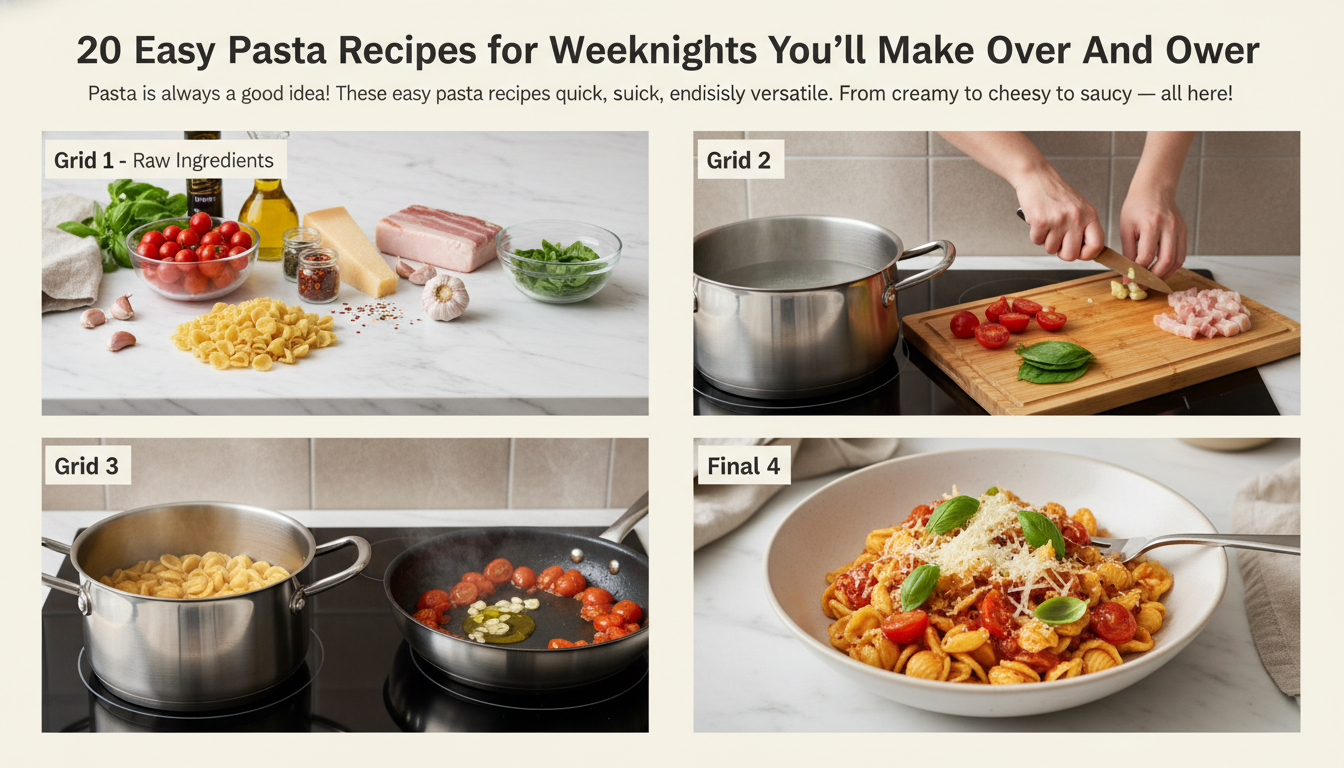
- Salt your water generously. Before anything else, fill a large pot with water and bring it to a rolling boil. Add at least 1 tablespoon of kosher salt — the water should taste pleasantly salty, like mild sea water. This is your only chance to season the pasta itself. Tip: Never add oil to your pasta water. It coats the noodles and prevents sauce from sticking.
- Build your sauce base. While your water heats, warm olive oil in a large skillet over medium heat. Add your aromatics — garlic, shallots, or onion — and sauté until softened and fragrant, about 2–3 minutes. Don’t rush this step; a properly softened aromatic base makes all the difference. Tip: For deeper flavor, let your garlic just barely turn golden at the edges before adding liquid.
- Cook pasta to al dente. Add pasta to the boiling water and cook according to package directions, but pull it out 1–2 minutes early. It should still have a slight bite. Tip: Reserve 1 cup of starchy pasta water before draining — this liquid is liquid gold for adjusting sauce consistency.
- Finish pasta in the sauce. Transfer your drained pasta directly into the skillet with the sauce. Toss over medium heat for 1–2 minutes, adding splashes of pasta water until the sauce clings to every noodle. This step — called “mantecare” in Italian — is what separates good pasta from great pasta. Tip: Always finish with a drizzle of fresh olive oil and a handful of fresh herbs off the heat.
- Taste, adjust, and serve immediately. Give the dish a final taste and adjust salt, pepper, or acid (a squeeze of lemon goes a long way). Plate it up right away — pasta waits for no one. Tip: Warm your serving bowls in the oven at low heat for 5 minutes so the pasta stays hot longer at the table.
Nutritional Benefits of Easy Pasta Recipes
Pasta has gotten an unfair reputation in diet culture, but the truth is more nuanced and a lot more delicious. When built thoughtfully, easy pasta recipes can be genuinely nutritious. Whole wheat or legume-based pasta varieties offer more fiber and protein than their refined counterparts, helping to keep you fuller for longer. Tomato-based sauces are rich in lycopene, a powerful antioxidant linked to heart health. Lean proteins like chicken or shrimp add essential amino acids, while a generous handful of vegetables boosts vitamins and minerals significantly.
A standard serving of spaghetti with marinara (approximately 1.5 cups) delivers around 350–400 calories, 12–15g of protein, and a good dose of iron, B vitamins, and magnesium. For a detailed breakdown of pasta’s macronutrient profile and glycemic impact, Harvard T.H. Chan School of Public Health’s Nutrition Source has an excellent evidence-based overview. The takeaway? Pasta, eaten in balance with vegetables and lean protein, absolutely belongs in a healthy diet.
Tips, Variations & Cooking Advice
1. Layer your flavors: The difference between a flat-tasting sauce and a deeply flavorful one is usually time and layering. Sauté your aromatics first, deglaze the pan with wine or pasta water, then add your main sauce components. Each layer builds complexity. A pinch of sugar can also balance overly acidic tomato sauces beautifully.
2. Protein swaps made easy: Almost every recipe in this collection works with your protein of choice. Rotisserie chicken is a weeknight hero — shred it in seconds and toss it in. Italian sausage adds bold, fennel-forward flavor. Shrimp cooks in under 3 minutes. For a plant-based option, white beans or lentils are hearty, satisfying, and soak up sauce like a dream.
3. Try a new pasta shape: The shape of your pasta matters more than you might think. Ridged pasta like rigatoni or penne grips chunky, meaty sauces. Long, thin noodles like spaghetti or linguine pair best with silky, oil-based sauces. Wide pasta like pappardelle loves a slow-cooked ragu. Matching shape to sauce is one of the easiest upgrades you can make.
4. Storage made simple: Store leftover pasta in an airtight container in the refrigerator for up to 4 days. Store sauce separately from noodles when possible to prevent over-absorption. To reheat, add a splash of water or broth to the pan over medium-low heat and toss until warmed through. Most pasta dishes also freeze well for up to 3 months — baked pasta recipes like lasagna freeze especially beautifully.
Common Mistakes to Avoid
1. Not salting your pasta water enough. This is the single most common mistake home cooks make. Under-seasoned pasta water means bland noodles no matter how flavorful your sauce is. Use more salt than feels comfortable — you’ll be amazed at the difference.
2. Overcooking the pasta. Mushy pasta is a tragedy. Pull your noodles out when they’re still slightly firm in the center (al dente) and let them finish cooking in the sauce. They’ll absorb flavor as they complete cooking in the pan.
3. Discarding your pasta water. That cloudy, starchy cooking water is a secret weapon. It binds sauce to pasta, adjusts consistency without diluting flavor, and helps emulsify oil-based sauces into something silky and cohesive. Always save at least a cup before you drain.
4. Adding cold cream or cheese directly to a hot pan. This can cause dairy to seize and clump. When adding cream, reduce the heat to medium-low. When stirring in Parmesan, remove the pan from heat entirely and add the cheese while tossing vigorously. The residual heat will melt it perfectly without turning grainy.
Serving Suggestions & Storage
These easy pasta recipes shine brightest when paired with simple, complementary sides. A crisp green salad dressed with lemon vinaigrette cuts through rich, creamy pasta sauces beautifully. Crusty garlic bread is practically mandatory — perfect for swiping up every last bit of sauce. Roasted vegetables like zucchini, cherry tomatoes, or broccoli make any pasta dish more complete and colorful.
For wine pairings, tomato-based pasta dishes love a medium-bodied Chianti or Barbera d’Asti. Creamy pastas pair wonderfully with a buttery Chardonnay or a light Pinot Grigio. Prefer a non-alcoholic option? Sparkling water with lemon or a cold glass of unsweetened iced tea works perfectly.
As for storage: most pasta dishes keep well in the fridge for 3–4 days in an airtight container. Baked pasta casseroles freeze exceptionally well — portion them into individual servings and freeze for up to 3 months for the ultimate weeknight emergency dinner. Reheat covered in the oven at 350°F until warmed through, or microwave individual portions with a splash of water to keep moisture intact.
Conclusion
There’s a reason pasta is one of the most beloved comfort foods on the planet — it’s endlessly adaptable, deeply satisfying, and genuinely fun to make. This collection of easy pasta recipes gives you 20 reliable options to pull from every week, whether you’re cooking for one or feeding a hungry family. From five-ingredient weeknight wonders to impressive-but-simple showstoppers, every recipe here is built to become a repeat favorite in your home kitchen. If you’re looking for even more weeknight dinner inspiration, check out our Easy Weeknight Dinners collection and our guide to One-Pot Meals Everyone Loves. Now get that water boiling — dinner’s almost ready.
Frequently Asked Questions About Easy Pasta Recipes
What is the easiest pasta dish for beginners?
Aglio e olio (garlic and oil pasta) is widely considered the perfect beginner recipe. It uses only five ingredients — spaghetti, olive oil, garlic, red pepper flakes, and Parmesan — and comes together in under 20 minutes. It teaches core techniques like building a sauce base and finishing pasta in the pan without any complicated steps.
Can I make easy pasta recipes ahead of time?
Absolutely. Many of the pasta recipes in this collection are excellent for meal prep. Cook your sauce ahead and refrigerate for up to 5 days, then boil fresh pasta the night you’re ready to serve. For baked pasta dishes like lasagna or baked ziti, you can assemble the entire dish, refrigerate it unbaked, and pop it in the oven when needed — it’s one of the best make-ahead dinner strategies there is.
How do I keep pasta from sticking together after draining?
The best way to prevent sticky pasta is to finish it immediately in your sauce. If you need to hold it for a few minutes, toss it with a small drizzle of olive oil. Avoid rinsing pasta with cold water (which removes starch and makes sauce slide off). The starch on the surface of freshly cooked pasta is actually what helps your sauce cling to every noodle.
What are the best pasta shapes for thick sauces vs. light sauces?
For thick, hearty sauces like Bolognese, ragu, or chunky vegetable sauces, choose short tubular or ridged pasta like rigatoni, penne, or paccheri — the hollows and ridges trap sauce. For light, oil-based, or delicate cream sauces, long pasta like spaghetti, linguine, or tagliatelle works best. The rule of thumb: the heartier the sauce, the sturdier the pasta shape should be.