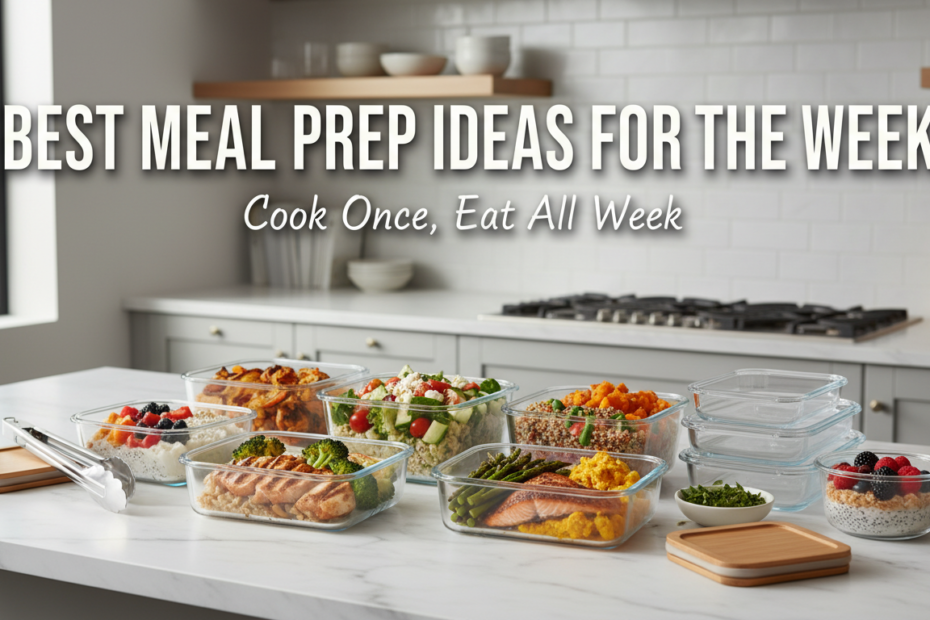
Meal prep like a pro! These brilliant meal prep ideas for the week are exactly what busy people need to save hours of cooking time, eat healthier, and finally feel organized from Monday through Sunday. Whether you’re juggling work, kids, or just trying to eat better without the daily stress, a solid weekly meal prep routine is your secret weapon.
In this guide, you’ll get everything you need — ingredients, step-by-step instructions, pro tips, and smart storage advice — to cook once and eat well all week long.
[toc]
Why You’ll Love These Meal Prep Ideas for the Week
Let’s be honest — the biggest barrier to eating healthy is time. When 6 PM rolls around and everyone’s hungry, it’s tempting to grab takeout or throw together something quick but nutritious. That’s exactly where meal prep ideas for the week change the game entirely. With just 2–3 hours on a Sunday, you can set yourself up for stress-free, delicious meals every single day.
These recipes are designed to be flexible, family-friendly, and beginner-approved. You don’t need to be a professional chef or spend a fortune at the grocery store. Simple, whole ingredients come together in smart ways that maximize flavor while minimizing your kitchen time throughout the week.
Beyond convenience, weekly meal prep helps you control portions, reduce food waste, and stick to your health goals. Studies consistently show that people who plan and prep meals in advance make better food choices and spend less money on dining out. This is the kind of habit that genuinely transforms your week — and your lifestyle.
Ingredients You’ll Need
- 2 lbs boneless chicken breasts — lean protein that works in salads, wraps, bowls, and more
- 2 cups dry brown rice — complex carbs that keep you full and reheat beautifully
- 1 can (15 oz) chickpeas, drained — plant-based protein and fiber boost for meatless days
- 4 cups mixed vegetables (broccoli, bell peppers, zucchini) — color, nutrients, and versatility
- 1 cup cherry tomatoes — fresh, no-cook topping that brightens any meal
- 1 bag (5 oz) baby spinach — salad base or quick sauté green
- 4 medium sweet potatoes — nutrient-dense carb that roasts perfectly in bulk
- 3 tbsp olive oil — healthy fat for roasting and sautéing
- 2 tsp garlic powder — flavor base for multiple dishes
- 1 tsp smoked paprika — adds depth and warmth to proteins and veggies
- Salt and black pepper to taste — essential seasoning throughout
- Lemons (2–3) — fresh brightness for dressings and finishing
- Your favorite sauce or dressing (tahini, hot sauce, or vinaigrette) — makes each meal feel unique
Substitution Note: Swap chicken for salmon, tofu, or hard-boiled eggs for variety. Brown rice can be replaced with quinoa, farro, or cauliflower rice for a lower-carb option. Any seasonal vegetable works in this framework — use what’s fresh and affordable near you.
Prep & Cooking Time
Prep Time: 20 minutes | Cook Time: 60–75 minutes | Total Time: About 90 minutes | Servings: 4–5 days of meals for 2 people | Difficulty: Easy
How to Make Meal Prep Ideas for the Week Step by Step
Follow these simple steps to master your meal prep ideas for the week and set up a full five days of healthy, delicious eating in one efficient cooking session.
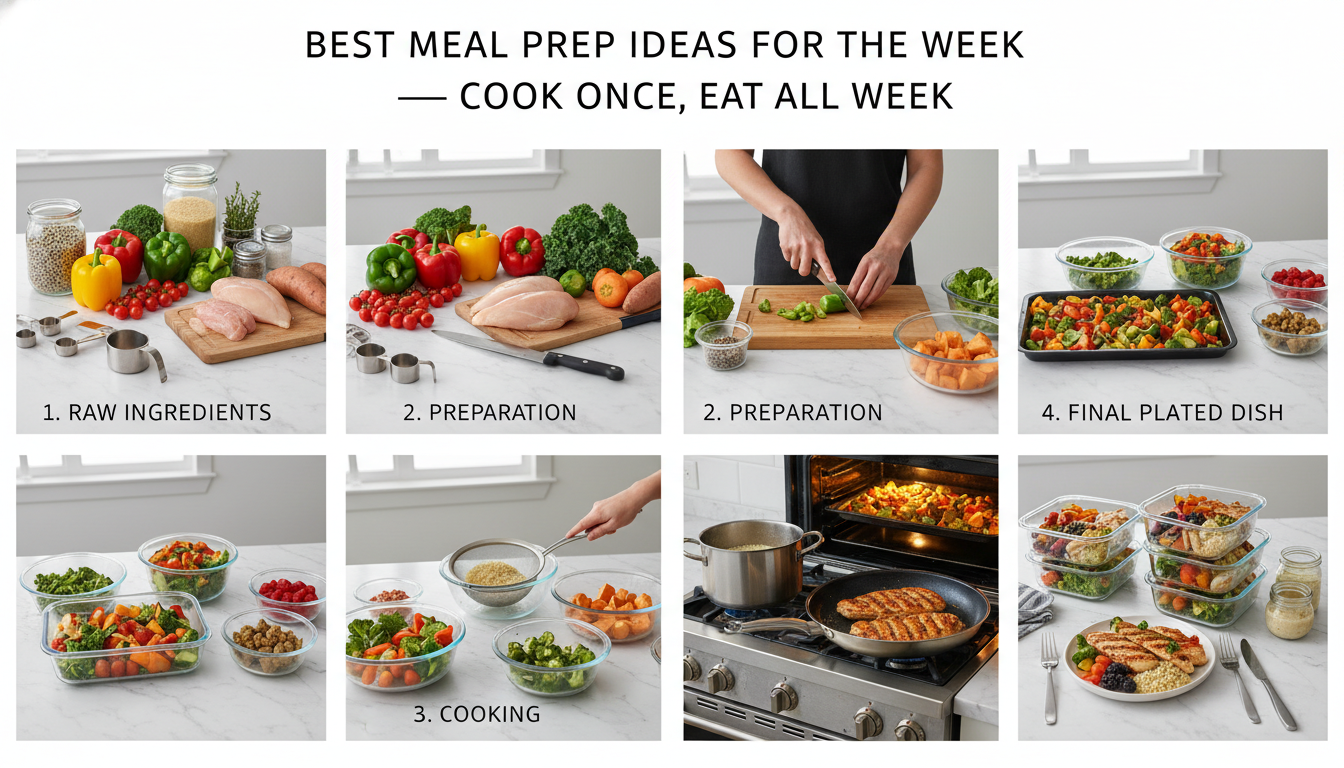
- Preheat your oven to 400°F (200°C). Line two large baking sheets with parchment paper. A hot oven is the key to getting perfectly roasted vegetables and caramelized sweet potatoes. Tip: Use two racks simultaneously to save 30+ minutes.
- Cook your rice first. Add brown rice and water to a pot (follow package ratio), bring to a boil, then reduce to a simmer. Cover and cook for 40–45 minutes. Set it and forget it while everything else gets prepped. Tip: Add a pinch of salt and a squeeze of lemon to the water for extra flavor.
- Season and roast the chicken breasts. Rub chicken with 1 tbsp olive oil, garlic powder, smoked paprika, salt, and pepper. Place on one baking sheet and roast for 25–30 minutes until the internal temperature reaches 165°F. Let cool completely before slicing. Tip: Slice into strips for bowls, dice for salads, or shred for wraps.
- Cube and roast sweet potatoes. Toss cubed sweet potatoes with 1 tbsp olive oil, salt, and pepper. Spread on the second baking sheet and roast at 400°F for 25–30 minutes, flipping halfway. Tip: Don’t overcrowd the pan — space ensures caramelization, not steaming.
- Roast the mixed vegetables. Toss broccoli, bell peppers, and zucchini with remaining olive oil and season well. After the sweet potatoes flip at the 15-minute mark, slide the veggie tray in on the same rack. They’ll finish at the same time. Tip: Cut vegetables into similar-sized pieces for even cooking.
- Rinse and season chickpeas. Drain, rinse, and pat dry canned chickpeas. Toss with a pinch of paprika, salt, and a spray of oil. You can eat them cold as a salad topper or quickly pan-roast them for 10 minutes for crunch. Tip: Crispy chickpeas stay good for 3 days at room temperature in an open container.
- Assemble your meal prep containers. Once everything is cooled (very important for food safety), divide rice, chicken, roasted vegetables, sweet potatoes, and chickpeas into airtight glass or BPA-free plastic containers. Label each with the day and meal. Tip: Keep dressings and sauces in separate small containers to prevent sogginess.
- Store properly and plan your week. Refrigerate containers for up to 4–5 days. Freeze anything planned for day 4 or 5 if you want maximum freshness. Write a simple meal map on a sticky note on your fridge so you always know what’s waiting for you. Tip: Add fresh spinach and cherry tomatoes right before eating for a fresh contrast to the warm prepped items.
Nutritional Benefits of Meal Prep Ideas for the Week
This meal prep framework is nutritionally balanced and built around whole, minimally processed foods. Each serving provides approximately 450–550 calories, with a solid macronutrient split of roughly 40% carbohydrates, 35% protein, and 25% healthy fats — ideal for energy, muscle maintenance, and satiety throughout the day.
Brown rice delivers fiber and B vitamins, while sweet potatoes are packed with beta-carotene, potassium, and vitamin C. Chicken breast offers one of the highest protein-to-calorie ratios of any protein source. Chickpeas add folate, iron, and gut-friendly fiber. The colorful vegetables bring a rainbow of antioxidants that support immune function and reduce inflammation.
According to the Harvard T.H. Chan School of Public Health, planning and preparing meals in advance is one of the most effective strategies for maintaining a nutritious diet long-term. Incorporating these meal prep ideas for the week into your regular routine supports everything from better sleep to improved energy levels.
Tips, Variations & Cooking Advice
1. Flavor Variation — Change Your Sauce, Change Your Meal: The fastest way to prevent meal prep boredom is to rotate your sauces. Use teriyaki glaze on Monday, lemon-tahini dressing on Wednesday, and a spicy sriracha mayo on Friday. The base ingredients stay the same — your taste buds never know it’s the same prep batch.
2. Substitution for Dietary Needs: This meal prep framework is naturally gluten-free. For vegan weeks, simply swap the chicken for extra chickpeas, marinated tempeh, or pan-seared tofu. The roasting and seasoning approach works identically for all protein types.
3. Seasonal Variation: Adapt your vegetable choices to the season. In summer, use corn, cherry tomatoes, and asparagus. In fall and winter, go heavy on butternut squash, Brussels sprouts, and cauliflower. This keeps your grocery bill low and your meals exciting year-round.
4. Storage Tips: Always let food cool completely before sealing containers — trapped steam creates condensation that leads to sogginess and faster spoilage. Glass containers preserve flavor better than plastic and are microwave-safe. Store raw greens and dressings separately until the moment you eat.
Common Mistakes to Avoid
Mistake 1 — Prepping too much variety at once. Beginners often try to make 7 completely different meals in one session and burn out fast. Start with 2–3 base components (a protein, a grain, a vegetable) and mix-and-match throughout the week. Simplicity is sustainable.
Mistake 2 — Storing everything together immediately. Combining warm food with fresh greens or dressings creates a soggy, unappetizing mess by day two. Always store components separately and assemble just before eating for the best texture and flavor.
Mistake 3 — Skipping the cool-down step. Placing hot food directly into sealed containers traps moisture, raises the internal temperature of your fridge, and can create bacterial growth. Always let food cool on the counter for 20–30 minutes before sealing and refrigerating.
Mistake 4 — Not seasoning enough during prep. Food always tastes more muted when cold. Season your proteins, grains, and vegetables more boldly than you think you need to during prep — this ensures everything still tastes delicious straight from the fridge or after a quick reheat.
Serving Suggestions & Storage
These prepped components are incredibly versatile. Build grain bowls with rice, roasted veggies, and sliced chicken over spinach. Stuff wraps or pita pockets with chicken, chickpeas, and tomatoes. Toss everything into a hearty salad with your favorite dressing. Make breakfast power bowls with sweet potato, spinach, and a quick fried egg on top.
For storage: refrigerate all prepped containers for up to 4–5 days. If prepping for a full 5 days solo, freeze meals planned for days 4 and 5 in freezer-safe containers, then transfer to the fridge the night before you need them. Most components reheat well in the microwave in 2–3 minutes. Add a splash of water or broth before reheating rice to restore moisture. Crispy chickpeas are the one exception — enjoy those at room temperature.
For more easy weeknight dinner ideas that complement your meal prep routine, check out our Easy Weeknight Dinner Recipes.
Conclusion
Mastering meal prep ideas for the week is one of the most impactful habits you can build for your health, your wallet, and your sanity. With just one focused cooking session per week, you’ll eliminate the daily “what’s for dinner?” panic, eat cleaner, and actually enjoy your food knowing you made it with intention. This flexible framework adapts to any diet, any season, and any schedule — all you need is 90 minutes and a plan.
Ready to take your kitchen efficiency even further? Check out our Healthy Lunch Meal Prep Guide for even more inspiration. Save this post to Pinterest, share it with a friend who needs a better Monday, and start your first prep session this Sunday. Your future weekday self will absolutely thank you.
Frequently Asked Questions About Meal Prep Ideas for the Week
How many hours does weekly meal prep actually take?
Most people can complete a full week of meal prep ideas for the week in 1.5 to 2.5 hours, depending on how many recipes they’re making. The key is working in parallel — roasting in the oven while grains simmer on the stove and vegetables are being chopped. With practice, you’ll get faster every week. Many experienced meal preppers complete their entire week’s prep in under 90 minutes.
What containers are best for meal prep?
Glass containers with airtight lids are widely considered the gold standard for meal prep. They don’t absorb odors or stains, they’re microwave and dishwasher safe, and they keep food fresh longer than most plastics. For salad-based meals, tall mason jars work brilliantly — layer dressing on the bottom and greens on top to prevent wilting. If you prefer plastic, choose BPA-free containers with secure snap-locking lids.
Can I meal prep for a whole family, not just one or two people?
Absolutely! Simply scale the ingredient quantities up. For a family of four, double or triple the amounts listed in this recipe. Using a large sheet pan for roasting and a bigger pot for grains makes batch cooking for families very manageable. Involving older kids in the portioning and labeling process also makes it a fun family activity that teaches great lifelong habits around food and planning.
Which foods don’t meal prep well and should be avoided?
A few foods genuinely don’t hold up well over several days: dressed salads (greens wilt and get soggy), sliced avocado (browns quickly without daily fresh preparation), and anything battered and fried (loses crispiness). Eggs are best cooked fresh for most preparations, though hard-boiled eggs are a fantastic exception and stay perfect in the shell for up to one week refrigerated. Pasta can also get gummy when stored — if including it, slightly undercook and store sauce separately.