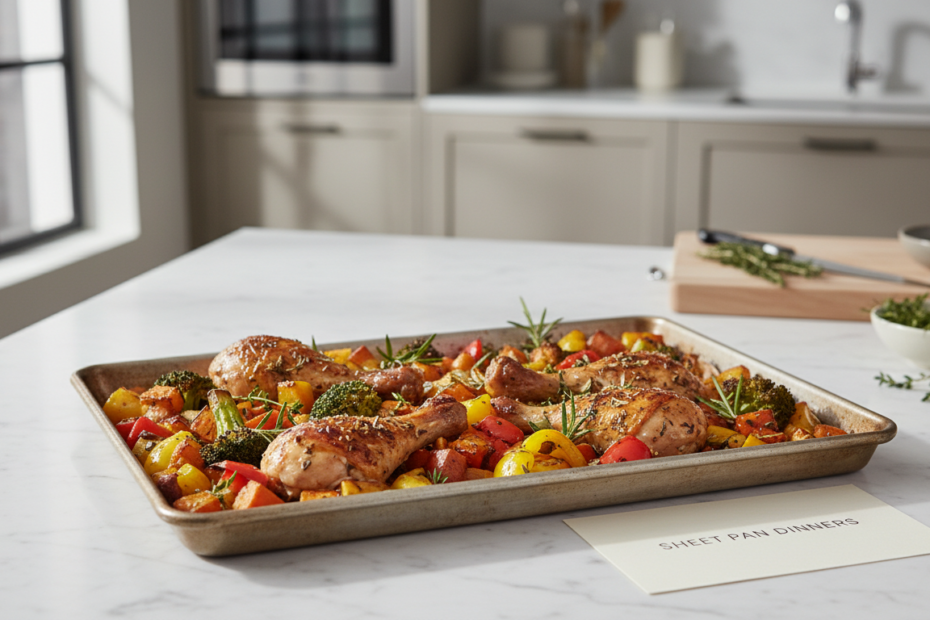
One pan, zero stress! Sheet pan dinners are the ultimate weeknight lifesaver — toss your protein and veggies together on a single pan, slide it into the oven, and walk away. You get a full, satisfying meal with bold roasted flavor and barely any dishes to wash. Whether you’re feeding a family of four or meal-prepping for the week, these recipes are about to change your dinner routine forever.
In this guide, you’ll discover foolproof sheet pan dinner recipes, pro tips for perfect roasting, easy variations, and everything you need to get incredible meals on the table with minimal effort and maximum flavor.
[toc]
Why You’ll Love These Sheet Pan Dinners
If you’ve ever stared into your fridge at 6 PM wondering what on earth to cook, sheet pan dinners are your answer. Everything cooks together on one pan in one oven — no babysitting multiple pots, no complicated timing, no culinary degree required. The dry, high heat of the oven does all the hard work, caramelizing vegetables and crisping proteins to golden perfection.
One of the biggest advantages of sheet pan dinners is how endlessly customizable they are. Swap the chicken for salmon, trade the broccoli for asparagus, go heavy on garlic — there are no rules. You can adapt every recipe to what’s in your fridge, your dietary needs, or whatever looked good at the farmers market. It’s flexible cooking at its absolute best.
And let’s talk cleanup. We’re talking one pan, possibly a mixing bowl, and a pair of tongs. That’s it. When dinner is done, the hardest part is deciding whether you want to soak the pan or just throw it in the dishwasher. For busy weeknights, that kind of simplicity is genuinely life-changing.
Ingredients You’ll Need
- 1.5 lbs bone-in, skin-on chicken thighs — the fat keeps them juicy and they brown beautifully in the oven
- 2 cups broccoli florets — roasts to crispy, slightly charred perfection
- 1 large bell pepper, sliced — adds color, sweetness, and a pop of vitamin C
- 1 medium zucchini, cut into half-moons — tender, mild, and soaks up seasoning well
- 1 cup cherry tomatoes — burst during roasting and create a natural pan sauce
- 3 tablespoons olive oil — essential for browning and preventing sticking
- 4 cloves garlic, minced — infuses everything with savory depth
- 1 teaspoon smoked paprika — adds warmth and a subtle smoky complexity
- 1 teaspoon Italian seasoning — herby backbone that ties the whole dish together
- ½ teaspoon red pepper flakes — optional, but adds a gentle kick
- Salt and black pepper to taste — essential seasoning base
- Fresh lemon juice — a squeeze at the end brightens everything
- Fresh parsley, chopped — for a fresh, vibrant finish
Substitution note: No chicken? Use salmon fillets (reduce cook time to 12–15 minutes), shrimp (8–10 minutes), or even thick-cut pork chops. For a vegetarian version, swap protein for chickpeas or cubed extra-firm tofu. Any hearty vegetable works — try sweet potatoes, cauliflower, green beans, or Brussels sprouts.
Prep & Cooking Time
Prep Time: 15 minutes | Cook Time: 35–40 minutes | Total Time: 50–55 minutes | Servings: 4
How to Make Sheet Pan Dinners Step by Step
Making sheet pan dinners couldn’t be easier — follow these simple steps and you’ll have a restaurant-worthy roasted meal on the table in under an hour.
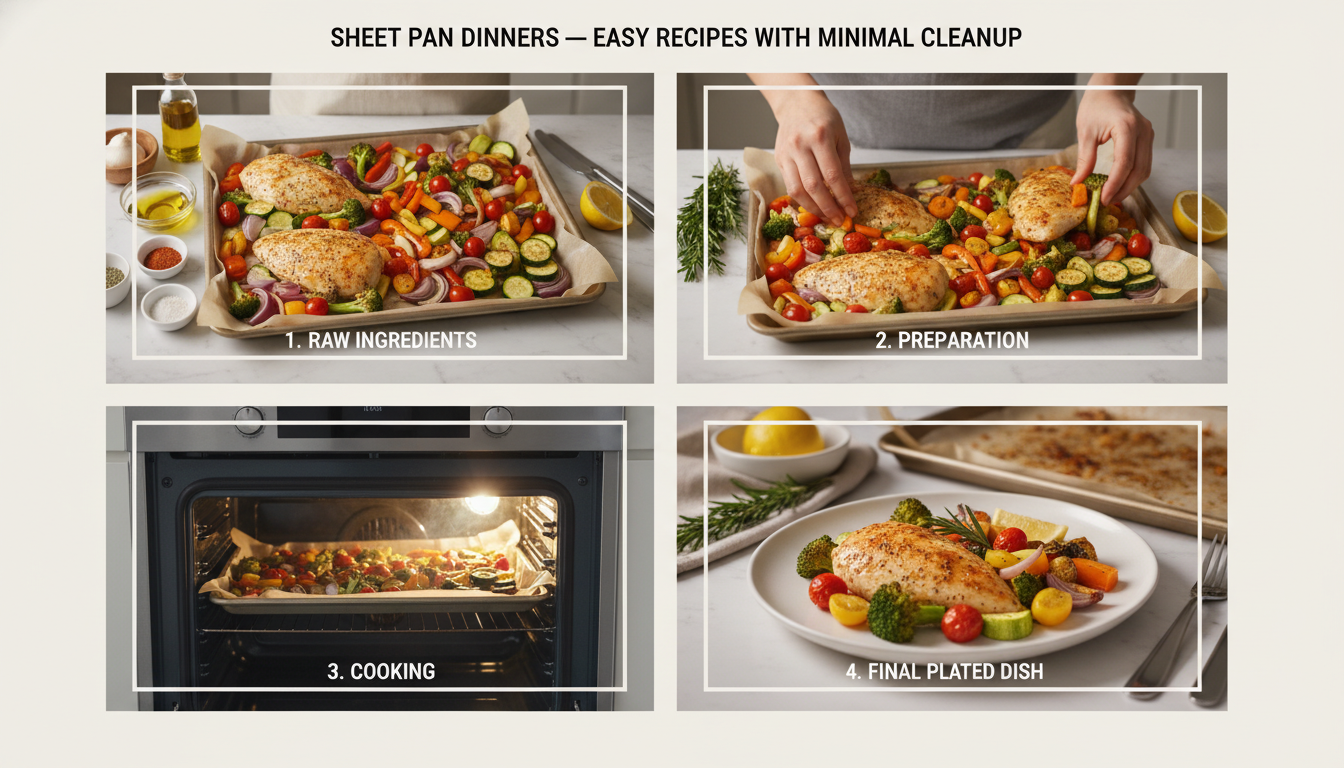
- Preheat your oven to 425°F (220°C). High heat is the secret to perfectly caramelized vegetables and crispy chicken skin. Line a large rimmed baking sheet with parchment paper or foil for easy cleanup. Tip: Use the largest pan you own — crowding leads to steaming, not roasting.
- Make your seasoning marinade. In a large mixing bowl, whisk together olive oil, minced garlic, smoked paprika, Italian seasoning, red pepper flakes, salt, and black pepper. This simple marinade does all the flavor heavy-lifting. Tip: Taste the marinade before adding the protein — it should be bold and slightly salty.
- Coat the chicken. Add the chicken thighs to the bowl and toss until fully coated. Place them skin-side up on one half of the prepared sheet pan. Pat the skin dry with a paper towel before adding marinade for extra crispiness. Tip: Let the chicken sit in the marinade for 10 minutes while you prep the veggies for deeper flavor.
- Season and arrange the vegetables. Add broccoli, bell pepper, zucchini, and cherry tomatoes to the same bowl (no need to wash it), toss with any remaining marinade, and spread them in a single layer on the other half of the pan. Keep vegetables in one even layer to ensure even roasting. Tip: Add denser vegetables like sweet potatoes or carrots closer to the center where heat is more intense.
- Roast for 35–40 minutes. Place the pan in the preheated oven. Roast until the chicken skin is deeply golden and the internal temperature reads 165°F (74°C), and the vegetables are tender with caramelized edges. No need to flip — just let the oven work its magic. Tip: If veggies are done before chicken, remove them and tent with foil while the chicken finishes.
- Finish and serve. Remove from the oven, squeeze fresh lemon juice over the entire pan, and scatter chopped fresh parsley. Let the chicken rest for 5 minutes before serving directly from the pan — fewer dishes means more time to enjoy dinner. Tip: Drizzle any pan drippings over the veggies before serving for incredible flavor.
Nutritional Benefits of Sheet Pan Dinners
Sheet pan dinners aren’t just convenient — they’re genuinely good for you. Roasting vegetables at high heat preserves more nutrients than boiling while concentrating natural sugars and flavors. Broccoli is loaded with vitamin K, vitamin C, and fiber. Bell peppers deliver a megadose of antioxidants. Zucchini is low-calorie and hydrating, while cherry tomatoes provide lycopene, a powerful antioxidant linked to heart health.
Chicken thighs bring protein, B vitamins, and healthy fats that keep you full and satisfied. Olive oil adds heart-healthy monounsaturated fats and enhances the absorption of fat-soluble vitamins from your vegetables. Per serving, this recipe comes in at approximately 420 calories, 32g protein, 18g fat, and 22g carbohydrates — a well-balanced macronutrient profile ideal for a complete dinner.
For more detailed guidance on the nutritional value of roasted vegetables and how cooking methods impact nutrients, visit Healthline’s complete guide to the healthiest vegetables. Want more nutritious dinner ideas? Check out our Healthy Chicken Recipes collection for more inspiration.
Tips, Variations & Cooking Advice
1. Maximize flavor with a hot pan. For extra-crispy results, preheat your sheet pan in the oven before adding ingredients. When cold food hits the blazing-hot surface, it sears immediately instead of steaming. This one trick dramatically improves the texture of your sheet pan dinners.
2. Easy substitutions for any diet. Going low-carb? Skip starchy vegetables and load the pan with asparagus, mushrooms, and green beans. Need a dairy-free, gluten-free option? This recipe already qualifies — just double-check your seasoning blends are certified GF. For a Mediterranean spin, swap Italian seasoning for za’atar and add olives and artichoke hearts.
3. Flavor variation ideas. Try a honey garlic glaze by adding 2 tablespoons of honey to the marinade. Go Asian-inspired with soy sauce, sesame oil, and ginger. Make it Mexican by adding cumin, chili powder, and a side of warm tortillas. The sheet pan dinner formula is a blank canvas — season it any direction you want.
4. Storage made simple. Leftovers keep well in an airtight container in the refrigerator for up to 4 days. Store chicken and vegetables separately if possible to preserve textures. For freezing, place cooled leftovers in freezer-safe bags for up to 2 months. Reheat in the oven at 375°F for 10–12 minutes to restore crispiness — avoid the microwave if you want the vegetables to stay firm.
Common Mistakes to Avoid
Overcrowding the pan. This is the number one mistake. When vegetables are piled on top of each other, they steam rather than roast, resulting in soggy, pale food. Use two pans if necessary — trust us, it’s worth the extra dish.
Cutting vegetables unevenly. If your broccoli florets are tiny and your zucchini chunks are massive, some will burn before others are cooked. Take two extra minutes to cut everything roughly the same size. Aim for 1–1.5 inch pieces for most vegetables.
Skipping the oil — or using too little. Oil is not optional in sheet pan dinners. It promotes browning, prevents sticking, and carries seasoning into every bite. Be generous — coat everything well. Three tablespoons for a full pan of food is the minimum.
Not checking internal temperature. Beautiful golden skin doesn’t always mean fully cooked chicken. Always use a meat thermometer to confirm the thickest part of the thigh reaches 165°F. Food safety is non-negotiable, no matter how perfectly the dish looks.
Serving Suggestions & Storage
Sheet pan dinners are a complete meal on their own, but a few simple additions make them feel extra special. Serve over fluffy white rice, garlic herb quinoa, or crusty sourdough bread to soak up those incredible pan juices. A simple side salad of arugula and shaved parmesan pairs beautifully, adding freshness to balance the rich roasted flavors.
For sauces, try a drizzle of tahini, tzatziki, or a simple chimichurri made from fresh herbs, garlic, olive oil, and red wine vinegar. These additions take the dish from weeknight dinner to something you’d happily serve to guests.
Storing leftovers: Refrigerate in an airtight container for up to 4 days. Freezing: Cool completely, portion into freezer bags, and freeze for up to 2 months. Label with the date. Reheating: For best results, reheat in the oven or air fryer at 375°F for 10 minutes. The chicken skin will crisp back up and the vegetables will warm through without becoming mushy.
Conclusion
There’s a reason sheet pan dinners have become the most searched weeknight meal solution on the internet — they genuinely deliver. One pan, big flavor, minimal cleanup, and endless variety. Whether you follow this recipe exactly or use it as a template to clean out your fridge, you’re always just 40 minutes away from a delicious, nutritious, home-cooked dinner. For more simple, stress-free dinner ideas that taste incredible without hours of effort, explore our full [INTERNAL LINK: Easy Weeknight Dinners] recipe collection. Now go preheat that oven — dinner is waiting!
Frequently Asked Questions About Sheet Pan Dinners
Can I make sheet pan dinners ahead of time?
Absolutely! You can prep all your ingredients — chop vegetables, marinate the protein, and mix your seasonings — up to 24 hours in advance. Store everything in separate containers in the refrigerator. When you’re ready to eat, just arrange on the pan and roast. Some people even do full meal-prep rounds, roasting two or three pans on Sunday for easy weeknight meals throughout the week.
What temperature is best for sheet pan dinners?
Most sheet pan dinners work best at 400°F to 425°F (200°C to 220°C). This temperature range is hot enough to caramelize vegetables and brown proteins without burning anything. If you’re cooking fish or shrimp, you can go slightly lower at 375°F since they cook faster. Always preheat your oven fully before adding the pan for the most consistent results.
Can I use frozen vegetables in sheet pan dinners?
Yes, but with an important caveat — do not thaw them first. Add frozen vegetables straight from the freezer and spread them in a single layer. The extra moisture will evaporate in the hot oven. However, fresh vegetables will always deliver better caramelization and texture. If using frozen, increase the oven temperature by 25°F and expect a slightly longer cook time of 5–8 additional minutes.
How do I prevent my sheet pan dinner from getting soggy?
Sogginess almost always comes from overcrowding or too much moisture. Use a large rimmed baking sheet and make sure everything is spread in a single layer with space between pieces. Pat proteins completely dry before seasoning. Avoid covering the pan with foil during roasting — foil traps steam. Finally, make sure your oven is fully preheated and your pan is large enough for the amount of food you’re cooking.