Sheet Pan Lemon Dill Salmon and Green Beans
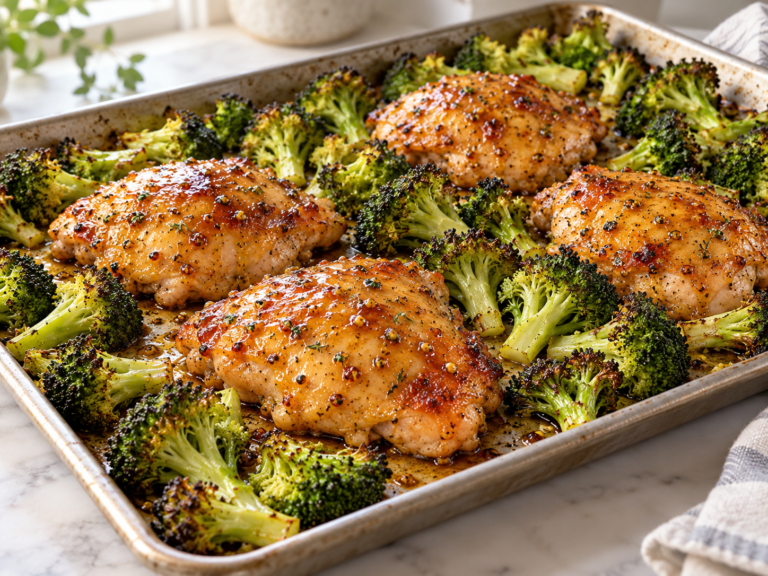
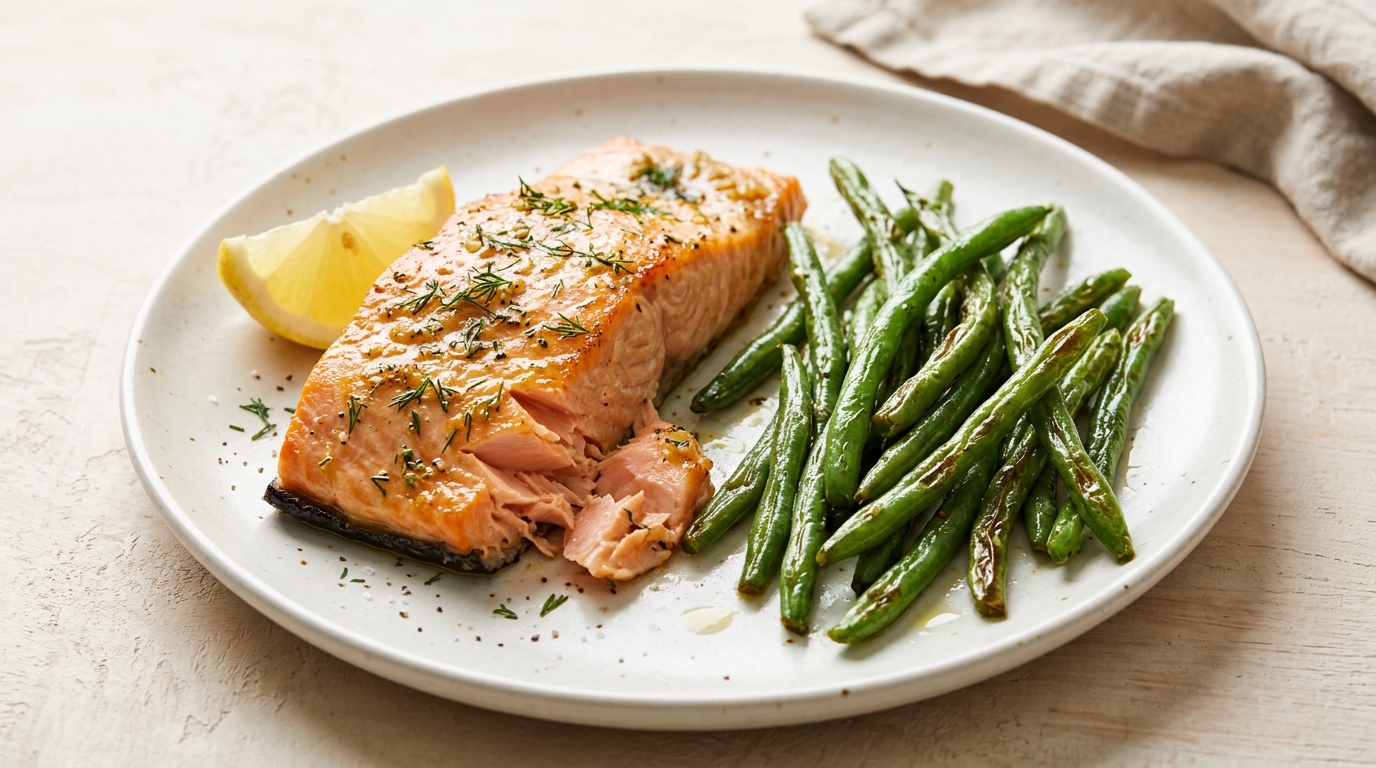
Lemon dill salmon pairs a simple mustard-lemon coating with green beans that roast on the same sheet pan. The beans get a short head start, then the salmon joins them for the final stage. That staggered timing helps the vegetables soften without keeping the fish in the oven too long.
Choose four portions with similar thickness so they finish close together. The coating is deliberately light: a little olive oil, Dijon mustard, garlic, lemon zest, and dill season the fish without leaving it beneath a heavy layer of sauce. Fresh lemon juice is added when serving.
Recipe at a Glance
| Servings | 4 |
|---|---|
| Timing | 15 minutes prep; about 18–22 minutes roasting; about 35–40 minutes total |
| Main equipment | Large rimmed sheet pan |
| Category | Dinner Ideas |
Why Make This Recipe
- One pan holds the main dish and the vegetable.
- The green beans start first, making the cooking stages easier to control.
- The lemon and dill finish works with rice, potatoes, or a simple salad.
Ingredient Notes and Substitutions
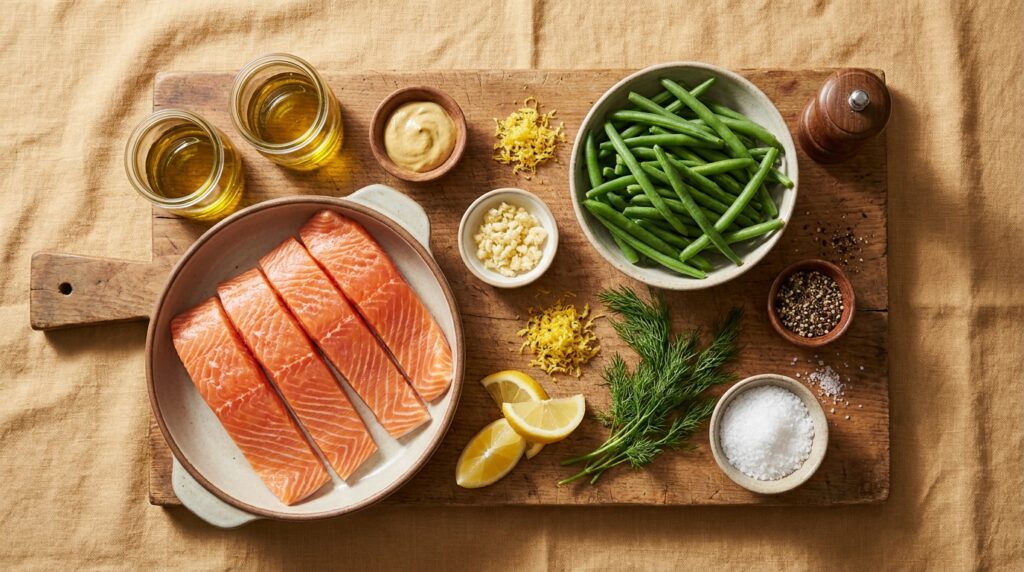
Match the salmon portions
Use fully thawed fillets about 1 inch thick and roughly 5–6 ounces each. Tail pieces cook faster than thick center portions. Skin-on salmon holds together well, but skinless portions also work if handled gently.
Trim and dry the beans
Remove tough stem ends and dry the beans after washing. Water left on the surface encourages steaming. Very thick beans may need a few extra minutes before the salmon is added.
Use zest before juice
Lemon zest gives citrus flavor without flooding the tray with liquid. Zest the lemon before cutting it. Save most of the juice for the table, where each person can adjust the sharpness.
How to Make Sheet Pan Lemon Dill Salmon and Green Beans
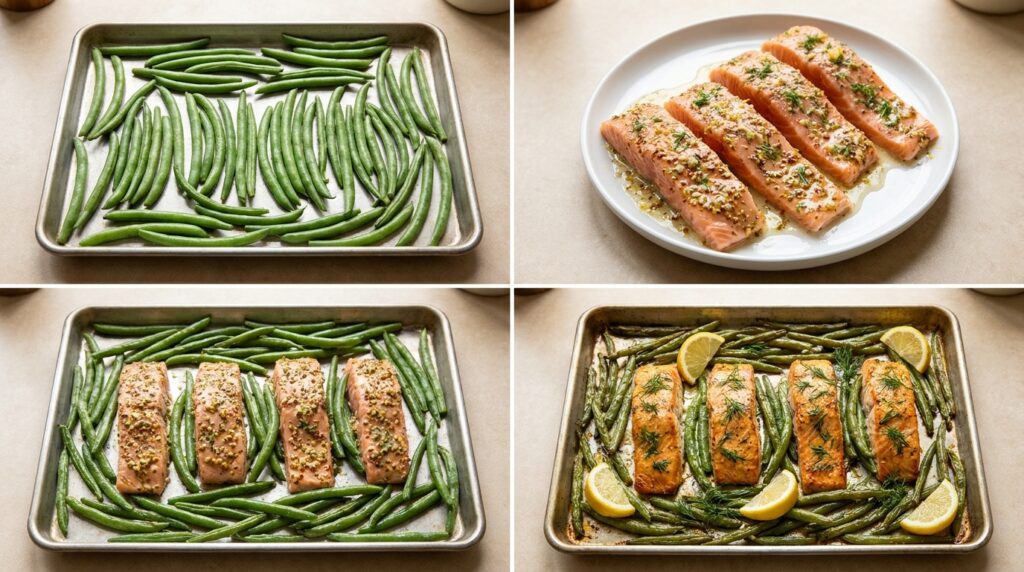
1. Heat the oven
Set the oven to 400°F (200°C), conventional heat. Line a large rimmed sheet pan with suitable parchment. Pat the salmon dry, checking gently for pin bones and removing any you find with clean tweezers.
2. Start the green beans
Toss the beans on the tray with 1 tablespoon olive oil, ½ teaspoon salt, and the pepper. Spread them in one layer and roast for 8 minutes. Leave enough room to add the fish without piling the beans beneath it.
3. Mix the coating
While the beans roast, combine the remaining tablespoon oil, Dijon, garlic, lemon zest, 1 tablespoon dill, and remaining ¼ teaspoon salt in a small bowl. Brush or spoon the mixture over the tops of the salmon portions.
4. Add the salmon
Remove the tray from the oven and shift the beans to make four clear spaces. Place the salmon skin-side down if it has skin. Keep each portion flat against the pan rather than balanced on a mound of vegetables.
5. Roast to doneness
Return the tray to the oven for about 10–14 minutes, starting checks earlier for thin pieces. Measure the thickest part of each fillet; cook the salmon to 145°F (63°C). The beans should be tender with some browned spots. Remove finished fish individually if needed.
6. Finish and plate
Scatter the remaining dill over the fish. Serve with lemon wedges, adding juice to taste at the table. If the beans need longer, move the cooked salmon to plates and return the vegetables to the oven for a few minutes.
Tips and Troubleshooting
Salmon is dry
Thickness matters more than the exact minute count. Start checking before the end of the estimated window and remove each piece once it reaches the target temperature.
Beans remain firm
Give particularly thick beans a longer head start. You can finish them after removing the fish instead of leaving safely cooked salmon in the oven.
Tray is crowded
Use a second tray if the vegetables cannot lie mostly in one layer. A tightly packed tray releases steam and reduces browning.
Variations
- Replace fresh dill with 1 teaspoon dried dill in the coating, and omit the fresh finishing sprinkle.
- Swap green beans for trimmed asparagus, adjusting the vegetable head start: thin asparagus often needs less time than green beans.
What to Serve With It
Serve each salmon portion with green beans and separately cooked rice, boiled baby potatoes, or a slice of bread. A plain yogurt sauce with chopped dill is an optional addition, particularly if the side is simply seasoned. Avoid adding a second strong citrus dressing before tasting the finished fish. The recipe yields four salmon-and-vegetable portions; starches and sauces are separate.
Storage, Freezing, and Reheating
Refrigerate the cooked fish and beans promptly in shallow covered containers. Use within 3–4 days; for better texture, plan to eat the salmon earlier in that window.
Cooked salmon can be frozen for up to 1 month for best quality, although its texture becomes firmer. Freeze separately from the beans and thaw in the refrigerator.
Chill leftovers within 2 hours (1 hour above 90°F / 32°C), keeping the refrigerator at 40°F / 4°C or colder. Heat leftover hot components to 165°F / 74°C; keep fresh toppings separate.
Frequently Asked Questions
Can I cook salmon from frozen here?
Thaw it first for this timing. Frozen portions need a different cooking window and can release enough water to affect the beans.
Can I use dried dill?
Yes. Use 1 teaspoon dried dill in the coating instead of the fresh dill, and skip the final fresh herb garnish.
Does the salmon need flipping?
No. Leave it in place while roasting. Moving delicate fish repeatedly can break the portions and remove the coating.
Sheet Pan Lemon Dill Salmon and Green Beans
Ingredients
Equipment
Method
- Heat the oven. Set the oven to 400°F (200°C), conventional heat. Line a large rimmed sheet pan with suitable parchment. Pat the salmon dry, checking gently for pin bones and removing any you find with clean tweezers.
- Start the green beans. Toss the beans on the tray with 1 tablespoon olive oil, ½ teaspoon salt, and the pepper. Spread them in one layer and roast for 8 minutes. Leave enough room to add the fish without piling the beans beneath it.
- Mix the coating. While the beans roast, combine the remaining tablespoon oil, Dijon, garlic, lemon zest, 1 tablespoon dill, and remaining ¼ teaspoon salt in a small bowl. Brush or spoon the mixture over the tops of the salmon portions.
- Add the salmon. Remove the tray from the oven and shift the beans to make four clear spaces. Place the salmon skin-side down if it has skin. Keep each portion flat against the pan rather than balanced on a mound of vegetables.
- Roast to doneness. Return the tray to the oven for about 10–14 minutes, starting checks earlier for thin pieces. Measure the thickest part of each fillet; cook the salmon to 145°F (63°C). The beans should be tender with some browned spots. Remove finished fish individually if needed.
- Finish and plate. Scatter the remaining dill over the fish. Serve with lemon wedges, adding juice to taste at the table. If the beans need longer, move the cooked salmon to plates and return the vegetables to the oven for a few minutes.
Notes
More Dinner Ideas
Browse the Dinner Ideas collection for more meals.
Save this recipe to your Pinterest dinner board so the ingredient list and method are easy to find when planning your next meal.
Cooking and Storage References
General handling guidance: USDA safe cooking temperatures, leftover storage and reheating, and food handling basics.