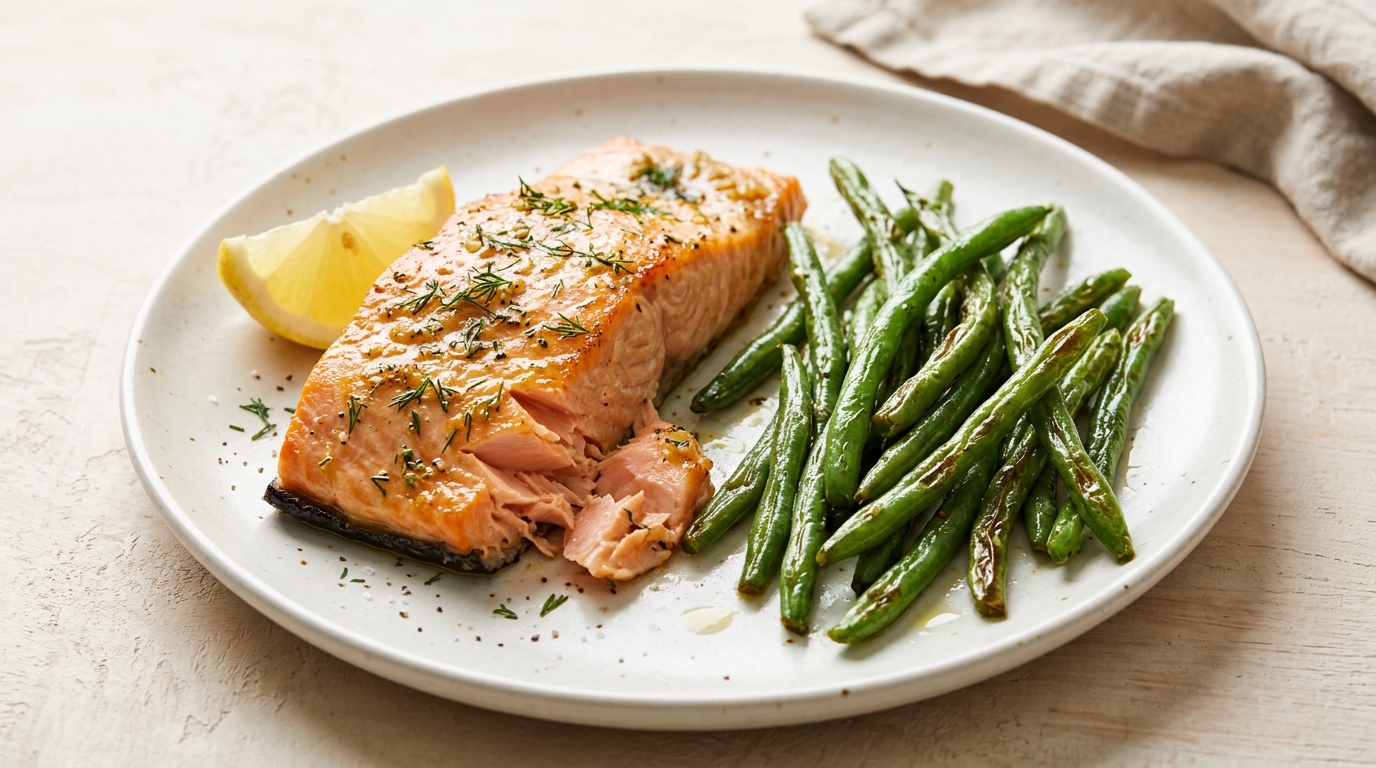
Ingredients
Equipment
Method
- Heat the oven. Set the oven to 400°F (200°C), conventional heat. Line a large rimmed sheet pan with suitable parchment. Pat the salmon dry, checking gently for pin bones and removing any you find with clean tweezers.
- Start the green beans. Toss the beans on the tray with 1 tablespoon olive oil, ½ teaspoon salt, and the pepper. Spread them in one layer and roast for 8 minutes. Leave enough room to add the fish without piling the beans beneath it.
- Mix the coating. While the beans roast, combine the remaining tablespoon oil, Dijon, garlic, lemon zest, 1 tablespoon dill, and remaining ¼ teaspoon salt in a small bowl. Brush or spoon the mixture over the tops of the salmon portions.
- Add the salmon. Remove the tray from the oven and shift the beans to make four clear spaces. Place the salmon skin-side down if it has skin. Keep each portion flat against the pan rather than balanced on a mound of vegetables.
- Roast to doneness. Return the tray to the oven for about 10–14 minutes, starting checks earlier for thin pieces. Measure the thickest part of each fillet; cook the salmon to 145°F (63°C). The beans should be tender with some browned spots. Remove finished fish individually if needed.
- Finish and plate. Scatter the remaining dill over the fish. Serve with lemon wedges, adding juice to taste at the table. If the beans need longer, move the cooked salmon to plates and return the vegetables to the oven for a few minutes.
Notes
Start the beans 8 minutes before adding the salmon. Cook fish to 145°F (63°C); check individual fillets because thickness varies.
Refrigerate the cooked fish and beans promptly in shallow covered containers. Use within 3–4 days; for better texture, plan to eat the salmon earlier in that window.
Cooked salmon can be frozen for up to 1 month for best quality, although its texture becomes firmer. Freeze separately from the beans and thaw in the refrigerator.